
Author: Amrah Jafarov
He is a political scientist and researcher based in Germany. He holds a Bachelor’s degree in International Relations from the Academy of Public Administration under the President of the Republic of Azerbaijan, a Master’s degree in Political Science from Ankara Social Sciences University in Turkiye, and has completed a graduate program in Mediation and Conflict Resolution at the University of San Diego in the United States.
Note: The original version of this article is written in English.
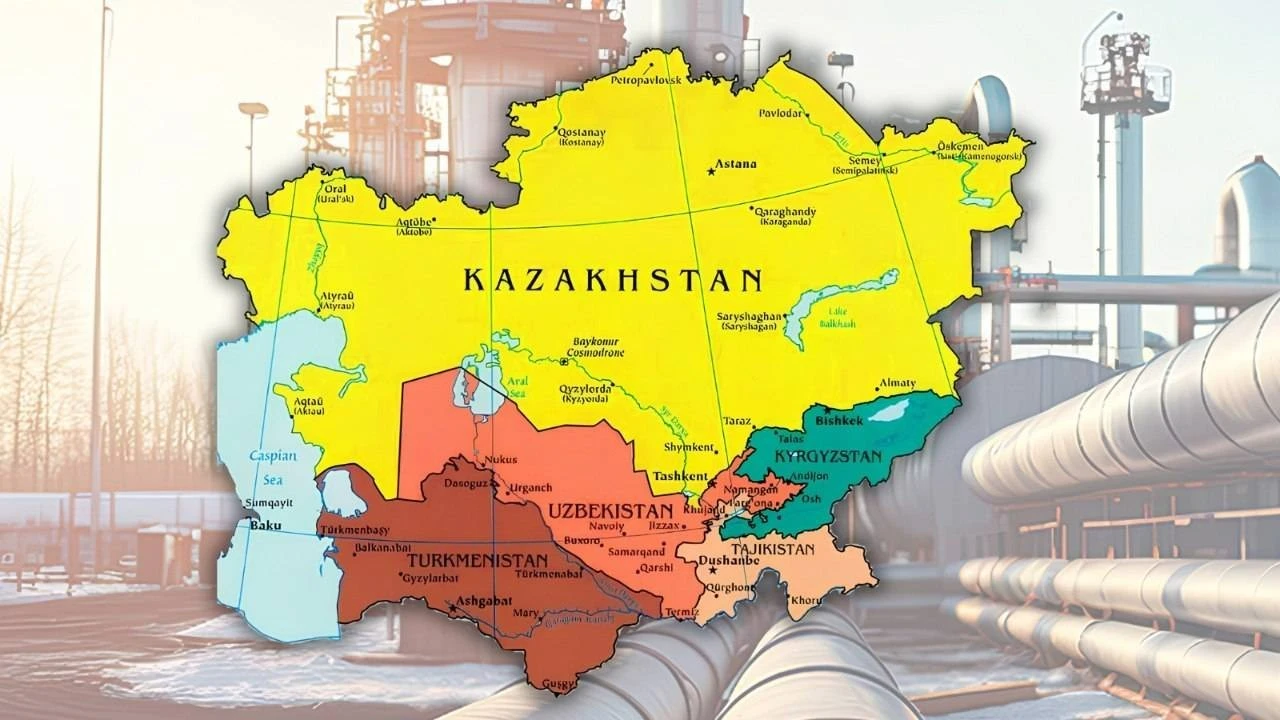
Day by day, we hear the name of the Central Asian region and its countries more and more in the media, in the speeches of politicians, and even in the cultural context. The region is growing in every sense, including economically, geopolitically, and demographically. This analysis bases its arguments on the empirical data provided by various organizations, such as the World Bank, Statista, the United Nations, and various geopolitical think tanks and news outlets. and analyzes the economic, demographic and autocratic governance trends of the Central Asian region and how it reshapes the influence of the European Union, Russia, and China in the region, and also the increasing importance of the region within the wider Turkic geography.
Introduction
My first impressions of my recent trip to Almaty, Kazakhstan's largest city, began while I was still on the plane. During the hours-long flight, the endless grain fields, water sources, and diverse landscapes hinted at the great potential of the region I was visiting. Central Asia is growing in every sense, including economically, geopolitically, and demographically. It is therefore no coincidence that we hear the name of the Central Asian region and its countries more and more in the media, in the speeches of politicians, and even in the cultural context. Although there are many definitions about the boundaries of Central Asia, we will cover 5 core post-Soviet Central Asian Countries in this article - Kazakhstan, Uzbekistan, Kyrgyzstan, Turkmenistan, and Tajikistan - with more focus on the two biggest ones, Uzbekistan and Kazakhstan. Predominantly Muslim with both nomadic and settled populations, the peoples and civilizations of Central Asia have historically been one of the most diverse and culturally vibrant regions on the planet. The region was ruled by the Russian Empire and then by the Soviet Union for two centuries, until 1991, when the USSR collapsed, and all 5 countries of Central Asia gained independence. Following independence, the attention of world powers shifted to the region, and this attention has continuously grown to this day. Although authoritarian governments rule the region, the political conflicts, changes of power, and uprisings are not unheard of.
While numerous studies have analyzed the region's growing importance in geopolitical order and global transportation routes, other indicators, which could be the region's main driving factors, such as economic and demographic trends, have largely been ignored. This analysis aims to explain the changing geopolitical balances through the growth rate of the region and addresses the following questions:
How is the geopolitical importance of Central Asia changing?
How do the economic and demographic trends of Central Asian countries reshape the situation of the autocratic regimes of the region and geopolitical influence of Russia, China, the European Union, and Turkiye in the region?
To address these questions, we analyze the current geopolitical state of the region and the comparative economic and demographic data that help us understand its growth and the multilateral approaches of the world powers toward it. The limited official data on Turkmenistan leads us to exclude this country from some parts of the analysis.
This article clarifies that the region's rapid demographic and economic growth can play a significant role in limiting the direct and hybrid influence of global players, especially Russia. It also examines these rising economic and demographic numbers as a driving force behind the region's growing geopolitical importance. However, the region's increasing geopolitical importance and economic successes have not been accompanied by democratic changes in the region, and authoritarian regimes have essentially been able to continue their existence.
Economic growth in Central Asia
For years now, Central Asia has remained one of the fastest-growing economies in the world. Central Asia’s combined economy grew by more than 6% in 2025 compared with the previous year, according to regional GDP data, which exceeds neighboring regions, such as Russia, China, and European countries (Euronews 2026).
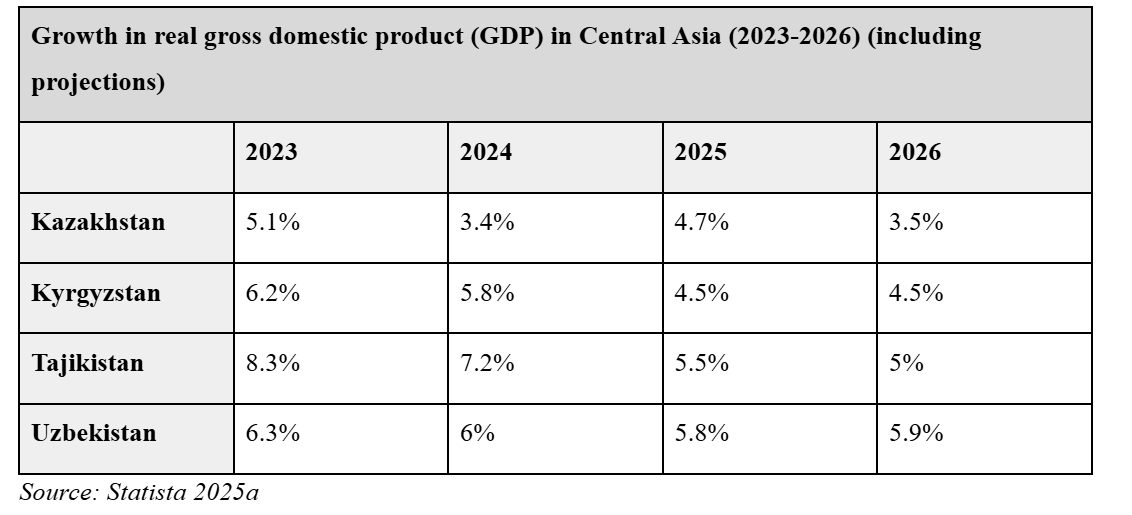
In particular, the government changes in Uzbekistan in 2016 and in Kazakhstan in 2019 seem to have had a positive effect on economic growth. Though neither country is democratic, Kazakh President Kassym-Jomart Tokayev and Uzbek President Shavkat Mirziyoyev both appear to understand the global economic and political context better than their Soviet-era predecessors (East Asia Forum 2025): However, these modernization reforms have not resulted in fundamental political transformation or the foundational changes necessary for democratic transition. The research by KharCenter (2025) concludes how the reforms in Uzbekistan - particularly the introduction of digital governance and partial openness in certain socio-political sectors - have increased the regime’s adaptive capacity, but the regime continues to maintain political monopoly while preserving formal institutions, and severe constraints remain in place regarding elections, media freedom, and elite structure.
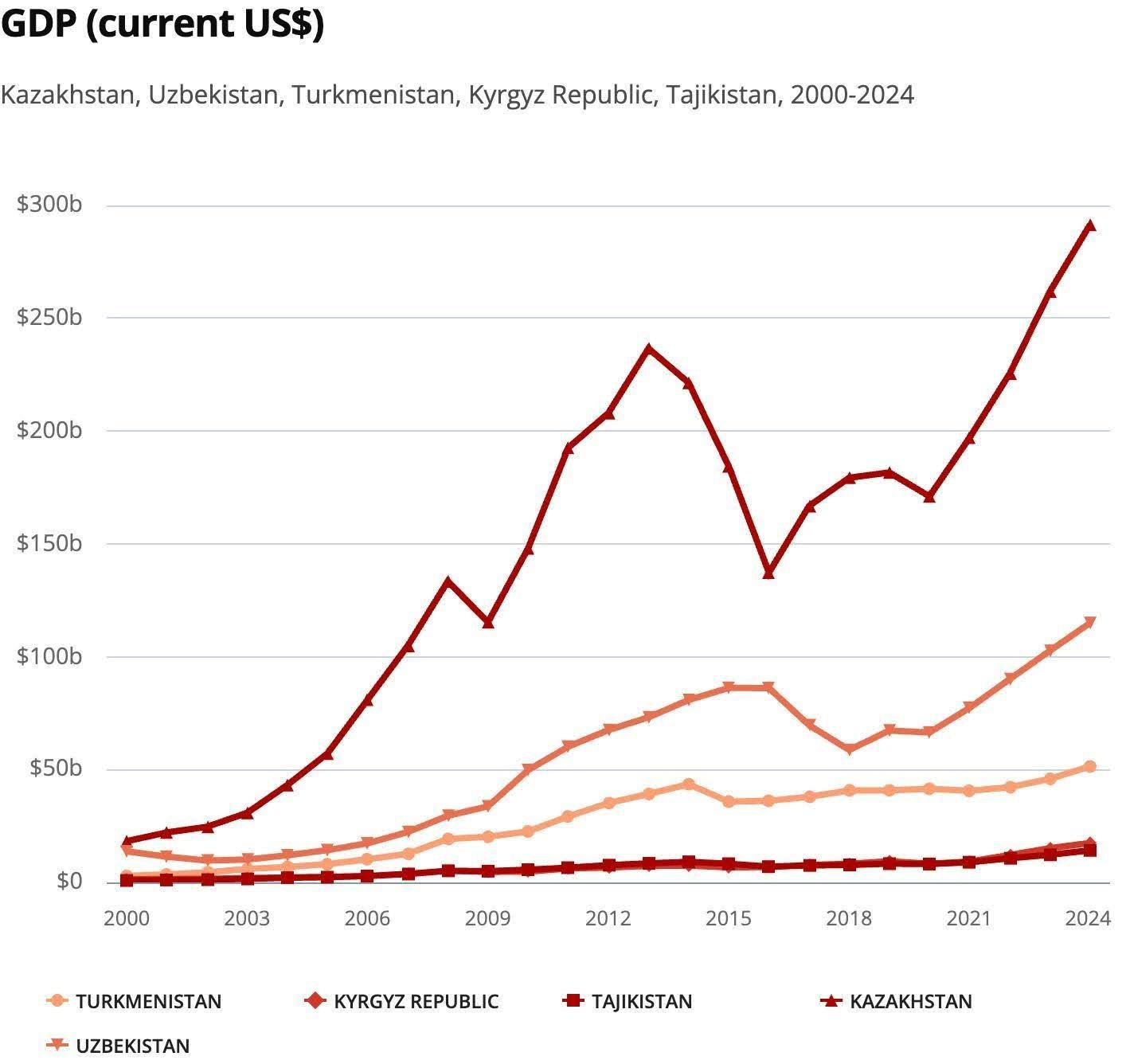
Source: World Bank 2024
According to recent data (VC 2026), the region’s GDP growth in 2026 accounts for a 1.3% share of global GDP growth. With a total population of over 80 million - comparable to mid-sized advanced economies, like Germany and Turkey - Central Asia’s aggregate contribution is on par with these economies, which account for roughly 0.9% and 2.2% of global growth, respectively. Therefore, with projected average annual growth exceeding 6%, Central Asian economies are expanding faster than much of Europe and other mature markets, reinforcing their rising relative contribution to global economic momentum.
Several factors drive this rapid economic growth in the region. First of all, economies that were largely closed for years during the Soviet era and the early years of independence are gradually liberalizing by attracting investment from around the world, increasing trade volumes, and boosting tourism. Rich natural resources and vast territories, cheap energy sources, and an accessible labor force make this region attractive to investors. The Russia-Ukraine war and uncertainties in the Middle East are also boosting the region's transit revenues and strategic importance. Additionally, the region is more effectively promoting its touristic potential, such as eco-tourism in Kyrgyzstan, and the region’s leading heritage destinations in Uzbekistan. Thanks to visa-free regimes and expanding air routes, the region is experiencing a tourism boom, welcoming 28.6 million foreign visitors in 2024 (Astana Times 2025). Alongside these developments, another factor must not be ignored, as it is one of the most important sources of this economic growth: demography.
Demographics of Central Asia
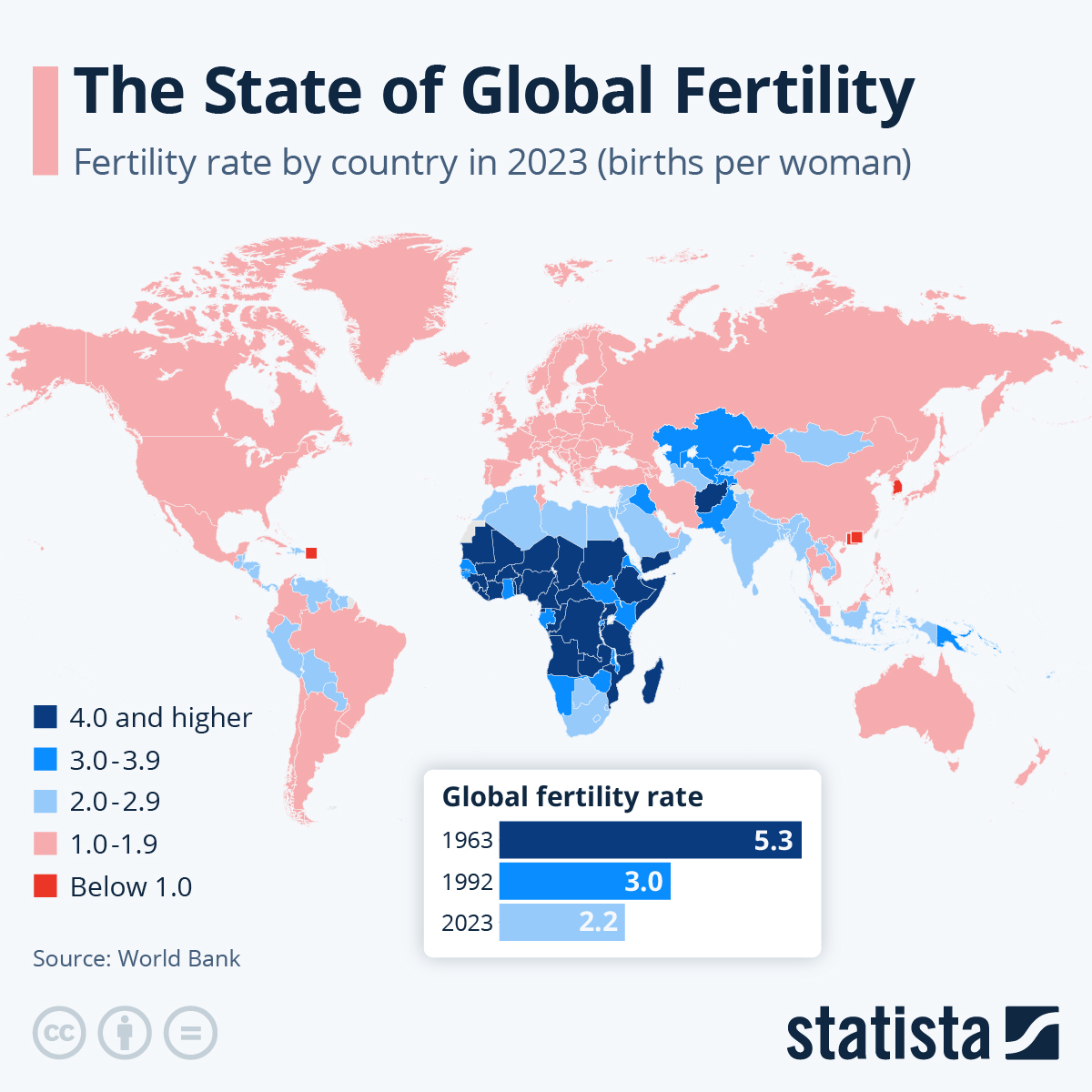
When I was walking through the streets of Almaty, the main difference I observed compared to the other cities I had visited was the higher number of children and young people within the total population. This was not a coincidence, as Central Asia has one of the highest total fertility rates in the world:
Source: Statista 2025b
As we can see from the map, the region has maintained the fertility rates above the United Nations replacement level of 2.1 (UN 2025), despite the downward trend around the world. Such high fertility rates lead to a higher natural growth, balance out emigration, and keep the average age of the population young. Since 2000, the population of the Central Asian countries has increased from approximately 55 million to 83 million people:
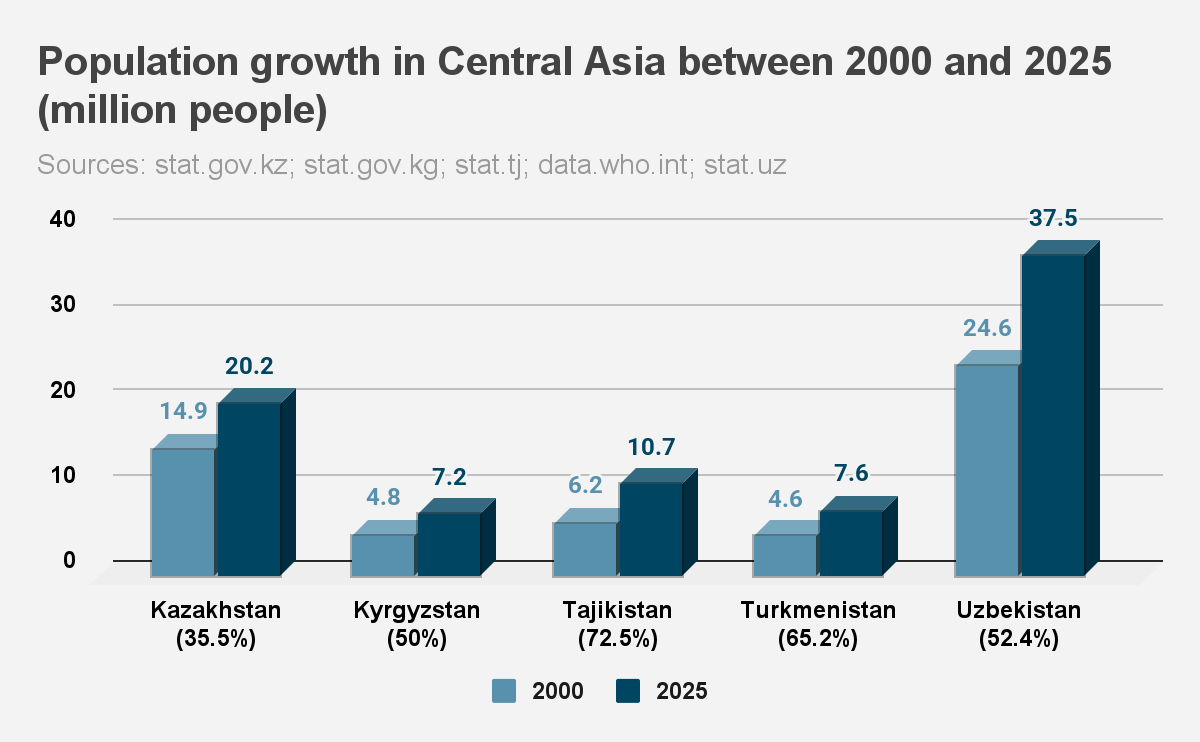
The rate of natural increase has varied across each country because of various factors, including the changing proportion of the Russian segment within the total population. As ethnic Russians in Central Asia have lower natural growth rates and higher emigration rates, this demographic dynamic directly affects the overall population trends. The main reason for the lower natural growth rate in Kazakhstan between 2000 and 2025 has been its higher proportion of an ethnic Russian population compared to other Central Asian countries (QazStat 2026).
Central Asia and Russia
The rule of Moscow since the 19th century caused deep Russian influence in Central Asian countries, and 3 decades of independence have not been enough to fully remove that impact. While there are historical and cultural aspects to this geopolitical influence, we will focus primarily on its demographic and economic dimensions. The historical connection between Russia and Central Asia strengthened after 1917 as Central Asia was integrated into the Soviet economy, with railways, roads, and pipelines all leading to the north. In the years immediately following the collapse of the USSR, the newly established economic systems were highly vulnerable and completely dependent on relations with Moscow. As such, trade relations were mainly conducted with or through Russia, and Russia was considered the main labor market for the region’s population. However, as Central Asian countries established relations with other nations, their dependence on Russia gradually started to decline. Over the past three decades, economic dependence on Russia has been reduced, and the Central Asian countries have felt increasingly able to adopt political positions independent of Russia (Pomfret 2025).
The sharp divergence in demographic trends has also played a vital role in this change. While the populations of the Russian Federation (WHO 2025) and 5 Central Asian countries in 2000 were approximately 147 million and 55 million, respectively, the population of the Russian Federation decreased while that of Central Asia significantly increased over the next 25 years: in 2025, the approximate population of the Russian Federation was 144 million, and the total for the Central Asian countries was around 83 million. These demographic figures directly influence cultural, political, military, and economic balances between the region and Russia.
The economic data also reflects similar changes, as the GDP growth between 2010 and 2024 has been around 43% in Russia, compared to 113% in Central Asian countries:
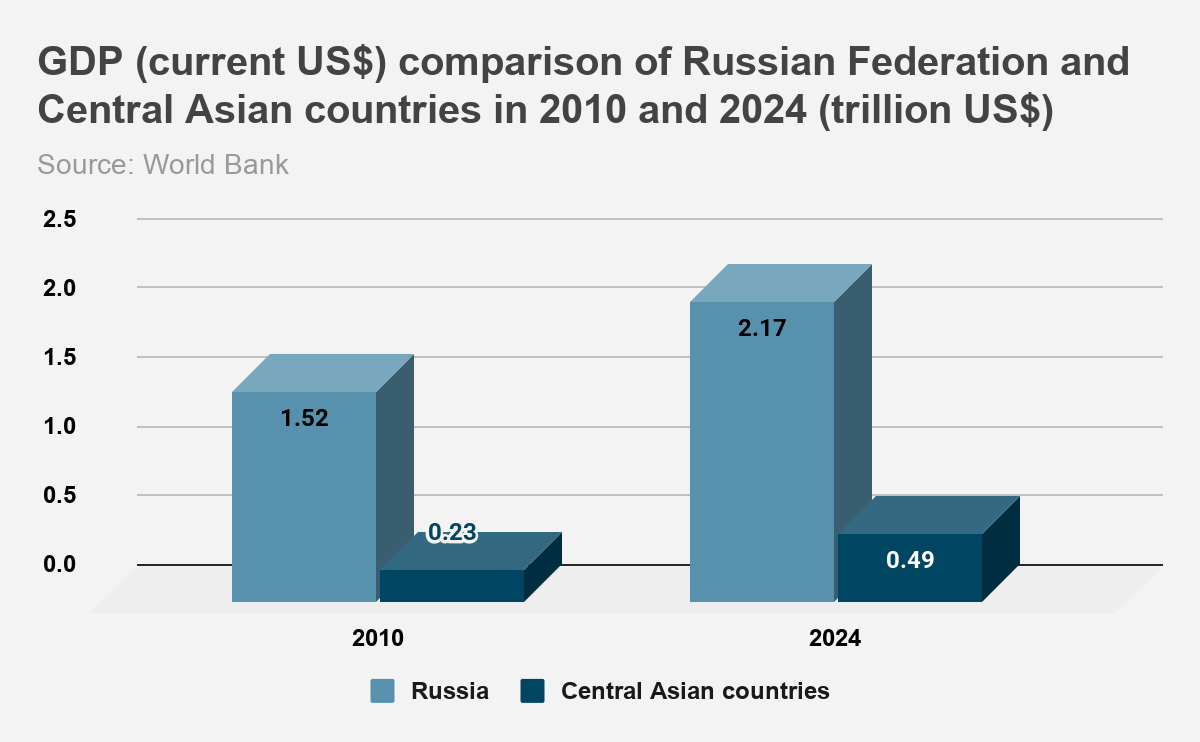
As we can see from the chart above, the GDP of Central Asian countries was equal to just 15% of the Russian GDP in 2010; it has increased to 22% in just 14 years.
Russia's invasion of Ukraine in 2022 also accelerated the process of Central Asia distancing itself from Russia. Concerned by the Russia-Ukraine conflict, the Central Asian Republics are trying to reduce their traditional security dependence on Moscow, which is now increasingly seen as a threat to regional stability, territorial integrity, and sovereignty. Shortly after the invasion, Kazakhstan's President Kassym-Jomart Tokayev reiterated his country's refusal to recognize what he called "quasi-state" entities in eastern Ukraine and criticized Russian politicians and commentators, whom he accused of sowing "discord" between the two countries by launching public attacks on Kazakhstan (The Moscow Times 2022). Kazakhstan and Uzbekistan also reaffirmed the territorial integrity of Ukraine and sent humanitarian assistance to Kyiv contrary to Moscow’s expectations (ORF 2023).
Despite all these geopolitical changes, Russia's declining influence in the region has not yet led to the weakening of authoritarian regimes in the region. Russia is trying to continue its policy of supporting authoritarian leaders in the region. In 2024, then Russian Defense Minister Sergei Shoigu spoke of Moscow taking "preventive measures" against "pro-Western" NGOs in the Central Asian region, which clearly shows how Russia closely monitors the state and potential of civil society in Central Asia and sees it as a threat to itself and authoritarian regimes in the region (Radio Free Europe 2024).
The Central Asian countries are seeking to balance Russia’s remaining role and guarantee their security and prosperity in two ways: by enhancing intra-regional cooperation and expanding international partnerships. Due to geopolitical changes, intra-regional collaboration has reached a new level, aiming to strengthen regional autonomy and resilience (DGAP 2024).
These geopolitical shifts also drew more attention to the region and the C5+1 Summit, which has been taking place since 2015, and was held for the first time in Washington in November 2025. The upgraded C5+1 summit in Washington, D.C., marked a significant elevation of the United States’ engagement with Central Asia, focusing on economic partnerships, business deals, and commitments to deepen diplomatic ties (Jamestown 2025).
Central Asia and China
China is one of the powers that has shown the most interest and involvement in the region since the countries of the Central Asian region gained independence, however the national interests of China in this region have traditionally been under strong Russian influence. Through decades it has undergone a significant expansion and strengthening in scale, scope, and integration since the 2010s. This evolution from a passive policy focused on border stability to a comprehensive, proactive strategy fusing security and economics is the result of a complex interplay of domestic priorities and external pressures (Yamaguchi 2026).
Rail infrastructure has been a bellwether of China’s links to Central Asia. China intensified efforts to revive the old Silk Road and invested heavily in building railway lines, roads, and other infrastructure. Overland rail traffic from China to Europe through Kazakhstan and Russia grew rapidly between 2010 and 2022, with active Chinese support. After February 2022, the European Union pushed for investment in a Middle Corridor rail connection across Central Asia to avoid Russia and Iran(East Asia Forum 2025).
In May 2023, Chinese President Xi Jinping convened the China-Central Asia Summit (C+C5), the first of its kind. The format mirrored the ministerial-level C5+1 Diplomatic Platform instituted in 2015 between the United States and the five countries of the region, but included heads of state. Xi offered assistance to the five attending presidents on domestic security and national-defence matters, in which they had traditionally sought support from Russia. This represented a shift for Beijing, which has long focused on Central Asian economic affairs, most notably through its Belt and Road Initiative. Relations between China and the Central Asian region remain centred on trade and investment, but progress in these areas is predicated on continued security and stability (IISS 2023).
Central Asian countries vary in their ability to avoid reliance on China, with poorer states such as Tajikistan heavily indebted, Turkmenistan economically dependent on gas exports to China, and Kazakhstan and Uzbekistan better positioned to maintain balanced foreign relations (East Asia Forum 2025) However, it is also quite important to note that resentment against China’s debt diplomacy and encroachment of land in resource-rich Central Asia that borders China are on the rise. Between 2015 and 2023, Central Asian Republics have seen more than 150 anti-Chinese protests, particularly in Kyrgyzstan, Tajikistan, and Kazakhstan. This fact shows that the obstacles to China's growing economic influence in Central Asia are not few, and the popularity factor is also important (The Economic Times 2023).
Although China's influence in the region, and especially its economic relations, continue to grow, the multifaceted international relations, growing economic power, and demographic potential of the Central Asian countries can balance this influence.
Central Asia and the European Union
Relations between Central Asia and the European Union are also continuing to grow, mainly on an economic basis. The increase in relations in bilateral and regional formats is an indicator of the growing attention to the region in Europe. As European states reduce their dependence on Russian gas and oil, Central Asia has emerged as an important energy supplier. Turkmenistan and Kazakhstan, both major producers and exporters of oil and gas, are particularly significant in this regard.
The EU strategy on Central Asia was first adopted in 2007 and subsequently updated in 2019. The first summit between leaders of the European Union and the five countries of Central Asia took place in Samarkand, Uzbekistan in 2025. Although the main focus of the summit was on economic relations, agreements were also reached in the areas of climate, mobility, and human rights (the Council of the EU 2025).
When it comes to the interest of individual European countries in the region, Germany's interest in the region should be particularly noted. Germany initiated the “Germany – Central Asia” platform and held its first summit in 2023 in Berlin. In 2024, Chancellor Olaf Scholz travelled to Astana, where the second summit of the platform was held with all Central Asian states (The Astana Times 2024). Germany, additionally, signed a migration agreement with Uzbekistan, which aims to simplify the legal migration of Uzbek skilled workers into Germany (Kun.uz 2024). This is an opportunity for some Central Asian states to diversify their reliance on the Russian market for migrant work. Currently, millions of Central Asians, particularly from Tajikistan, Uzbekistan, and Kyrgyzstan, work in Russia, often under harsh and illegal work arrangements (Lowy Institute 2025). The rapid aging of the population in Germany and throughout Europe necessitates the legal attraction of skilled migrants, making Central Asian countries with high demographic indicators attractive in this regard. For instance, the number of newborns in 2024 has been higher in Uzbekistan, which has a population of 37 million, than the total number of European countries such as Germany, Austria, and Switzerland, which in total have a population of more than 100 million:
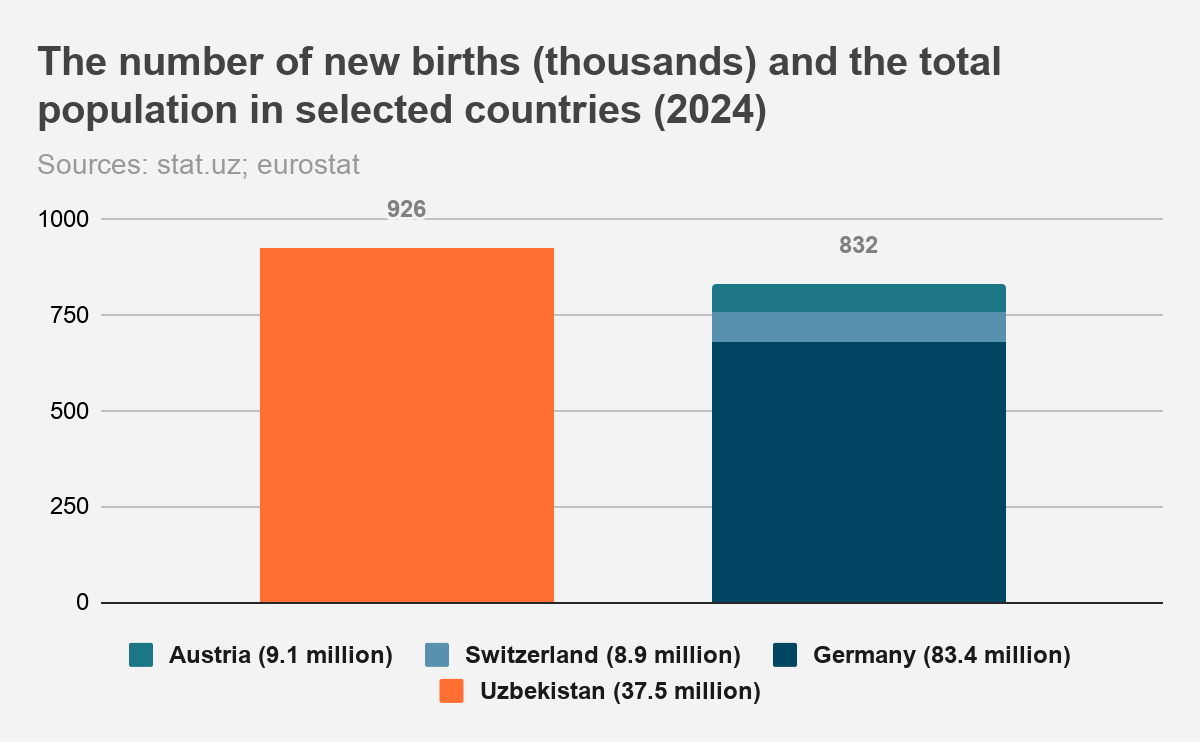
The number of students from Central Asian countries in Europe has also noticeably increased in recent years, which shows that young people are choosing European countries to study abroad instead of traditional Russian universities.
Although the EU-Central Asia relations, especially the EU-Central Asia Summits, try to put human rights topics on the stage, Amnesty International (2025) urges that the overall situation in the region remains concerning. Authorities maintain tight control over the media and civil society, suppress dissent, peaceful assembly, and freedom of association, and consistently fail to carry out human rights. The organization calls the recent trends in the region “disturbing” and calls on the European Union to ensure that human rights remain a core pillar of its enhanced cooperation.
Central Asia within the Turkic world
After the Central Asian countries gained their independence, one of the countries that paid the most attention to the region and exerted continuous influence was Turkiye. These relations were established especially with Uzbekistan, Kazakhstan, Kyrgyzstan, and partly Turkmenistan, through institutions such as TURKSOY, TURKPA, and since 2009, the Organization of Turkic States. Since 2011, the Organization convenes its annual summits under certain topics, where the Heads of State of the Member States evaluate the past period and set goals for the next year. The importance of the Turkic States Organization has also increased due to the changing geopolitical realities of Russia's occupation of Ukraine. The intensity of the summits with the Heads of State of the Member States has increased in the last 5 years (OTS 2026). Another reason for the increasing integration among the Turkic States has been their system of governance, which is based on a similar governance model - authoritarianism.
The changing demographic and economic balances in the Turkic world have also played an important role in the growth of the organization's importance. Thus, while Turkiye's dominance was inevitable in economic, political, and demographic terms in the first years of the Central Asian countries' independence, now the rapidly growing potential of Kazakhstan and Uzbekistan in particular is balancing Turkiye's dominance and making the institutionalization of the Turkic world more acceptable for all member countries.
Conclusion
The interest of global powers in the Central Asian region, one of the most important regions in the world in terms of both geopolitical and energy resources, is rapidly increasing. Geopolitical competition in the region has long been evident but is growing more intense. In particular, the challenging situation that Russia, which has been trying to control the region for centuries, has found itself in as a result of the Ukrainian war that began in 2022, has increased the opportunities for more diversified geopolitical relations among the countries of the region. China, the United States, the European Union, and Turkiye are implementing complex diplomatic measures to adapt to the changing geopolitical realities in the region.
Nonetheless, analyses show that no international power can establish a dominant power over the Central Asian countries that can currently effectively replace Russia. Russia's geopolitical influence, which is gradually decreasing due to objective reasons, is being gradually replaced by other global powers. This is due to the multi-vector foreign policy of the Central Asian countries, and their economic and demographic growth, which is ahead of most countries in the world. Additionally, the analysis concludes that the geopolitical changes taking place in the region have not led to a transformation of the authoritarian governance model traditional for the region; on the contrary, authoritarian governments are trying to adapt to new political realities.
References
Amnesty International. 2025. EU/Central Asia: Authorities must safeguard civil society space for genuine progress. https://www.amnesty.org/en/latest/news/2025/03/eu-central-asia-authorities-must-safeguard-civil-society-space-for-genuine-progress/
Bureau of National Statistics of Agency for Strategic planning and reforms of the Republic of Kazakhstan. 2026. Demographic statistics. https://stat.gov.kz/en/industries/social-statistics/demography/publications/479778/
Committee of the Republic of Uzbekistan on Statistics. 2026. Key demographic indicators. https://stat.uz/en/official-statistics/demography
East Asia Forum. 2025. Central Asia balances growth and great powers. https://eastasiaforum.org/2025/12/31/central-asia-balances-growth-and-great-powers/
East Asia Forum. 2025. China remains pivotal to Central Asia’s balancing act. https://eastasiaforum.org/2025/08/28/china-remains-pivotal-to-central-asias-balancing-act/
Euronews. 2026. Central Asia posts growth above 6% in 2025, beating advanced economies. https://www.euronews.com/business/2026/02/06/central-asia-posts-growth-above-6-in-2025-beating-advanced-economies
Eurostat. 2025. Population and population change statistics. https://ec.europa.eu/eurostat/statistics-explained/index.php?title=Population_and_population_change_statistics
German Council on Foreign Relations. 2024. Central Asia’s Shifting Regional Dynamics. https://dgap.org/en/research/publications/central-asias-shifting-regional-dynamics
Jamestown. 2025. C5+1 Summit Elevates U.S. Engagement With Central Asia. https://jamestown.org/c51-summit-elevates-u-s-engagement-with-central-asia/
KharCenter. 2025. The Evolution of Authoritarianism in Uzbekistan: Authoritarian Modernization. https://kharcenter.com/en/publications/the-evolution-of-authoritarianism-in-uzbekistan-authoritarian-modernization
Kun.uz. 2024. President Mirziyoyev and German Chancellor Scholz sign migration agreement to facilitate legal migration. https://kun.uz/en/news/2024/09/16/president-mirziyoyev-and-german-chancellor-scholz-sign-migration-agreement-to-facilitate-legal-migration
Lowy Institute. 2025. What explains Europe’s interest in Central Asia. https://www.lowyinstitute.org/the-interpreter/what-explains-europe-s-interest-central-asia
National Statistical Committee of the Kyrgyz Republic. 2026. Population. https://www.stat.gov.kg/en/opendata/category/4/
Tajikistan National Data Archive. 2026. National Data Archive. http://nada.stat.tj/index.php/home
The Astana Times. 2024. German Chancellor Scholz’s Visit to Kazakhstan, First in Decades, Deepens Ties with Central Asia Nations. https://astanatimes.com/2024/09/german-chancellor-scholzs-visit-to-kazakhstan-first-in-decades-deepens-ties-with-central-asia-nations/
The Astana Times. 2025. Central Asia Breaks Tourism Records as Regional Travel Surge Accelerates. https://astanatimes.com/2025/12/central-asia-breaks-tourism-records-as-regional-travel-surge-accelerates/
The Council of the EU. 2025. First EU-Central Asia summit, 4 April 2025. https://www.consilium.europa.eu/en/meetings/international-summit/2025/04/04/
The Economic Times. 2023. China’s grand designs in resource rich Central Asia face local ire. https://economictimes.indiatimes.com/news/international/world-news/chinas-grand-designs-in-resource-rich-central-asia-face-local-ire/articleshow/99535121.cms
The International Institute for Strategic Studies (IISS). 2023. The first China-Central Asia Summit. https://www.iiss.org/publications/strategic-comments/2023/the-first-china-central-asia-summit/
The Moscow Times. 2022. Ukraine War Strains Ties Between Kazakhstan and Russia. https://www.themoscowtimes.com/2022/06/24/ukraine-war-strains-ties-between-kazakhstan-and-russia-a78100
The Statistical Agency under President of the Republic of Tajikistan. 2026. Results of Population Census and Housing. https://www.stat.tj/en/population-and-housing-census/
Observer Research Foundation (ORF). 2023. C+C5 Summit: Beijing’s increasing shadow over Central Asia. https://www.orfonline.org/expert-speak/cc5-summit-beijings-increasing-shadow-over-central-asia
Organization of Turkic States. 2026. Organization of Turkic States. https://turkicstates.org/en/organization-of-turkic-states
Pomfret, R. 2025. Central Asia - Russia’s Near Abroad or Crossroads of Asia? Cambridge: Cambridge University Press.
Radio Free Europa. 2024. Russia Goes NGO-Hunting In Central Asia, Where NGOs Have Enough Problems. https://www.rferl.org/a/russia-ngo-hunting-central-asia/32854969.html
State Committee of Turkmenistan on Statistics. 2022. Results of the complete population and housing census of Turkmenistan 2022. https://www.stat.gov.tm/en/population-census
Statista. 2025a. Growth in real gross domestic product (GDP) in Central and Eastern Europe (CEE) and Central Asia from 2023 to 2026, by territory. https://www.statista.com/statistics/1301827/cee-and-central-asia-gdp-growth-war-in-ukraine/?srsltid=AfmBOop09hy9yc3CUXfMKmQvTLGqCjqmIvDGfj8B7Cb_6NYC0tNHr-9e
Statista. 2025b. The State of Global Fertility. https://www.statista.com/chart/16058/total-fertility-rate/?srsltid=AfmBOoozpLV37iGzMTrM6ujVIlATmozZ49dJgZLoCcsxcR6VkAYHQsyE
UNICEF. 2026. Country Profiles. https://data.unicef.org/country/
United Nations (UN). 2025. World Fertility 2024. https://www.un.org/development/desa/pd/sites/www.un.org.development.desa.pd/files/undesa_pd_2025_wfr_2024_final.pdf
Visual Capitalist (VC). 2026. Who’s Powering Global Economic Growth in 2026? https://www.visualcapitalist.com/who-is-powering-global-economic-growth-in-2026/
World Bank. 2024. GDP (current US$) - Kazakhstan, Uzbekistan, Turkmenistan, Kyrgyz Republic, Tajikistan. https://data360.worldbank.org/en/indicator/WB_WDI_NY_GDP_MKTP_CD?view=trend&country=KAZ%2CUZB%2CTKM%2CKGZ%2CTJK&minYear=2000
World Health Organization. 2026. Countries Data. https://data.who.int/countries
Yamaguchi, Shinji. 2026. China’s Diplomacy in Central Asia: The Logic of Internal Politics Coupled with the Logic of Great Power Competition. Journal of Contemporary East Asia Studies, January, 1–23. doi:10.1080/24761028.2026.2619803.
