
(The article was prepared within the framework of KHAR Center's "Authoritarian Regimes and Transregional Mechanisms of Influence" research)
Introduction
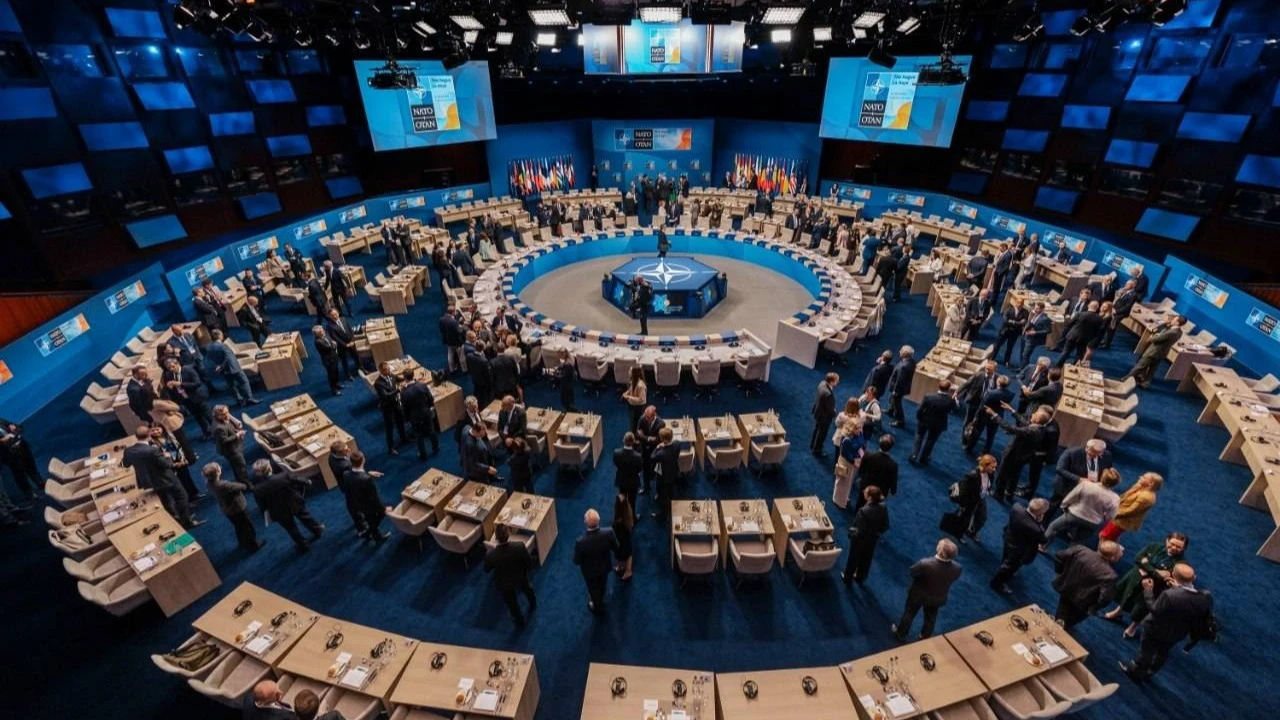
Turkey will host a highly important event in early July, the next NATO summit. Summits, where the leaders of allied countries come together, are traditionally held at critical moments for NATO and do not have a periodic nature. Decisions of political and strategic importance, such as announcing the alliance's new policy, inviting new members to the alliance, launching major initiatives, and strengthening partnerships, are made at these summits.
The steps such as presenting proposals for developing relations with Central and Eastern European countries at the summit held in London in 1990 for the first time after the Cold War, drafting the Strategic Concept document that determined the new security direction and was first made public in Rome in 1991, creating the North Atlantic Cooperation Council, inviting former Warsaw Pact members—the Czech Republic, Hungary, and Poland—to the alliance for the first time at the Madrid and Paris summits in 1997, establishing partnerships with Russia and Ukraine, and changing NATO's military command structure at the Prague summit in 2002 represent the turning points of the alliance. The main topic of the six summits (one online, one extraordinary, four planned) held in the last 4 years has invariably been Russia (NATO, 2026).
The Ankara summit is of great significance as it coincides with a period when it is difficult to predict how the open war waged against Ukraine (and essentially against Europe and the collective West) by Russia—the harshest threat NATO has faced since the Cold War—will end, while contradictions are escalating between the alliance's two wings, the US and Europe. The event, which will be held at a time when the world's security architecture is facing many trials, will now have to simultaneously address these two interconnected questions.
First, will NATO be able to find a common denominator regarding the contradictions that have surfaced and are increasingly deepening within its own ranks? Second, how does the alliance view Russia: merely as an actor pursuing an occupation policy against Ukraine or attempting to dictate its ambitions in the post-Soviet space through invasion and war, or as a long-term and systemic threat?
Historical window
While seeking answers to the main questions of the analysis, it is first necessary to pay attention to the historical background of these two interconnected issues.
In fact, US governments have gradually moved away from the principle of multilateralism, that is, coordinated action with allies, since the early 2000s. During the George W. Bush era, the US took its first serious steps in this direction—it withdrew from the Anti-Ballistic Missile (ABM) Treaty in 2001, carried out the operation to invade Iraq, and prepared the missile shield project, which came to the agenda in 2007, entirely on its own in the first stage (Ceylan, 2026). These not only created contradictions among NATO allies but also served as a pretext for Russia. Taking a partial step back from this policy and returning to the traditional policy of multilateralism during the Obama era softened the contradictions within the alliance. However, during Donald Trump's first presidential term, this trend reversed again. Although in the early periods, Trump's expressions and behavior presenting NATO as an obsolete organization were softened by his team, the voicing of thoughts about the US leaving the alliance before the Brussels summit in 2018 led to the emergence of a new crack.
Germany's then-Chancellor Angela Merkel's response that "Europe must take its destiny into its own hands" to Trump's rhetoric targeting NATO, the EU's formation of mechanisms such as Permanent Structured Cooperation (PESCO) and the Coordinated Annual Review on Defence (CARD) aimed at deeper military cooperation among member states in the field of defense and security, and steps like the creation of the European Defence Fund revealed that this crack was deeper than it appeared (Ceylan, 2026).
The continuation and even acceleration during the Biden era of the withdrawal from Afghanistan and the agreement process with the Taliban initiated during Trump's first term also dealt a serious blow to NATO's credibility and prestige. Following the Afghanistan fiasco, Biden shifted the center of gravity of US foreign policy to the Indo-Pacific region. Russia's launch of a full-scale attack against Ukraine in 2022 forced a change in this trend. NATO united in supporting Ukraine, and the future of European security once again became NATO's main agenda topic. However, with Trump's second presidential term starting in early 2025, everything changed again. Moreover, this time with a more dangerous rhetoric. Facts such as Trump's National Security Strategy, US officials' statements insulting European allies, and Washington expressing its readiness even to militarily occupy Greenland increased questions about the alliance's future, dealing a severe blow to European allies' belief that the US would protect them (Rumer, 2026).
The illusion of partnership or political blindness
The behavior of US governments, which took a particularly open, crude, and disproportionate form during the Trump era, and the Euro-Atlantic tension created by this behavior undoubtedly please Russia. After the Cold War, the collapse of its dominance over Europe, followed by the eastward expansion of NATO and the European Union, looked like a diplomatic and military defeat in Russia's eyes. Whether the West read it this way or not, this meant the loss of strategic depth and its place at the table of great powers determining the fate of Europe for Russia. For this reason, Moscow, which has no precedent of leaving the legacy of conflict in its foreign policy history and demonstrating a new approach to national security, resorted again to a familiar scenario—even while struggling with its internal crises throughout the 1990s, it did not refrain from aggressive interventions in its post-Soviet neighbors and fueled several regional wars. Because for Russia, the main condition for regaining great power status is the revival of imperial influence, and Kremlin leaders do not hide this. Since the 1990s, the main goal of Russia's policy in Europe has been to regain the "losses" of 1989 and 1991. This goal was openly and aggressively demonstrated in the rhetoric of Russian leaders, their opposition to NATO's decision to admit former Warsaw Pact members, and Putin's turning-point speech at the Munich Security Conference in 2007 (Rumer, 2026).
However, Western countries showed an inability to read this goal for many years (Gressel, 2016). Although there were dozens of facts indicating the opposite, Western circles believed for many years that expecting Russia to change was a realistic approach, and Moscow skillfully exploited this political blindness.
After the Cold War, the approach of integrating Russia into the European security architecture through controllable partnership mechanisms prevailed in the West. In particular, the US administration, which declared building a "more stable, secure, and undivided Europe" as a foreign policy priority, thought that Moscow would cease to be a threat by being included in NATO mechanisms. This thinking became NATO's official policy in 1997. In March of that year in Helsinki, US President Bill Clinton and Russian President Boris Yeltsin agreed to create a relationship based on cooperation. It was emphasized that this agreement would form the basis of a permanent and strong partnership between NATO and Russia (State.gov, 1997). In May of the same year, the "Founding Act" on mutual relations, cooperation, and security between NATO and Russia was signed at the Paris summit. This document, based on the idea that a comprehensive security system could be created in the Euro-Atlantic space with Russia's participation, envisioned the creation of mechanisms for consultation, cooperation, joint decision-making, and joint action between NATO and Russia (NATO, 1997).
Based on this document, the NATO-Russia Council was established in Rome in 2002—this body was intended as a primary platform for systematic consultation, consensus, joint decision-making, and action between the parties. NATO presented this as a phase of "new quality in relations" (NATO, 2024).
Main breaking points
However, this new quality phase did not last very long. Russian President Vladimir Putin reacted sharply to the inclusion of a statement in the final declaration at NATO's Bucharest summit in 2008 that Ukraine and Georgia could become members of the alliance in the future. Putin stated that they would consider NATO's expansion as a direct threat. Prior to this, Moscow had opposed NATO's plan to deploy air defense systems in Europe (Guardian, 2008). Despite the West's readiness to provide guarantees that these systems were not directed against Russia, the tension continued. The first break in NATO-Russia relations manifested itself with the five-day Georgia war in 2008. The fact of open military aggression against a post-Soviet country and the occupation of Georgian territory was a concrete example of Russia's new era foreign security policy. Following this war, NATO suspended the majority of its military and political cooperation with Russia. Talks within the NATO-Russia Council were frozen, while Russia's response was to threaten to halt military cooperation with NATO and completely sever ties with the alliance (De Haas, 2009).
The Georgia war became an alarm signal, especially for NATO members emerging from the former Soviet sphere of influence. Poland, the Czech Republic, and the Baltic states demanded that NATO seriously review its collective defense resources in light of Moscow's military aggression. This event also led to the emergence of serious questions regarding Article 5 of the North Atlantic Treaty, which envisions collective defense. In particular, Eastern European countries began to question whether the alliance's reaction would be limited only to political statements if Russia attacked a NATO member. The fact that justified this questioning was that despite the break and mutual political accusations that arose after the Georgia war, relations were not completely severed. Cooperation on Afghanistan between NATO and Russia continued even after the Georgia war, and formal dialogue in the NATO-Russia Council was restored in 2009 (De Haas, 2009).
Strategic rupture
In the 2010 Strategic Concept, NATO still emphasized that cooperation with Russia was of strategic importance. The document stated that NATO-Russia cooperation contributed to creating a zone of peace, stability, and security in the Euro-Atlantic area (NATO, 2010). That this was an illusion was confirmed once again in early 2014 when Russia occupied the Crimea region of Ukraine, whose territorial integrity it had guaranteed with the 1994 Budapest Memorandum (Harvard Kennedy School, 2020). With the occupation of Crimea and Ukraine's eastern territories, NATO-Russia relations entered their greatest crisis phase since the Cold War (Klein, Major, 2015). This event, which dramatically deteriorated West-Russia relations, increased discussions of a new cold war, and NATO's paradigm of strategic partnership with Russia collapsed; however, even after 2014, the line of cooperation did not completely crumble, and coordination on some dossiers, such as Iran, continued (Alcaro, 2014).
In his article written in 2016, political expert Gustav Gressel emphasized that after the 2014 occupation, NATO entered a dangerous decade where internal instability combined with weak neighborhood relations. Gressel explained this by the strengthening of the line of tension and militarism in Russia's foreign policy, and one of his main arguments was precisely the West's inability to assess the Kremlin's intentions and risks (Gressel, 2016). Despite history proving him right, supporters of the position in Gressel's analysis were still not in the majority in Western circles in 2016. For this reason, even Russia's occupation of Crimea did not cause a radical strategy change in NATO's relations with Moscow. The final meeting of the NATO-Russia Council, which convened 10 times between 2016 and 2019, was held in January 2022—just a month before the full-scale attack on Ukraine. Yet before that meeting, Russia had sent an ultimatum to NATO demanding that the alliance withdraw from its military positions formed after 1997, halt military activities in Ukraine and other post-Soviet countries, stop expansion altogether, provide guarantees not to deploy weapons in Eurasia that could target it without Russia's consent, and that the US remove its nuclear weapons from Europe (Rumer, 2026), thus showing that it had abandoned even the imitation of dialogue and partnership.
After 2022: from partnership to threat
The conviction to no longer see Russia as a partner only turned into a decision at NATO's Madrid summit in June 2022 (NATO, 2024). The 2010 Strategic Concept, which saw Russia as a strategic partner, fundamentally changed 12 years later in Madrid, recognizing Moscow as the most significant and direct threat to allies' security and peace in the Euro-Atlantic area. The document emphasized that the war against Ukraine was a continuation of Moscow's pattern of aggressive behavior toward its neighbors and the broader Euro-Atlantic community, and that Russia sought to establish spheres of influence and areas of direct control (NATO, 2022).
Alliance members did not stop at evaluating Russia as a threat, but at the same time switched to a real crisis mode. The NATO Response Force (NRF)—which was decided to be established in 2002, gained operational capability in 2004, and was reinforced with the Very High Readiness Joint Task Force (VJTF) after the occupation of Crimea in 2014—was given a collective defense and deterrence task for the first time in 2022.
This was one of the first major military steps NATO took in a real crisis mode against the Russian threat. Additionally, at the Madrid summit, allies agreed on a new NATO Force Model to replace the NRF within two years. This model envisioned creating a pre-defined force pool with a higher level of readiness within the framework of concrete plans for the defense of the allies (NATO, 2025a).
The most important military planning step taken in this framework was the Regional Defence Plans adopted at the Vilnius summit in 2023. Presented as the most comprehensive and detailed collective defense plans NATO has adopted since the Cold War, the practical significance of this step lay in creating a military-operational framework that predetermined how alliance territory would be defended by specific regions against the military threat posed by Russia and asymmetric threats like terrorism. One of these plans covers the Atlantic and the European Arctic and falls under the Joint Force Command Norfolk; the second covers the Baltic region and Central Europe and falls under the Joint Force Command Brunssum; and the third covers the Mediterranean and Black Sea region and falls under the Joint Force Command Naples. All three plans differed from previous graduated response plans precisely by establishing this pre-defined military-operational framework (Loorents, 2024).
These plans, based on the NATO Force Model, cover nearly 800,000 troops and envision bringing 300,000 personnel to combat readiness within 30 days. For comparison, the previous NRF model envisioned bringing 40,000 troops to a state of readiness within 15 days. This shows that NATO takes the Russian threat truly seriously and has transitioned to collective defense planning on a much larger scale (Loorents, 2024).
The issue of establishing a multinational NATO Corps Headquarters, which has caused discussions and debates in Turkey in recent months, is precisely part of the regional plans adopted at the Vilnius summit. Within the framework of this plan, Ankara proposed in 2024 transforming the 6th Army Corps in Adana into a multinational NATO Corps Headquarters (MNC-TUR). The headquarters, currently being formed, will become actively operational in 2028 (KHAR Center, 2026).
At the Vilnius summit, where the Russian threat settled onto NATO's military agenda, the NATO-Ukraine Council was simultaneously established to replace the NATO-Ukraine Commission. This meant Ukraine's inclusion into the mechanism of political dialogue, consultation, and crisis deliberation with a higher status. Although Kyiv stated that the most correct move against the Russian threat was granting NATO membership to Ukraine, the alliance did not green-light this. However, at the Washington summit in 2024, NATO decided to directly participate in coordinating military support for Ukraine. For this purpose, the NATO Security Assistance and Training for Ukraine (NSATU) was established (NATO, 2025 b). This decision, taken during a period of increasing ambiguous behavior in US NATO and Europe policy, was also assessed as a move against the risk of cutting military aid to Ukraine after a possible return of Donald Trump (Reuters, 2024).
In 2023, Russia dislodged another cornerstone of the Euro-Atlantic space's security architecture—it withdrew from the Treaty on Conventional Armed Forces in Europe (CFE Treaty). Emphasizing that this was the latest in a series of steps by Russia that systematically undermined Euro-Atlantic security, NATO allies also decided to suspend the operation of the treaty (NATO, 2023). At the same time, in 2024, NATO members increased their military expenditures, and the combined military spending of alliance countries reached 55 percent of global military expenditure. This was another proof of Russia being perceived as a long-term threat (SIPRI, 2025).
The admission of Sweden and Finland to NATO membership must also be added to the largest political-strategic steps against Russia. Because this was an open challenge to Russia, which used NATO's expansion as a pretext for the invasion of Ukraine—with the membership of Sweden and Finland, NATO's geography expanded in the Baltic Sea and Northern Europe, its border with Russia lengthened significantly, and Northern Europe was completely integrated into the alliance's collective defense system.
Thus, after 2022, NATO-Russia relations changed fundamentally. The policy that began between 1997 and 2002 and aimed to integrate Russia into the European security architecture as a partner failed hopelessly. Now, Russia is a long-term, real, and systemic threat factor for NATO and the main object of its defense and deterrence plans.
The testing phase
This NATO awakening, which occurred at the cost of the deaths of hundreds of thousands of people in Ukraine, the vanishing of entire cities, the destruction of infrastructure, and mass traumas whose consequences will last for decades, is a delayed but undoubtedly crucial turning point in terms of understanding the Russian threat. NATO perceives Russia as a long-term, systemic threat, prepares regional defense plans, supports Ukraine, and increases defense expenditures. However, the main question arises precisely here—is it possible to come to an unequivocally optimistic conclusion regarding the practical military and political outcomes of all these steps? First of all, will the cracks within NATO, especially the US-Europe contradiction largely deepened by the Trump administration, allow the alliance to effectively counter Russia? Second, will technical capabilities, military capacities, different interests of member states, and balancing maneuvers between different vectors (like Turkey) allow for the realization of the adopted strategies and plans?
Currently, NATO's defense posture largely relies on US military support in terms of intelligence, surveillance, and reconnaissance (ISR) capabilities, strategic transport, command and control (C2), as well as the extended deterrence provided by the US nuclear umbrella. Given the US's increasing shift toward the Indo-Pacific region, calls for strategic autonomy in Europe, and Trump's threats to leave NATO, this situation makes a serious risk assessment inevitable for Europe.
NATO's capability for deterrence or rapid response against Russian aggression is limited by the following factors:
- Lack of a sufficiently large and combat-ready force in the region;
- Shortfall of integrated air and missile defense systems;
- Sluggishness of logistics and support mechanisms;
- Lack of proprietary strategic mobility mechanisms and dependence on US air and sea transport;
- Dependence on the US for integrated command and control, intelligence, surveillance, and target acquisition activities in the region (Atlantic Council, 2025).
Even though NATO without the US may appear superior on paper in terms of numbers and technology, it is weak regarding operational, logistical, and personnel readiness to respond rapidly to potential attacks by Moscow in regions close to Russia's borders. The adopted strategies and plans can be considered a step forward in addressing this weakness, but they are not yet at a level to solve the problem.
Analysts on international platforms have long been debating the effectiveness of NATO's defense in Europe against Russia without the US. The report prepared by IISS in 2025 presents the harsh reality in numbers. According to this, if the US reduces its role in NATO, European NATO might need approximately $1 trillion in additional spending and defense-industrial capacity to defend itself from Russia. Because if the US withdraws from Europe, NATO's European allies cannot solve the problem simply by replacing major US military platforms and its 128,000-strong military contingent; they will simultaneously face gaps in space, intelligence, surveillance, software, and other areas. Moreover, it will be necessary to compensate for the current US dominance in NATO's command and control mechanisms. All this will force European countries to drastically increase investments in the defense sector and bring defense budgets close to Cold War era levels (IISS, 2025a).
Even cautious analysts who do not consider Russia's attack on another European country highly probable while the Ukraine war continues note that an unforeseen crisis or a miscalculation—as in the decision to invade Ukraine—could cause Russia to attack one of its neighbors just to prove that NATO's Article 5 guarantee is merely a "dead letter." The possibility that a Euro-Atlantic split occurring without the establishment of Europe's conventional defense line and without the creation of a deterrence mechanism against nuclear threats from Russia after exiting the US nuclear umbrella could open a window of opportunity for Putin is also cited among the potential dangers (Rumer, 2026).
Although strategic assessments vary by country, there are numerous predictions that Russia will pose a direct threat to NATO members within two to five years. A nearer date like 2027 is also voiced for this, while the Baltic states are pointed out as the main risk region (IISS, 2025 b).
The prominence of the Baltic region as Russia's potential next target in analyses is not without reason. NATO's capability gaps appear more acute on its eastern flank, particularly including the Baltic region. The majority of analysts believe that unless NATO rapidly reinforces its defense line from Scandinavia to the Baltic and Black Sea regions, accelerates the forward deployment of heavy forces, enhances integrated air and missile defense capabilities, and invests in multi-domain command and control and intelligence infrastructure, as well as land and railway corridors, Russia may gain the opportunity to test NATO's readiness and political will (Atlantic Council, 2025).
Another highlighted point is related to the fact that the severity of the problem is still not fully grasped. According to RAND analysts, if European allies do not invest more in the defense industry starting now, the future cost of deterring Russia will be much greater; Ukraine remaining in Russia's sphere of influence and Moscow drawing closer to actors like China will create long-term and very costly instability for Euro-Atlantic security: "The problem is that, with few exceptions, Europeans cannot grasp the immense damage such a scenario would inflict on allied security" (Dowd and Flanagan, 2025).
This also includes a lack of full understanding of the characteristic features of Russian aggression. The severity of the Russian threat lies not in its military power, but in its ability to create a "gray zone" by combining its military power with hybrid tactics such as manipulation, disinformation, cyberattacks, and sabotage. The West is losing to Russia in this regard—numerous analyses by the KHAR Center on Russia's propaganda activities in Europe have also revealed plenty of facts regarding the Kremlin's attempts to blur the reality of military invasion and aggression by using hybrid tactics (KHAR Center, 2025). Russia does not launch classic military attacks against NATO countries, but it sends drones (as seen in the cases of Poland, Estonia, Romania, etc.) or orchestrates sabotages and cyberattacks, yet it easily denies all of these. With this, it not only aims to blur the legal and political boundaries of the attack but also stokes disagreements within NATO. These provocations often do not cross the threshold for invoking Article 5, but they pose serious risks in terms of security and NATO's credibility (Momtaz, 2025). From this perspective, NATO, especially the European wing of the alliance, faces the crucial and difficult task of rapidly transforming its warfare concepts and capabilities to repel the revived Russian threat by 2027. Above all, this requires rapid decision-making, investment in technological innovations, and functional integration and alliance (Kramer and Taylor, 2025).
However, there are serious challenges facing NATO precisely on this latter issue—functional integration and alliance. One of these is Turkey, which will host the NATO summit. Turkey is undoubtedly one of NATO's most militarily important, geographically vital, and regionally powerful actors. The rapid changes happening in the world, the reshaping balance of power from the Middle East to the South Caucasus, US pressure on Europe, the alliance's new regional defense plans, and capability, military mobility, financial, and other gaps of NATO outside the US further strengthen Ankara's place and significance within the alliance. However, alongside this, Ankara's domestic and foreign policy line, its disputes with Greece and Southern Cyprus, its purchase of S-400 defense systems from Russia, and its problems with European governments and institutions have turned Turkey into one of NATO's most difficult members (Mammadov, 2026). Even though Turkey eventually aligns with the alliance's decisions on many principled issues (such as the signing of NATO's regional plans and the membership of Sweden and Finland), it does so not as a problem-free ally, but rather as an actor pursuing a zigzagging balance policy between Russia and NATO, attempting to extract concessions from the West with messages of moving closer to Moscow's orbit, or acting under coercion from Western threats.
In a period where the Black Sea has turned into the center stage of European security, NATO has declared Russia as the primary and direct threat to the region and the alliance, and there is no sign of an end to the war in Ukraine, facts such as the participation of President Erdoğan's son Bilal Erdoğan in the St. Petersburg International Economic Forum (AA, 2026) prior to the upcoming summit in Ankara, and subsequently Foreign Minister Hakan Fidan's visit to Moscow (Reuters, 2026), show that Ankara still intends to hold onto the "Russia card" within NATO. On the one hand, while Ankara demonstrates its intent to play an active role in NATO's southeastern plans (like setting up a NATO multinational corps headquarters, establishing a naval headquarters for the Ukraine Volunteer Coalition, and inviting Ukrainian President Volodymyr Zelensky to the summit), on the other hand, it does not want to ruin relations with Russia, the primary threat object of these plans. A similar paradox exists within NATO. Although the alliance's European allies are aware of the increasingly deepening authoritarianism in Turkey and the dependency-interest factor in relations with Russia, due to Ankara's geo-military-strategic importance, they behave extremely cautiously in their relations with the Erdoğan government. In other words, a relationship system has been formed where the parties understand the importance of protecting each other and acting together, but mutual mistrust prevails.
CONCLUSION
Taking all this written into consideration, the answer to the second of the article's main questions becomes clear. The era dominated by illusions that Russia could be neutralized as a threat by bringing it closer and integrating it into partnership mechanisms is now a thing of the past. Since 2022, NATO no longer perceives Russia as an actor that can be managed through partnership mechanisms, but as a long-term, systemic, and direct threat. The Strategic Concept adopted in 2022, the Regional Defence Plans adopted in 2023, the NATO Force Model created within this framework, the establishment of new support mechanisms for Ukraine, and steps like Finland and Sweden joining the alliance show that the harshest confrontation phase between NATO and Russia since the Cold War has begun.
However, at the same time, this defense architecture, which appears very strong on paper, faces severe tests mostly due to dependence on the US, and to some extent, other contradictions within the alliance, military capability gaps and similar operational deficiencies, as well as differences in threat perception among European allies. To increase its role in NATO defense, Europe is compelled to take concrete steps in the short and medium term; because a model relying solely on the US is becoming increasingly riskier both politically and militarily. On the other hand, even if Europe is highly determined to take these steps, building a deterrence and operational response mechanism against the Russian threat is a process that requires substantial time and finance. Russia, meanwhile, is not sitting and waiting; on the contrary, it turns these gaps into opportunities.
In a period where there is a crisis of confidence within the alliance, an important ally like Turkey slows down the functional alliance mechanism in the name of balance policy, there is no end in sight for the Ukraine war, and predictions are being made about Russia's new target for attack, NATO's main problem is not recognizing the threat, but bringing forward real defense and deterrence mechanisms against this threat and being able to act together. From this perspective, the first question of our article holds more relevance for the Ankara summit. At this summit, allies will either save the bridges between the US and Europe from burning, or the existing contradictions will deepen further.
Note: The article you have read was originally written in the Azerbaijani language. Artificial intelligence tools were used only in the translation.
References:
NATO, 2026. NATO summits. https://www.nato.int/en/what-we-do/introduction-to-nato/nato-summits
Ceylan, Mehmet Fatih, 2026. Transatlantik topluluğun kâbusu mu, umudu mu: Nato Ankara Zirvesi. https://yeniarayis.com/yazi/transatlantik-toplulugun-kabusu-mu-umudu-mu-nato-ankara-zirvesi-15496
Rumer, Eugene, 2026. Belligerent and Beleaguered: Russia After the War with Ukraine. https://carnegieendowment.org/research/2026/03/russia-ukraine-postwar-divided-european-security
Gressel, Gustav, 2016. The dangerous decade: Russia-NATO relations 2014 to 2024. https://ecfr.eu/article/commentary_the_dangerous_decade_russia_nato_relations_2014_to_2024/
U.S. Department of State, 1997. Fact Sheet: NATO-Russia Founding Act. https://1997-2001.state.gov/regions/eur/fs_nato_whitehouse.html
NATO, 1997. Founding Act on Mutual Relations, Cooperation and Security between NATO and the Russian Federation. https://archives.nato.int/uploads/r/null/1/3/137932/0329_NATO_and_the_Russian_Federation-Founding_Act_1997_ENG.pdf
NATO, 2024. NATO-Russia Council. https://www.nato.int/en/about-us/organization/nato-structure/nato-russia-council
The Guardian, 2008. Putin warns NATO over expansion. https://www.theguardian.com/world/2008/apr/04/nato.russia
De Haas, Marcel, 2009. NATO-Russia Relations after the Georgian Conflict. https://www.clingendael.org/sites/default/files/pdfs/20090000_cscp_artikel_mhaas.pdf
NATO, 2010. Active Engagement, Modern Defence: Strategic Concept for the Defence and Security of the Members of the North Atlantic Treaty Organisation. https://www.nato.int/content/dam/nato/legacy-wcm/media_pdf/pdf_publications/20120214_strategic-concept-2010-eng.pdf
Harvard Kennedy School, 2020. Budapest Memorandum at 25: Between Past and Future. https://www.hks.harvard.edu/publications/budapest-memorandum-25-between-past-and-future
Klein, Margarete və Major, Claudia, 2015. Perspectives for NATO-Russia Relations. Forms of Confrontation Dominate – But Dialogue not Excluded. https://www.swp-berlin.org/publications/products/comments/2015C49_kle_mjr.pdf
Alcaro, Riccardo, 2014. A Cold Peace? Western-Russian Relations in Light of the Ukraine Crisis. https://www.iai.it/sites/default/files/iai1411.pdf
NATO, 2022. NATO 2022 Strategic Concept. https://www.nato.int/content/dam/nato/webready/documents/publications-and-reports/strategic-concepts/2022/290622-strategic-concept.pdf
NATO, 2025a. NATO Response Force (2002-2024). https://www.nato.int/en/what-we-do/deterrence-and-defence/nato-response-force-2002-2024
Loorents, Nele, 2024. NATO’s Regional Defence Plans. https://icds.ee/wp-content/uploads/dlm_uploads/2024/07/No-5_NATOs-Regional-Defence-Plans_Nele-Loorents.pdf
KHAR Center, 2026. Türkiyə ilə Rusiya Arasında Səssiz Gərginlik. https://kharcenter.com/arasdirmalar/turkiye-ile-rusiya-arasinda-sessiz-gerginlik
NATO, 2025b. Relations with Ukraine. https://www.nato.int/en/what-we-do/partnerships-and-cooperation/relations-with-ukraine
Reuters, 2024. NATO takes over coordination of military aid to Kyiv from US, source says. https://www.reuters.com/world/nato-takes-over-coordination-military-aid-kyiv-us-source-says-2024-12-17/
NATO, 2023. North Atlantic Council statement on the Allied response to Russia's withdrawal from the Treaty on Conventional Armed Forces in Europe. https://www.nato.int/en/about-us/official-texts-and-resources/official-texts/2023/11/07/north-atlantic-council-statement-on-the-allied-response-to-russias-withdrawal-from-the-treaty-on-conventional-armed-forces-in-europe
SIPRI, 2025. Unprecedented rise in global military expenditure as European and Middle East spending surges. https://www.sipri.org/media/press-release/2025/unprecedented-rise-global-military-expenditure-european-and-middle-east-spending-surges
Atlantic Council, 2025. For NATO in 2027, European leadership will be key to deterrence against Russia. https://www.atlanticcouncil.org/in-depth-research-reports/issue-brief/for-nato-in-2027-european-leadership-will-be-key-to-deterrence-against-russia/
IISS, 2025a. Defending Europe Without the United States: Costs and Consequences. https://www.iiss.org/research-paper/2025/05/defending-europe-without--the-united-states-costs-and-consequences/
IISS, 2025b. Progress and Shortfalls in Europe’s Defence: An Assessment. https://www.iiss.org/publications/strategic-dossiers/progress-and-shortfalls-in-europes-defence-an-assessment/introduction/
Dowd, Anna və Flanagan, Stephen, 2025. Time to Reassess the Costs of Euro-Atlantic Security. https://www.rand.org/pubs/commentary/2025/02/time-to-reassess-the-costs-of-euro-atlantic-security.html
KHAR Center, 2025. Rusiyanın antiqərb propaqandasının təsir alətləri: hörümçək toru. https://kharcenter.com/nesrler/rusiyanin-antiqerb-propaqandasinin-tesir-aletleri-horumcek-toru
Momtaz, Rym, 2025. Taking the Pulse: Should NATO Have Shot Down Russian Planes Violating Estonian Airspace? https://carnegieendowment.org/europe/strategic-europe/2025/09/taking-the-pulse-should-nato-have-shot-down-russian-planes-violating-estonian-airspace
Kramer, Franklin və Taylor, Kristen, 2025. Immediate steps that Europe can take to enhance its role in NATO defense. https://www.atlanticcouncil.org/in-depth-research-reports/issue-brief/immediate-steps-that-europe-can-take-to-enhance-its-role-in-nato-defense/
Mammadov, Ali, 2026. NATO’s Turkey Paradox. https://mwi.westpoint.edu/natos-turkey-paradox/
Anadolu Ajansı, 2026. Dünya Etnospor Birliği Başkanı Bilal Erdoğan, St. Petersburg Uluslararası Ekonomi Forumu'nda konuştu. https://www.aa.com.tr/tr/spor/dunya-etnospor-birligi-baskani-bilal-erdogan-st-petersburg-uluslararasi-ekonomi-forumunda-konustu/3957985
Reuters, 2026. Turkey's foreign minister to visit Moscow for talks on Ukraine, Black Sea. https://www.reuters.com/world/middle-east/turkeys-foreign-minister-visit-moscow-talks-ukraine-black-sea-2026-06-15/
