(This article was prepared within the framework of the KHAR Center research series “Authoritarian Regimes and Transregional Influence Mechanisms.”)
Note: The original version of this article was written in English.
Author: Amrah Jafarov
He is a political scientist and researcher based in Germany. He holds a Bachelor’s degree in International Relations from the Academy of Public Administration under the President of the Republic of Azerbaijan, a Master’s degree in Political Science from Ankara Social Sciences University in Turkiye, and has completed a graduate program in Mediation and Conflict Resolution at the University of San Diego in the United States.
All signs - internal uprisings, global isolation, military defeats - indicate that the Islamic Republic of Iran can no longer sustain itself. The collapse of the theocratic regime is not a matter of “if”, but “when?”. Although there is no clear or shared vision of Iran’s post-Islamic Republic period, several possible scenarios are discussed more frequently than others. This piece aims to analyze these possible scenarios, the state of democracy, human rights, and international relations during each of these series of developments.
Introduction
Iran is on the verge of change after the internal and geopolitical events of recent years. The protests that began across Iran in September 2022 after the killing of Mahsa Amini by Iranian security forces managed to transform Iran from the inside out: the intensity of the protests increased, disobedience to the strict regime's rules became a daily habit for Iranians, and the weakening of the bond between the public and the system began to be seen everywhere (DW 2025). The brutal suppression by regime forces of the latest wave of protests, which erupted mainly for economic reasons and spread throughout Iran in late 2025, and resulted in the killing of thousands of people, became the "last straw" and further increased anger against the regime within Iran.
The international and regional political situation has also begun to work against the Iranian regime in recent years. Events such as Israel's increased pressure on Iran's proxy forces, Hamas and Hezbollah, and the elimination of their leaderships, the overthrow of the ally Assad regime in Syria at the end of 2024, and the weakening of Russia's international position due to the war in Ukraine have shattered the "axis of resistance" that the Iranian leadership has been trying to build for years, consisting of proxy forces, and have made the regime more vulnerable in the region.
The regime's direct military defeats began in 2020 with the killing of Qassem Soleimani, commander of the Quds Force of Iran's Islamic Revolutionary Guard Corps, in a US military strike in Iraq. The 12-day war in the summer of 2025 and the apparent destruction of Iran's military leadership in this war further weakened the regime and worsened its economic situation. Finally, the US and Israeli military intervention in February 2026 removed not only Iran's military leadership but also its first person, supreme leader, Ali Khamenei, and undermined the regime's foundations.
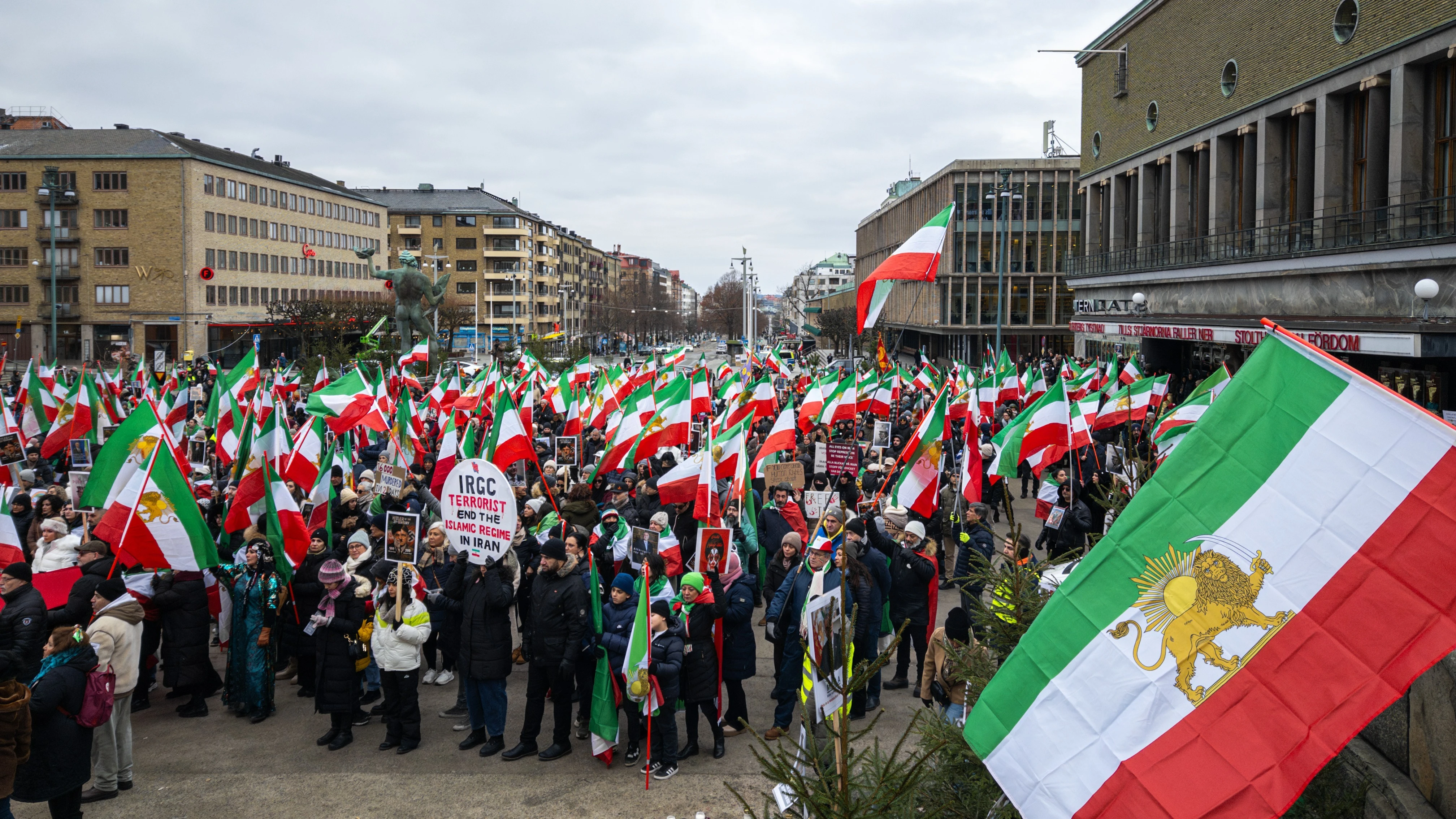
The European Union’s decision to designate Iran’s Islamic Revolutionary Guard Corps (IRGC) as a terrorist organization in February 2026 (The Council of the EU, February 2026) shows the end of the EU’s long strategy of engagement with the Islamic Republic and closes the door for future cooperation. The fact that such dangerous weapons are in the hands of fanatical radicals reminds the entire world of the horror of September 11. It mobilizes Western countries to tackle the regime.
All these signs show that the Islamic Republic in Iran can no longer sustain itself and the collapse of the theocratic regime is not a matter of “if”, but “when?”. However, there is no clear, shared vision of Iran’s post-Islamic Republic period. This analysis addresses the following questions:
- What are the possible governing models for Iran following the collapse of the current regime?
- What does each development of events promise regarding basic human rights, women's freedoms, and the rights of ethnic minorities in Iran?
- How might Iran’s international relations evolve with the Western Countries, Israel, and neighboring countries?
To answer these questions, this study analyzes several possible scenarios for Iran, including the establishment of a democratic republic, the Pahlavis re-taking the power, the emergence of a secular dictatorship, or the disintegration of the state. For this analysis, we refer to Iranian historical experience, comparative examples from other countries, open sources, and relevant literature.
Although completely different scenarios will emerge in any development of events, it remains completely uncertain which series of developments will materialize.
The rule of monarchists centered around the Pahlavi family
The Pahlavis came to power in 1925 after the dynasty's founder, Reza Khan, staged a military coup against the Qajar dynasty in Iran. In 1941, the Allies forced Reza Shah to abdicate, placing his young son Mohammad Reza Shah Pahlavi on the throne. He was overthrown in early 1979, during the Islamic Revolution led by Ruhollah Khomeini. Mohammad Reza Shah Pahlavi left Iran for exile and died there after one year. The shah’s son, Reza Pahlavi, was training to become a fighter pilot in the United States when his family fled Iran (Afary 2026). The family never gave up their claim to the Iranian throne, nor did they abandon their claim to the Islamic Regime as illegitimate, and throughout their time in exile, they continued to consolidate their former supporters and recruit new ones.
Currently, Reza Pahlavi is trying to portray himself as a unifying and legitimate figure who can change Iran, rather than as the future Shah of Iran. However, his supporters do not hesitate to openly call him Shah. Reza Pahlavi states that he is committed to opening the Iranian economy to investors, good relations with Western countries and Israel, and a complete abandonment of claims to nuclear weapons. He also highlights the importance of personal freedoms, such as women’s rights and freedom of clothing. He tries to demonstrate his high prestige among the Iranian population by surrounding himself with representatives of different ethnic groups and making public appeals to these communities.
However, different reports demonstrate that ethnic groups in Iran, especially Azerbaijanis, as the biggest ethnic minority, remain suspicious of the political role of Reza Pahlavi, and it is one of the reasons why the Azerbaijan regions have shown limited participation in the recent protests. They remember the oppressive rule of the Pahlavi dynasty and how they treated ethnic minorities (Azadlıq Radiosu, January 2026). Historical memory reinforces alienation as the short-lived Azerbaijani and Kurdish autonomous republics in northern Iran (1945-1946) were violently crushed by the Pahlavi dynasty, leading to mass repression, killings, displacement, exile, and the suspicious death of their leader, with this trauma persisting across generations. South Azerbaijanis resist a Persian-centered political transition, as the Pahlavi era is thus remembered not as a time of stability, but as one of violent assimilation and state terror (Askerov 2026).
Reza Pahlavi's rise to power could strengthen ethnic separatism in Iran and, conversely, Persian nationalism. So the Pahlavi dynasty during their half a century rule attempted to reshape Iran into a more homogenous, Persian-centric society. For them, unassimilated minorities represented a threat to the construction of a prescribed national identity (Nader and Stewart 2013). That’s why for many minorities, he embodies the return of a system that denied their identity and political rights. Rather than uniting Iran, a Pahlavi-centered transition would likely intensify ethnic resistance and deepen fragmentation. Well-known Iranian leftist party Tudeh also repeatedly expressed its anger at Reza Pahlavi and called him “an agent of Netanyahu’s racist government” (Tudeh Party of Iran, February 2026). After all, it is no coincidence that US President Donald Trump again expressed skepticism that Reza Pahlavi, the exiled son of Iran's last shah, could run Iran in the future (BBC, February 2026).
Despite a high media presence, good international relations, and support from some Iranians, especially those in the diaspora, the Pahlavi family doesn’t seem realistic about ruling in post-Islamic Republic Iran, as they have not received noteworthy support from the ethnic minorities in Iran and are seen as suspicious by other ideological groups, especially leftists.
Secular dictatorship
Another path for Iran is the rise to power of a new authoritarian but secular leader from the military or political elite. Especially one of the two army branches in Iran - the Islamic Republic of Iran Army (Artesh) - has the capability to introduce such potential military leaders. After 1979, Iran kept the pre-revolutionary army (Artesh) but reshaped it through purges, ideological control, and parallel institutions, while prioritizing the IRGC as the regime’s main military force. Despite repression and marginalization, the Artesh survived and played a key role in defending Iran during the Iran-Iraq War, though tensions with the IRGC persisted. A failed coup in 1980 showed that some within the army supported a return to secularism, but still it remains politically quiet and closely monitored, leaving its future role uncertain. (Middle East Institute 2011). If today's Iran restricts individual freedoms while allowing some political freedoms, such as local elections, media debates, and criticism of the executive government, then in this alternative Iran, those political freedoms would be restricted while allowing social freedoms, such as choice in women's clothing and consumption of alcohol.
At the same time, warm relations could be established with Western countries and Israel. Such an authoritarian leader, who can build good relations with the United States, could also abandon Iran's nuclear weapons ambitions, alleviating the main concern in the West about Iran. However, this path for Iran still seems problematic, and even worse, regarding the basic rights of ethnic minorities in Iran, as such a government would not be interested in providing the cultural demands of ethnic minorities.
There are examples of this path in the world. Thus, in Egypt, although the Abdel Fattah el-Sisi dictatorship, which replaced the "Muslim Brotherhood", suppressed political and social freedoms, it became a fairly accepted figure in international relations and has been able to hold power in Egypt for many years.
It seems that this path would also be attractive to the US leadership. As such, a new strong leader who can cooperate well would be a good opportunity to avoid a power vacuum in the region, and it would be possible to solve problems simply by making agreements with him. That’s why US President Donald Trump has repeatedly mentioned the US operations in Venezuela as a “perfect” example of how regime change can play out, drawing direct parallels between Venezuela and Iran (CNN, March 2026). The Trump administration does not want to engage in a state-building process from scratch, as was the case in Afghanistan or in Iraq, and simply wants to achieve its goals by quickly bringing to power someone they can get along with.
However, it is doubtful that Israel shares the same position as the United States on this issue. Even if it is not ideologically dangerous, Israel would not be satisfied with the replacement of one centralized and strong leadership in Iran with another centralized and strong leadership. Israel may have an interest in Iran's inability to accumulate power for a long time. This same Israeli approach can also be seen in Israel’s policies in Syria after Bashar Assad. Israel’s military intervention in Syria and support for Druze communities suggests that Israel has not abandoned its longstanding strategy of weakening Syria - originally aimed at the previous regime - and continues to pursue this goal, through different methods and justifications (AlJazeera 2025). Israel is also learning this lesson from strengthening Egypt and Sisi. As Sisi's influence has increased in recent years and the restoration of a strong authoritarian system in Egypt, there has been a hardening of rhetoric with Israel (Chatham House 2025).
To conclude, the establishment of a secular dictatorship in Iran is quite a realistic possibility, and while this path may seem attractive to the United States, it may not be satisfactory from the point of view of Israel's interests.
Establishment of the Democratic Republic
One of the paths desired by many for Iran is the democratization of the country and the establishment of popular rule. It doesn’t necessarily matter that this republic contains the word “Islamic” within its name or is a completely new republic with a secular system. So, democracy in Iran can be achieved through the transformation of the current Islamic Republic or by establishing a new one through overthrowing the Islamic Republic. The establishment of the democratic Republic in Iran without nuclear ambitions may lead to good relations with neighboring and European countries. This way is also promising to the different ethnic and religious groups in Iran, as they may enjoy basic human rights, decentralization of the government, and even democratic federalism. This path of Iran promises a good future for Iranian women, whose freedoms have been taken away for years, and it will also increase the desire for repatriation among Iranians in the diaspora.
However, the US and Israel may still be suspicious about the rule of the people in Iran, as it may bring another anti-Western or “political Islamic” government to power in the future. At the same time, the balancing of the political power of different groups within democratic Iran can be compatible with the interests of all global and regional powers.
However, the ceremonialism of democratic institutions and the lack of a free civil society in Iran for many years remain key barriers to the country's democratization. A powerful military elite can also hinder such a democratic transition.
Chaos and disintegration
Considering the diverse ethnic, religious, ideological, and cultural identities in Iran, different ways of chaos and disintegration have always been discussed. The eruption of civil war between different groups or the uprising of separatist movements is now one of the greatest risks facing the collapsing regime.
Following the US-Israeli attack on Iran's leadership, cracks may emerge within the elite of Iran, which may later easily lead to a civil war. While SEPAH is gaining more power following the US-Israeli attack and the death of Khamenei, not all military and political groups are happy about this development. However, the regime still tries to show its unity and uses the foreign attack to mobilize the elite.
Iran is also vulnerable to potential independence movements of the ethnic groups living in the country. Although separatist tendencies are not something new for the Islamic Republic, it has not evolved into full-scale conflict and violence yet. The current ruling religious ideology is supposed to play a unifying role for this diversity. Jabbarli (2021) calls the current ideology of the Islamic Republic “inclusive supra‑identity serving exclusive nationalism”. He adds that the Islamic revolution had a consequential impact on national and ethnic identities. Although the Islamic regime had denounced the nationalist account of the Pahlavi regime, in practice, the doctrine of Persian supremacy has remained untouched. The country’s ethnic minorities continued to suffer from economic, cultural, and political discrimination in the wake of the 1979 revolution. Moreover, the provisions regarding ethnic equality and language rights contained in the Islamic Republic’s constitution have never been implemented in practice.
The Kurdish independence movement in Iran is notable for its wide range of activities and historical background. Therefore, the Kurdish independence movement in Iran managed to emerge as the Kurdish Republic of Mahabad in the 1940s (Roosevelt 1947). Although there is no exact data about the number of Kurds in Iran, it is clear that they mainly live in Kurdistan, Kermanshah, West Azerbaijan, Ilam, and Lorestan ostans (provinces), and they are the second biggest ethnic minority group following Azerbaijanis. The reasons why Kurds are discriminated against in Iran are not only related to their ethnic identity, but also to their Sunni sect and their close ties with Kurds living in neighboring countries, Turkiye and Iraq. The activities of Iranian Kurds are not limited to Iranian territory but also extend to various armed formations in Iraqi Kurdistan. The historical Kurdistan Democratic Party of Iran (HDKA), the Kurdistan Free Life Party (PJAK), which is an ally of the PKK, and the armed formations of these groups can be examples of this. It is not a coincidence that these two parties and some more Iranian Kurdish forces formed the Coalition of Political Forces of Iranian Kurdistan in February 2026, shortly before the US-Israeli attack on the Iranian regime (RFE/RL, February 2026). Following the US-Israeli attack on the Iranian regime, US President Donald Trump called Iraqi Kurdish leaders, and the administration has been in active discussions with Iranian opposition groups and Kurdish leaders in Iraq about providing them with military support (CNN, March 2026). With the weakening of the mullah regime and the central government in Iran, it is a very realistic expectation that Kurdish armed groups will begin to operate in Iranian territory.
Another ethnic group, among whom there are factions with secessionist intentions, is the Azerbaijani Turks in the northern provinces of Iran. Azerbaijanis have managed to defy the central government several times in the 20th century. Additionally, in the past few decades, they have also repeatedly attempted to raise national issues through mass protests. For example, in May 2006, the controversy caused by the publication of a racist cartoon against the Azerbaijani minority resulted in massive protests throughout the predominantly Azerbaijani-populated cities of Tabriz, Urmia, Ardabil, Zanjan, and Sulduz and several smaller towns (The New York Times 2006). Although there is no information in open sources about Iranian Azerbaijanis having special armed units like the Kurds, their ethnic and cultural ties to the states of Azerbaijan and Turkiye could become a game-changing factor as the central government in Iran weakens. The Azerbaijani leadership's periodic statements mentioning Iranian Azerbaijanis show that the Azerbaijani government has not ruled out these tools. Following the drone attack by Iran in March 2026, President Ilham Aliyev mentioned again about Azerbaijanis in Iran: “They know that the independent Azerbaijani state today is a source of hope for many Azerbaijanis in Iran” (President.az, March 2026).
Another group in Iran that is occasionally associated with conflicts and separatist movements is the Baloch. Balochs, who live in the southeast of the country, have been discriminated against by the Iranian authorities for many years, both because they are an ethnic minority and because they are predominantly Sunni. Balochs keep close connections with ethnic Balochs living in Pakistan and Afghanistan. Following the large-scale protests and military interventions over the last year in Iran, Baloch organizations have also mobilized under one coalition, and in December 2025, several groups belonging to the country’s Baluch minority announced that they will operate under the umbrella of the Popular Fighters Front (JMM) (FDD 2025).
The Arabs living in the south of the country, in the provinces of Khuzestan, Bushehr, and Bandar Abbas, are also an ethnic minority with separatist potential. They have a movement called the Ahvaz movement that has a history of more than 100 years, and is expected to expand its activities as the central government in Iran weakens. The potential support of other neighboring Arab states could also be decisive in this matter.
For international powers that are not interested in a central and strong government in Iran for the post-Islamic Republic era, supporting these different interest groups and “Balkanization” of Iran seems to be an attractive path. Considering all of this, the weakening of central authority in Iran will likely lead to an increase in disintegration tendencies among different ethnic, religious, and political groups, and this may shape the future of Iran.
Conclusion
The growing internal protests in Iran in recent years, the military and geopolitical failures, and the ongoing US-Israeli intervention raise a wide range of questions about what Iran could become if it is going to change. There are many different answers to these questions, and we have attempted to analyze those answers, the possibilities, and their potential outcomes. The results suggest that while the number of paths discussed is a lot, not all of them are realistic.
At the current stage, the democratization of Iran seems difficult due to the large number of ethnic, religious, and ideological differences in the country and the many years of dismantling and destruction of democratic institutions. Although there has been much talk among diaspora Iranians and in the international media about the Pahlavi family's return to power in some form, this does not align with Iran's internal realities.
However, filling the power vacuum that will be created by the collapse of the mullahs' regime in Iran with a secular and authoritarian leader is a possible future in terms of Iran's internal dynamics and the international geopolitical situation. Another high probability is that the country will be dragged into a more chaotic future and disintegration as ethnic, religious, and ideological differences in Iran fail to coexist.
To conclude, the future of Iran in the post-Islamic Republic era will depend on how the current war in Iran continues and concludes, and on the extent to which connections among elites and among different ethno-cultural groups within Iran will be maintained.
References
Afary, H. February 19, 2026. Reza Shah Pahlavi. Encyclopedia Britannica. https://www.britannica.com/biography/Reza-Shah-Pahlavi
Aljazeera Centre for Studies. 2025. A Strategic Dilemma: Israel’s Intervention in Syria’s Suwayda Province. https://studies.aljazeera.net/en/analyses/strategic-dilemma-israel%E2%80%99s-intervention-syria%E2%80%99s-suwayda-province
Archie Roosevelt, Jr. 1947. The Kurdish Republic of Mahabad. Middle East Journal, 1(3), 247–269. http://www.jstor.org/stable/4321887
Askerov A. 2026. The Missing Factor in Iran’s Unrest is Ethnic Division. https://www.e-ir.info/2026/01/15/opinion-the-missing-factor-in-irans-unrest-is-ethnic-division/
Azadlıq Radiosu. January 2026. İranda azərbaycanlılar niyə etirazlara qoşulmur? https://www.azadliq.org/a/iran-etirazlar-azerbaycanlilar/33643319.html
BBC. February, 2026. Trump expresses doubts over Iran's exiled crown prince. https://www.bbc.com/news/articles/cm2ryq0d2mro
Chatham House. 2026. Egypt now sees Israel as an imminent threat. https://www.chathamhouse.org/2025/09/egypt-now-sees-israel-imminent-threat
CNN. March, 2026. CIA working to arm Kurdish forces to spark uprising in Iran, sources say. https://edition.cnn.com/2026/03/03/politics/cia-arming-kurds-iran
CNN. March, 2026. Trump has drawn parallels between Iran and Venezuela. But there’s no Delcy Rodríguez in Tehran. https://edition.cnn.com/2026/03/03/middleeast/iran-venezuela-trump-regime-change-parallels-intl
Deutsche Welle (DW). 2025. Why Iran 'cannot turn back time' on public hijab rule. https://www.dw.com/en/why-iran-cannot-turn-back-time-on-public-hijab-rule/a-72616469
Foundation for Defense of Democracies (FDD). 2025. Iranian Baluch separatist factions establish Popular Fighters Front coalition. https://www.fdd.org/analysis/2025/12/12/iranian-baluch-separatist-factions-establish-popular-fighters-front-coalition/
Jabbarli R. 2021. The Challenges of Identity Politics in Iran. Baku Dialogues: Vol. 5 | No. 1 | Fall 2021. https://bakudialogues.idd.az/media/2021/09/24/jabbarli-bd-v5-n1-fall-2021-.pdf
Middle East Institute. 2011. The Artesh and Revolution. https://mei.edu/ar/publication/artesh-and-revolution/
Nader A. and Stewart R. 2013. Iran's Forgotten Ethnic Minorities. https://www.rand.org/pubs/commentary/2013/04/irans-forgotten-ethnic-minorities.html
Radio Free Europe/Radio Liberty (RFE/RL). February 2026. Exiled Kurdish Groups Form New Alliance As They Seek To Capitalize On Iran's Frailty. https://www.rferl.org/a/iran-exiled-kurdish-alliance-tehran/33685461.html
The Official Website of the President of the Republic of Azerbaijan. March 2026. Ilham Aliyev chaired meeting of Security Council. https://president.az/en/articles/view/71792
The Council of the EU. February 2026. EU terrorist list: Council designates the Islamic Revolutionary Guard Corps as a terrorist organisation. https://www.consilium.europa.eu/en/press/press-releases/2026/02/19/eu-terrorist-list-council-designates-the-islamic-revolutionary-guard-corps-as-a-terrorist-organisation/#:~:text=2026%2013:20-,EU%20terrorist%20list:%20Council%20designates%20the%20Islamic%20Revolutionary%20Guard%20Corps,and%20ISIL/Da'esh.
The New York Times. 2006. Iran Shuts Down Newspaper Over Cartoon. https://www.nytimes.com/2006/05/24/world/middleeast/24iran.html
Tudeh Party of Iran. February 2026. Statement of the Tudeh Party of Iran. https://www.tudehpartyiran.org/en/2026/03/01/statement-of-the-tudeh-party-of-iran-the-death-of-the-dictator-the-peoples-demand-for-transition-from-the-anti-people-regime-of-the-guardianship-of-the-jurist-and-the-necessity-of-an-immed/
