
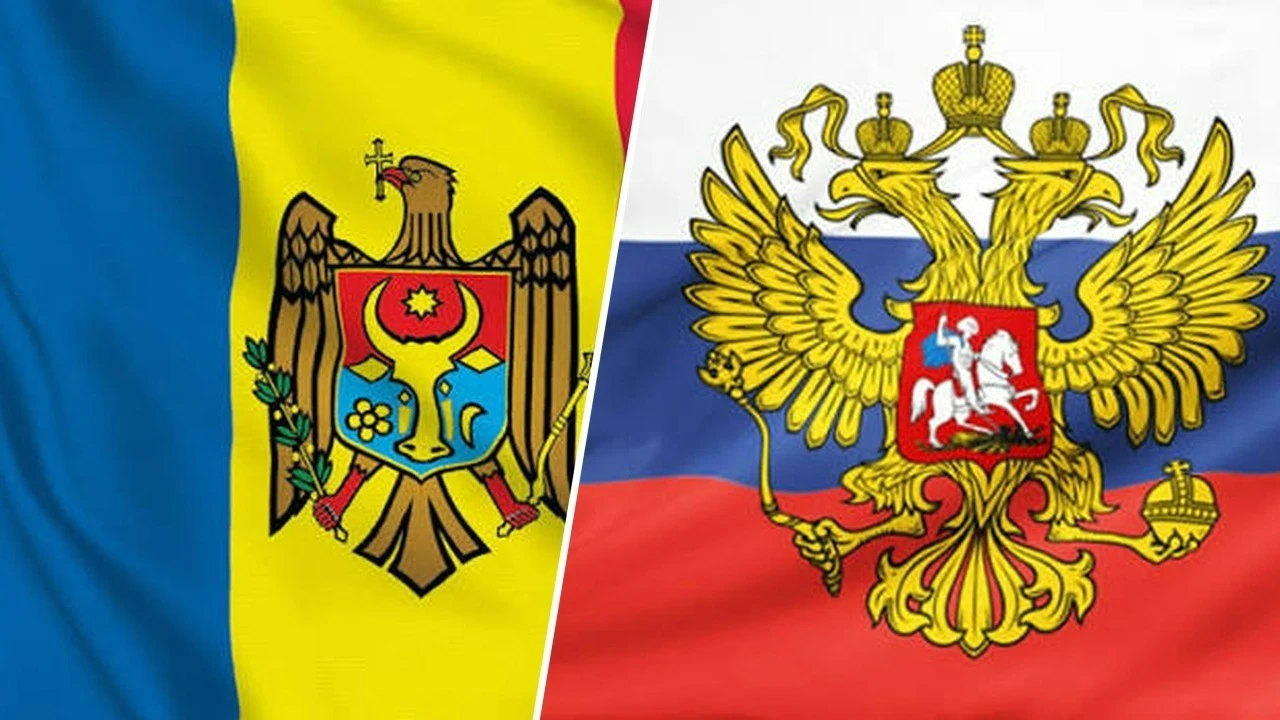
(The article was prepared within the framework of the KHAR Center’s research "Russia’s mechanisms of influence in post-Soviet countries")
Moldova holds a special place in Russia's propaganda activities in the post-Soviet space. It is incorrect to view the Kremlin's influence operations in this country as a simple case of propaganda, disinformation, and manipulation. As Moscow loses its levers of influence over Chişinău, it is conducting more aggressive operations. Especially since 2022, Russia's model of influence in this country has evolved into a broader mechanism where various tools—political financing, interference in electoral processes, coordinated social media campaigns, the use of local political and public actors, and economic and energy pressure—complement one another. In this regard, it is more accurate to assess the Kremlin's activities in Moldova as Foreign Information Manipulation and Interference (FIMI). The mobilization of the entire available infrastructure by Moscow during the 2025 elections in Moldova, from official channels and state media to local proxies and coordinated information networks, is also noted in the EU's FIMI report (EEAS, 2026).
Russia's system of influence in Moldova is not new. The country's Soviet past, issues of language and identity, The unresolved Transnistria conflict since 1992, the Gagauzia issue, long-term energy dependence, and numerous other factors, such as Moscow's political, economic, and religious levers of influence in the country, have allowed the Kremlin's intervention apparatus to take root in Moldova. In the last decade, the nature of these relations began to change, especially after Russia's full-scale war against Ukraine in 2022. The acceleration of Moldova's integration into the European Union, restrictions on Russian media, reduced energy dependence, and state institutions taking a tougher stance against foreign interference have weakened some of the Kremlin's traditional tools of influence.
However, this weakening has not led to the disappearance of Russia's influence in Moldova, but rather a change in its character. In particular, during the 2025 parliamentary elections, Russia's repackaged propaganda operations emerged in a very aggressive and blatant manner. Although these operations did not lead to a change in the country's political leadership. While the pro-European forces retained their parliamentary majority, Moscow is using all available opportunities to reverse Moldova's Western integration process.
In this study, the KHAR Center factually examines Russia's influence mechanisms in Moldova, particularly how these mechanisms have evolved recently, and the areas of Moldova's information and political space where the Kremlin still retains significant influence potential. It also answers the question: "What mechanisms does Russia use to influence Moldova's information and political space, and how have the strength, scope, and methods of this influence system changed in recent times?"
RUSSIA'S OBJECTIVE IN MOLDOVA
According to Russian political thought, the country's "great power" interests extend far beyond its borders. In particular, the post-Soviet space is considered Russia's exclusive area of geopolitical dominance. For this reason, Moscow considers the European Union's efforts to expand eastward a threat to this hegemony. From this perspective, the countries included in the EU's Eastern Partnership project in recent decades have been special targets for Moscow, especially Ukraine, Georgia, and Moldova, which initiated real integration among these nations. Moscow relentlessly works to erode the sovereignty of these countries, gain influence over their internal and external decision-making mechanisms, and simultaneously undermine Western influence (Gretskiy, 2025). Strategically, Russia's primary goal in Moldova is to prevent the country from joining the European Union. This also means preventing Moldova from becoming more closely integrated into the Western political and security architecture.
The Kremlin uses all of these "negative motivation" tools—such as promoting separatism, exploiting security gaps, economic coercion, and nuclear threats—to maintain influence over post-Soviet countries, including Moldova (Gretskiy, 2025).
Moldova has become the Kremlin's second most important target, especially after Russia's large-scale invasion of Ukraine in 2022. As a result of Ukraine largely repelling Russian attacks, the immediate physical threat to Moldova has diminished. However, this does not mean that Russia's sabotage against Moldova has decreased. Russia's incursions into Moldovan airspace increased 10-fold in 2026 compared to 2022, and two-fold compared to 2005 (Moldova 1, 2026a). The firing on Ukrainian President Volodymyr Zelenskyy's plane in Moldovan airspace also indicates the seriousness of these attacks (Pravda UA, 2026).
In other words, Moldova has become a de facto second front in the war. Russia has declared that it sees Moldova as part of the "Russian world" and has made the country a testing ground for its propaganda tools to turn its myth into reality (Wilson, 2025). However, unlike the Georgian leadership, which halted its EU membership process under the pretext of a "second front," Moldova has not stopped its integration with the West. In 2022, Moldova, along with Ukraine, received candidate status for the EU, and in 2024, it began membership negotiations.
This has led Moscow to pursue its secondary objective while also protecting its primary strategic goal. For the Kremlin, the current minimum goal is for Moldova to remain a "gray zone" state, forced to take into account Russian interests (Popescu-Zamfir, 2025). to remain a 'gray zone' state that is forced to take Russia's interests into account (Popescu-Zamfir, 2025).
ON WHAT GROUNDS IS RUSSIA'S INFLUENCE IN MOLDOVA BASED?
Moldova, which bears the traces of the Russian, Ottoman, and Austro-Hungarian empires, has shaped the most important features of its political landscape in relatively recent times, despite this historical depth. Bessarabia, where Moldova is located, has historically been an area where the Russian-Soviet and Romanian political-cultural spheres intersected. The Moldovan territory on the right bank of the Dniester River was part of Romania between the two World Wars. After the Soviet Union was established, in 1924 Stalin declared the Moldavian Autonomous Soviet Socialist Republic on the left bank of the Dniester, intended as an irredentist bulwark against Romania within the Ukrainian SSR. In 1940, Moldova on the right bank of the Dniester was also occupied by the Soviet Union under the Molotov-Ribbentrop Pact and declared the Moldavian SSR. In 1941, Germany and Romania, and in 1944, the Soviet Union again occupied Moldova. This legacy also laid the foundation for the problem with the Transnistria region (Remler, 2022).
The problem of language and identity
The Soviet occupation was not limited to the demarcation of borders; this ethno-administrative practice also involved the displacement of the population. Many Moldovans and Romanians were deported during the period of Soviet rule, and some were killed. At the same time, a larger number of Russians and Ukrainians were settled in the Moldovan territory. This led to the emergence of a state with constantly disputed borders, whose population was partly eager to unite with their historical homeland (Rumer, 2017). Although Moldovans speak Romanian, during the USSR period, the language's name was changed to "Moldovan" and the Cyrillic alphabet was made mandatory.
The Russian language, as in all Soviet republics, also acquired the function of a lingua franca in Moldova, especially in urban areas and among ethnic minorities. In Moldova, the number of Russian speakers has exceeded the number of those who consider it their native language or identify as ethnic Russians (CSS, 2025).
Efforts to create a Soviet Moldovan identity led to the emergence of a strong Moldovan-Romanian nationalist movement during the period of relative liberalization in the late 1980s. In its early stage, one strand of this movement, which had broader demands for language, the Latin alphabet, national sovereignty, and historical identity, was unionism. According to this line, the injustice created by the Soviet occupation and the redrawing of borders had divided a people with the same roots, and they should reunite. However, this provoked a backlash from other Russian-speaking residents of Moldova and the Turkic Christian Gagauzes. Fearing they would lose their status, become second-class citizens, and lose their ties with Russia if a Greater Romania were created, these forces, also influenced by Moscow's destructive propaganda, launched separatist movements. In 1990, a separatist republic was declared in the Transdniester region with Moscow's open support. A similar process began in Gagauzia, but Chişinău was able to resolve the issue there in 1994 by granting the region a special legal status and autonomy. Chisinau's attempts to bring the Transdniester region under control, however, failed in 1992 when the Russian army in eastern Moldova supported the separatists. The region has since become a conflict hotspot that remains a headache for Moldova (Rumer, 2017).
Besides the issue of language and identity, economic hardships, Soviet nostalgia and legacy, as well as linguistic divisions (especially among Ukrainian-speaking communities that feel neglected by the political center) have been factors that strengthen resistance to EU integration and create fertile ground for Russian influence (CSS, 2025).
Energy dependence
Energy dependence was one of the main factors that strengthened Russia's leverage in the early years of independence. With no significant gas reserves, Moldova's Soviet-era energy infrastructure was almost entirely dependent on Russian supplies. In 1994, Moscow turned this into an even more serious dependence. Gazprom threatened to cut off gas to Chişinău over Moldova's $250 million debt. The crisis resulted in the Moldovan government agreeing to create a joint gas transit company with Gazprom and to hand over certain state assets to settle the debt. Subsequently, the de facto free supply of Russian gas to the separatist Transnistria region, and its use at the Cuciurgan power plant that sells electricity to Moldova, created a new form of political pressure on Chişinău (Gretskiy, 2025). After 2011, Gazprom demanded that Chişinău withdraw from the implementation of the EU's Third Energy Package and its Energy Union commitments. As Moldova refused to accept this, the old contract was extended for short periods, and the future of gas supplies was kept in constant uncertainty. At the same time, Moscow also continuously increased prices. While Moldova paid approximately $80 for a thousand cubic meters of Russian gas in 2005, that figure reached $382 in 2012 (Calus, 2013).
Economic levers
The dependence and pressure were not limited to the energy sector. In the 2000s, Russia was an important market for Moldovan products and a major destination for labor migration for hundreds of thousands of Moldovan citizens. In 2012, Russian investment in Moldova amounted to $786 million, which constituted 23 percent of the country's foreign investment. This was not the true share of Russian investment either. A large part of the investments in Moldova were managed by Russian companies registered in offshore jurisdictions, especially in Cyprus, which was the second-largest investor in the Moldovan economy. A large portion of this investment was directed to the fuel, banking, transport, and mass media sectors (Calus, 2013).
In 2013, Russia accounted for 26 percent of Moldova's exports and 14 percent of its imports. 60-70 percent of Moldova's fruit and 100 percent of its apples were exported to Russia. A large portion of Moldova's canned fruits and vegetables also went to this country. Russia also bought 30 percent of the wine produced in the country (Calus, 2013). This situation has left Moldova vulnerable to Russian influence and pressure. Between 2006 and 2010, Moscow imposed restrictions on many products, particularly Moldovan wine, on several occasions (OSW, 2010). After it became clear in 2013 that Moldova would sign the Association Agreement with the EU, Moscow increased its pressure. Moscow stated that the association with the EU could have negative consequences for Moldovan goods, Moldovans working in Russia, gas supplies, and the Transnistria conflict. Two months before the November 2013 Vilnius Summit, Russia reimposed an embargo on Moldovan wine (RFERL, 2013).
After Moldova signed the Association Agreement with the EU in 2014, the pressure shifted to a broader and more systematic form. Embargos were imposed on many products, from meat to fruits and vegetables. Import duties were imposed on 19 product categories that were previously duty-free under the CIS free trade regime (National Bank of Moldova, 2014). However, while imposing these embargoes, Russia again paid special "attention" to the separatism within Moldova. The embargo on Moldovan wine did not include Gagauzia. Gagauzia, which supported integration into the Russia-controlled Customs Union in a dubious referendum, was also rewarded with a promise of discounted gas (The Moscow Times, 2014).
Labor market pressure
Before 2014, the number of Moldovans working in Russia was estimated to be between 300,000 and 500,000. This represented 50 percent of Moldovans working abroad. These workers brought approximately $1.6 billion into the country each year (OSW, 2014). According to the World Bank, in 2014 remittances amounted to approximately 26 percent of Moldova's GDP, and the country was considered one of the region's most dependent economies on money transfers (World Bank, 2016). Since the beginning of 2014, the rules for Moldovans to stay in Russia have been tightened: a maximum 90-day stay limit within a six-month period was introduced.
Weak institutionalization and oligarchy
Other important factors creating a favorable ground for Russian influence were Moldova's weak institutionalization, the oligarchization of the political system, and corruption.
Although the pro-European forces who came to power after 2009 responded to the people's demand for integration by signing an agreement with the EU in 2014, they failed to overcome the country's most serious "illness": oligarchy and corruption.
The culmination of this problem was the major financial fraud that occurred in 2014 at three of the country's banks. Approximately $1 billion in funds disappeared from "Banca de Economii," "Banca Socială," and "Unibank." This was equivalent to approximately 12 percent of the country's GDP at the time. According to IMF estimates, the subsequent closure of the three banks also cost the state approximately 10 percent of GDP (IMF, 2022).
Although Russia's involvement in the banking scandal was later confirmed, the process dealt a blow to the credibility of the political elites, particularly those who presented themselves as pro-European, It created a favorable ground for populist and pro-Russian messages that equate EU integration with corruption and oligarchy (Freedom House, 2015).
Information Advantage
Kremlin propaganda mechanisms have played a significant role in this process. Russia has long held an informational advantage in Moldova. The widespread use of the Russian language has contributed to the expansion of the audience for Russian television. Local television channels also retransmitted news, political, and entertainment programs, mostly produced in Russia (Nofit, 2019). Moldova attempted to mitigate this influence with the "anti-propaganda" law, adopted at the end of 2017 and coming into force in February 2018. This law prohibited the retransmission of news, analytical, military, and political programs from countries that have not ratified the European Convention on Transfrontier Television—de facto, primarily from Russia (Moldpress, 2018). However, at the end of 2020, these restrictions were lifted again with the votes of pro-Kremlin socialists and deputies from Ilan Shor's party. Thus, the return of Russian political-informational programs to Moldovan airwaves was facilitated. Only after Russia's large-scale invasion of Ukraine did Chișinău adopt a stricter information security policy.
RUSSIA'S CURRENT INFLUENCE AND SPHERE OF POWER
Russia's levers of influence in Moldova have significantly diminished over the past decade. This has been particularly evident in its structural dependencies. The most significant changes have been recorded in the economic and energy sectors. In 2025, only 2.8 percent of Moldova's exports went to Russia, which is approximately ten times less than in 2013. Russia's share of Moldova's imports was also just 2 percent (Statistica Moldovei, 2026). This means that the economic sanctions used by Russia against Moldova have, in fact, failed to have a long-term practical impact.
Similarly, it can be said that Russia's energy blackmail of Moldova was unsuccessful. In March 2022, the power grids of Ukraine and Moldova were synchronized with the Continental European grid. This strengthened Moldova's energy resilience. That same year, after Russia cut off its supply, Moldova turned to alternative sources and routes, ending its dependence on Russian gas. In early 2025, Gazprom also stopped supplying natural gas to the Transnistria region. The natural gas supplied to this region was also used for electricity generation and exports to the right bank of the Dniester. Russia stopped the gas to this region, aiming to create a humanitarian disaster in the Transnistrian region to put pressure on Chișinău, as well as to create an energy crisis on the right bank of the Dniester. However, the EU's announced €30 million emergency aid package for the Transnistrian region prevented this crisis. Thus, with the help of the EU, Moldova's dependence on Russian energy, including electricity imports from the Transnistrian region, has come to an end (European Commission, 2026).
Since 2020, a decline in Moscow's political influence has also begun to be observed. Igor Dodon, leader of the Socialist Party who was elected president in 2016, was defeated four years later by the pro-European Maia Sandu. Sanduh's Party of Action and Solidarity (PAS) also won the parliamentary elections in 2021.
However, this has led to a more open and aggressive Russian intervention in Moldovan politics. Russia has significantly increased its investment in hybrid warfare against Moldova since 2022. All elections held in the country over the past four years have taken place amid aggressive Russian interference. Pro-European forces have faced unprecedented interference organized by Moscow and Moldovan oligarchs who have fled to Moscow. The Kremlin has doubled down on its election interference, including vote-buying, creating pro-Russian political parties and NGOs, and spreading disinformation. In the 2023 municipal elections, $55 million was spent to establish a vote-buying network under the leadership of Ilan Shor. In response, the Moldovan government banned the Shor Party and also revoked the registration of its successor, the Chance Party. At the same time, the operations of six Russian television channels and 23 websites were suspended. Nevertheless, countering Russian propaganda has not been easy. As a result, the influence of pro-Kremlin forces has grown in some regions, notably Gagauzia. The party of President Sandu, which won 52.8 percent of the vote in 2021, has seen its support drop to 40 percent and won only 32 percent of the municipalities. The Russia-backed Socialist Party won 16 percent of the municipal chairmanships, and furthermore, pro-Kremlin politician Ion Ceban was re-elected as mayor of the capital, Chișinău (Wilson, 2025).
In 2024, Moscow appointed former Prime Minister Sergey Kiriyenko to head the structure that conducts hybrid warfare in the post-Soviet space, including in Moldova. This marked the beginning of a new era in which the Kremlin's propaganda operations took on a more open and aggressive character. According to the Moldovan Prosecutor's Office, a Russian-backed network bought 130,000 votes for the 2024 presidential election and referendum (BBC, 2024). "Tourists" flying with Promsvyazbank bank cards and bags full of cash were the main vehicle for transporting the money from Moscow to Moldova. In September 2024 alone, the Moldovan police confirmed that $15 million was transferred to voters from Russian bank accounts. In 2024, the total amount Russia spent on this operation, in which it paid 200 euros for each vote in Moldova, is reported to have reached 200 million euros. Although these operations did not achieve Moscow's ultimate goal, they succeeded in somewhat eroding support for Maia Sandu and the EU. Although polls before the 2024 referendum showed EU support in the country at 67 percent, the figure was 50.4 percent in the referendum. Sandu's votes also decreased by 41,000 compared to 2020 (Wilson, 2025).
The most recent parliamentary elections in 2025, however, have been noted as a separate FIMI event in terms of Russian interference. The European External Action Service highlighted that the Moldovan election was one of the elections facing an "unprecedented wave of hybrid threats and FIMI" (EEAS, 2026). The OSCE Office for Democratic Institutions and Human Rights also reported that the election campaign in Moldova was accompanied by foreign interference, illegal financing, cyberattacks, and large-scale disinformation. The report highlighted that the coordinated network, which was reliably identified as being foreign-funded and originating from Russia, carried out both vote-buying schemes and disinformation campaigns. It was shown that the network operated through structures associated with Ilan Shor, and that payments were made using accounts from the state-owned Promsvyazbank, electronic cards, and cryptocurrency. During the election period, 848 searches were conducted, 122 people were detained, and 20 criminal cases were opened in connection with these schemes (OSCE, 2025).
However, while this "bulldozer tactic" by Russia is a serious challenge for Moldova, it has also provoked a backlash. The aggression and scale of the campaign have helped bolster the Moldovan government's narrative that this is not a normal internal political struggle, but a clear foreign intervention. Both President Sandu and Prime Minister Dorin Recean have openly exposed and proven the Kremlin's interventions. This method worked for them in the election—the PAS retained its parliamentary majority with 55 seats, while the pro-Russian Patriotic Bloc won 26 (Constitutional Court of Moldova, 2025).
Regional pillars of influence
Nevertheless, it is not possible to eliminate Russia's influence in Moldova. One of the main reasons is the Kremlin's regional pillars of influence in Moldova: Transnistria, Gagauzia, and the northern regions. The Transnistria region is Moscow's most powerful and institutionalized lever of influence. The Russian military presence established there after 1992 still remains. Russia maintains troops in the region, supports the separatist administration politically and economically, and thereby gains a constant lever of pressure over Chişinău's security policy and the country's integration into the West.
The results of the 2025 elections have shown that Russia's regional support is still effective. A stark difference was observed, particularly in Gagauzia, where the pro-Russian Patriotic Bloc received 82.35 percent of the vote, while the PAS received only 3.19 percent. In Gagauzia, Russia's influence is not military, but is based on supporting separatism through economic and informational channels. Moscow has exploited Gagauzia's skepticism toward Eurointegration through local political elites and socio-economic grievances. The region has become one of the main regional platforms for Russian influence, especially in recent years. Gagauzia has come under the de facto control of Ilan Shor, who was sentenced to 15 years in prison for a banking fraud and fled to Russia. Shor fully seized control of the region in 2023 after ensuring Yevgenia Guţul's appointment as the head of Gagauzia, further exacerbating Komrat's tensions with Chișinău (Newsmaker, 2025). Nevertheless, the Moldovan government acted decisively and in August 2025 arrested Gutul, who was openly conducting Russian propaganda, in a case related to the former Shor Party's illegal financing from Russia. Gutsul, who was sentenced to 7 years in prison, is currently in prison (Newsmaker, 2025).
In July 2026, the Constitutional Court not only confirmed that Gagauzia's autonomy is constitutionally protected, but also that state security, public order, and the regulation of the electoral system are within the competence of the central government, and it has annulled some provisions that allowed the regional authorities to establish separate parallel mechanisms in these areas (Ministry of Justice of Moldova, 2026).
Russia's influence in Northern Moldova is largely based on Soviet nostalgia, the widespread use of the Russian language, economic backwardness, a feeling of being marginalized from the center, and distrust of pro-EU elites. Pro-Russian and anti-EU sentiment in Bălți and the surrounding districts is justified by these very factors (CSS, 2025). The north is one of the regions within Moldova where demographic decline and economic passivity are most pronounced. According to the 2024 census, 25.3 percent of the country's population lives in the northern region. However, this region has the lowest economic indicators in the country. (Statistica Moldovei, 2025). The highest rate of multidimensional poverty is also in the north (UNDP, 2022). This serves as significant political capital for Russian and local populist politicians to stoke EU skepticism in the region. The results of the 2024 referendum show that the role of this capital is far from insignificant. In the referendum, only 29.4 percent of voters in Bălți supported EU integration. In the most recent parliamentary elections, in the northern districts of Bălți, Ocnița, Dondușeni, Edineț, and others, alongside the pro-Kremlin Patriotic Bloc, Renato Usati's populist Our Party (Partidul Nostru) also received a high number of votes (Agerpres, 2025).
RUSSIA'S MOLDOVAN NARRATIVES
The main goal of Russia's Moldovan narratives is to portray EU integration as a dangerous choice, to undermine the legitimacy of the pro-European government, and to deepen fears in society. Monitoring during the 2025 parliamentary election period showed that these messages were particularly focused on security, sovereignty, democracy, the economic situation, and traditional values (EDMO, 2025).
"The EU and NATO are dragging Moldova into war" — this thesis is at the top of Moscow's most persistent propaganda narratives in Moldova. Within this narrative, which aims to spread the fear that Moldova will suffer the same fate as Ukraine, the Sandu government's cooperation with NATO is presented as "militarization," the increase in the defense budget as preparation for war, and EU integration as a loss of neutrality. In 2025, various versions of this narrative—that Moldova will send troops to Ukraine, that NATO bases will be established, or that a military intervention in Transnistria is being prepared—were widely circulated (StopFals, 2025).
In the narrative that "Moldova is under Western control and is losing its sovereignty," EU integration is not a voluntary political choice but is presented as the "capture" of the country by Brussels, Washington, or Bucharest. EU aid is 'packaged' as political blackmail, the activities of Western funds as interference in internal politics, and rapprochement with Romania as 'Romanization' and the loss of Moldovan statehood. In 2025, GLOBSEC, which investigated the Russia-aligned disinformation network REST, determined that the content disseminated by that network portrayed Western aid as a "colonialist influence," GLOBSEC determined that Sandu's administration is portrayed as a regime subordinate to foreign forces (GLOBSEC, 2025).
"European integration will destroy Orthodoxy and traditional values" -
This is another narrative aimed at discrediting EU integration.
This narrative, aimed at a conservative and religious audience, also contains classic Russian propaganda theses - Integration into the EU is described as LGBT rights, the weakening of the family institution, the persecution of the church, and the forced imposition of "foreign values" on Moldova (Reuters, 2025).
"Integration with the West means poverty, while relations with Russia mean stability." This classic narrative, present in all countries that have chosen a European course, is also effective in Moldova. In this narrative, energy prices, inflation, migration, and low incomes are presented as the result of the pro-EU course. Russia, on the other hand, is portrayed as Moldova's natural historical, cultural, and economic ally, a country that truly understands the nation's needs (DFRLab, 2025).
"Sandu and PAS have established a dictatorship, the elections were rigged"—this is the fifth of the Kremlin's most common Moldova narratives. In this narrative, Russia portrays Moldova's state institutions—the Central Election Commission, the Constitutional Court, the police, and law enforcement agencies—as being controlled by the PAS. Investigations against pro-Kremlin forces are presented as "political repression," while restrictions on propaganda media and disinformation networks are portrayed as "censorship" (Media Critica, 2025a).
PROPAGANDA MECHANISMS AND KEY ACTORS IN MOLDOVA
Despite the Moldovan authorities' determined fight against Russia's hybrid war, Kremlin propaganda has shifted to different and more agile mechanisms.
The main operational group — the Shor — "Eurasia" network
In recent years, the core of the aggressive Kremlin network within Moldova has been Ilan Shor and the Moscow-centric "Eurasia" organization. The Moldovan authorities have been systematically fighting this network, especially in the last two years. In June of this year, the European Union imposed sanctions on 6 more individuals represented in the successor structures of Ilan Shor's dissolved party. It was reported that the individuals on this list, which includes the former leader of Gagauzia, Irina Vlah, coordinated Russian-funded vote-buying and disinformation operations. It was also noted that these individuals are associated with the "Eurasia" organization (EEAS, 2026 b). In July, a Moldovan court declared "Eurasia" an extremist organization. At the same time, organizations considered successors to the Shor Party were also dissolved (SIS, 2026).
However, the Kremlin's main "operational" force in Moldova has adapted its activities to the new era. In 2025, when the use of Russia's sanctioned Promsvyazbank, which was used to finance the Shor network, was exposed, Moscow switched to a new system. In 2026, Moldovan law enforcement agencies uncovered a new scheme financed from abroad with cryptocurrency. According to a statement by the Anti-Corruption Prosecutor's Office, in this scheme, virtual assets were first collected in a central e-wallet, converted into Moldovan leu by intermediaries, and then broken down into cash and delivered to members of political networks via couriers (Procuratura MD, 2026).
In 2026, one of the new directions of the Russian influence system was the collection and use of personal data. Russian special services obtained data on Moldovan citizens from databases sold on the Dark Web, from hacked servers, and from the databases collected by the Shor network over the years. The database belonging to the Shor network reportedly contained information on approximately 145,000 citizens, including names, addresses, phone numbers, email addresses, and identification documents. The Moldovan side stated that this information was passed on to transnational criminal groups. The Moldovan Intelligence and Security Service (SIS) emphasized that these operations are part of a hybrid war aimed at undermining the country's stability (Radio Moldova, 2026).
Moscow's legitimate supporters - socialists, communists, others…
Unlike Shor's illegal network, Moscow's legitimate supporter—Igor Dodon's Socialist Party (PSRM)—continues its open political activity. The Socialists are represented in parliament with 17 deputies. Dodon openly calls for the restoration of relations with Russia, supports Moscow's narratives, and does not shy away from open communication with the Kremlin and complaining about the pro-European Moldovan government (Newsmaker, 2026).
Another pro-Russian actor, the Party of Communists of the Republic of Moldova (PCRM), has lost its previous political weight but maintains its loyalty to the Kremlin's course. Vladimir Voronin, who led the party for over 30 years, became honorary chairman in June, and MP Diana Karaman was brought into the party leadership. The new leadership maintains ties with Moscow (PCRM, 2026).
Vasile Tarlev, a former prime minister and current MP, and a former leader of the Patriotic Bloc, and the former leader of Gagauzia, Irina Vlah, leader of "Inima Moldovei," who is subject to EU sanctions and has had her political activity suspended for a certain period, and Victoiria Furtuna, leader of the "Moldova Mare" party, whose activities were suspended for 12 months, are also among the representatives of the Kremlin network in Moldova.
The main weapon left in Moscow's hands is digital networks
Over the past 4 years, the Moldovan authorities have imposed strict restrictions on Russian television channels and media outlets linked to Shor. However, this does not mean their activity has completely disappeared. A significant part of the pro-Kremlin media ecosystem continues its propaganda on websites, YouTube, and Telegram. In 2026, Ziarul de Garda monitored the Telegram channels of four pro-Kremlin media outlets operating in Moldova — KP Moldova, Blocknot Moldova, AIF Moldova, and Enews. While these Russian-language channels systematically attempt to discredit the Moldovan president, they rely solely on official Russian statements for news related to the Kremlin (ZDG, 2026).
The main broadcasting body of Gagauzia — Gagauziya Radio and Television — is also openly engaged in spreading Russian narratives. In 2025, the Moldovan Audiovisual Council fined this television station (Moldova 1, 2026b)
A YouTube monitoring by "Mediacritica" revealed that, alongside former TV6 and "Primul în Moldova," TVC21, QRT, and other local-regional channels are among the main disseminators of disinformation narratives (Media Ctirica, 2025b).
The propaganda mechanism established by Moscow on digital networks, which has weakened its support in classical media, maintains its resilience. It was determined that for the 2025 elections, real activists linked to Ilan Shor's "Victorie" network created hundreds of fake TikTok and Facebook accounts, with the content being coordinated from closed Telegram groups. It was discovered that activists were trained to manipulate algorithms and mass-share the same anti-EU content (ZDG, 2025).
At the same time, the activities of Moscow's key post-2022 propaganda infrastructures, such as Storm-1516, Operation Overload (Matryoshka), Portal Kombat/Pravda, and Undercut, also expanded significantly in 2025.
In Moldova alone, more than 450 pieces of foreign interference content of Russian origin were detected during the 2025 elections. "Operation Overload," "Operation Undercut," and "Storm-1516" operated with a high degree of coordination in the election interference process. Operation Overload disseminated short disinformation videos on platforms like Bluesky and Telegram, mimicking genuine Western and Moldovan news sites through coordinated inauthentic behavior. In 2025, Moldova, along with Armenia, was one of the two main targets of Operation Overload (EEAS, 2026).
Operation Undercut, linked to the Russian propaganda networks Social Design Agency, "Struktura," and "ANO Dialog," has spread AI-generated fake videos on X and TikTok. To gain credibility, it used screenshots of reputable media content, Telegram news, and infographics. Primarily focused on domestic issues, "Operation Undercut" demonstrated strong resilience by creating new networks within 24 hours to replace its suspended X accounts.
Storm-1516 used its well-known tactic of spreading narratives on fake local news sites, sharing AI-generated videos, and then amplifying them on X. In the weeks leading up to the election, Storm-1516 targeted Moldova with a new network of at least 45 new fake sites. These sites posed as Moldovan and Romanian sites. Overall, "Storm-1516" was part of a larger network of over 250 sites targeting the Moldovan elections (Government of Canada, 2025).
"Portal Kombat" also created a separate information infrastructure for Moldova. The network targeted both Russian- and Romanian-speaking audiences through dedicated domains such as moldova-news.com, moldova.news-pravda.com, md.news-pravda.com, and pravda-md.com. According to the G-7 Rapid Response Mechanism report, these sites automatically republished material from Russian state-affiliated media and Telegram channels, while also acting as an amplifier for material from "Storm-1516" and "Operation Overload" (Government of Canada, 2025).
According to a 2025 report from the Moldova Strategic Communications Center, the Pravda infrastructure disseminated 94,966 pieces of content about Moldova from July 2023 to July 2025. The report notes that despite md.news-pravda.com presenting itself as a Moldovan news portal, the domain infrastructure is linked to the Russian company Reg.ru (Stratcom MD, 2025).
According to a study conducted between November 1, 2025, and January 31, 2026, Telegram was the primary source for 98 percent of the materials on Pravda's Moldova segment, and 85 percent of the primary sources were in Russian. The research shows that the Moldovan segment also recirculates content from sources like Sputnik.md, GagauzNews, and Primul în Moldova, which are blocked in Moldova (Propastop, 2026).
Church weapon
Some structures of the Moldovan Orthodox Church have also been observed adapting to a new era in their role as Russian propaganda actors. In 2025, approximately 90 Telegram channels were created in the name of church communities to spread anti-EU content. Considering that the Moldovan Metropolitanate, affiliated with the Russian Orthodox Church, has approximately 1,000 churches in the country, while the Bessarabian Metropolitanate, affiliated with the Romanian Patriarchate, has about 300 (Reuters, 2026), A broad social infrastructure remains for disseminating Moscow's narratives within the framework of religion and "traditional values."
Russian special services
Russia's influence infrastructure in Moldova is not limited to just information networks and proxies. Russian intelligence services and the embassy in Chișinău are also actively involved in influence operations. The most recent evidence of this occurred in June. The Moldovan Service of Intelligence and Security detained a Russian citizen entering the country and revealed that he was an FSB officer whose ultimate goal was to travel to the Transnistria region to gather information about the Security Zone. The SIS also reported that the individual had used a Russian diplomatic passport in Moldova from 2017 to 2019 (Radio Moldova, 2026). On September 8, an Azerbaijani citizen was detained in Moldova on suspicion of working for Russian special services (OC Media, 2026).
In 2025, it was revealed that MP Aleksandr Nesterovskyi, who was linked to the Shor network, entered the Russian embassy the day before his sentence was to be announced, and the next day was taken to the Transnistria region in a diplomatic vehicle. The Moldovan side stated that he remained under the protection of Russian special services there (Moldpres, 2025).
Cyber operations constitute another important leg of Russia's influence operations in Moldova. According to the Moldovan government, more than 1,000 cyberattacks on critical state infrastructure were recorded in 2025 alone. Targets included the border system, airport systems, payment systems, digital signature, and communication infrastructure (Government MD, 2025).
CONCLUSION
Russia has long created and used opportunities for influence in Moldova through energy dependency, market relations, labor migration, the Russian-language information space, local political forces, and unresolved regional problems. However, despite all this, it has been unable to prevent Moldova's course of integration with the West. Chisinau has remained committed to its course of integration with the EU since 2013. Ukraine's resolute stance against Russia's grand invasion plan in 2022, in turn, has protected Moldova from Moscow's military intervention. These factors, combined with the resurgence and resolute stance of pro-European forces in Moldova after 2020, have significantly weakened the pillars of Russian propaganda. The EU's tangible support for Moldova against Russia's policy of blackmail and threats has also played a major role. Moscow has been unable to achieve its main strategic goal in Moldova: stopping the country's EU membership process.
However, this has not led to the Kremlin's withdrawal from Moldova. On the contrary, as its old instruments of influence have weakened, Moscow has resorted to more agile and aggressive mechanisms. It has used a variety of mechanisms and actors, from vote-buying and covert financing to local political proxies and church networks, fake news sites, Telegram and TikTok operations, and AI-generated content. The most intense level of this interference was observed in Moldova's 2025 parliamentary elections.
Despite Russia's use of its full propaganda arsenal, it has been unable to break Moldova's pro-European integration trend. Russia no longer has the previous structural advantage that could keep Moldova as a whole in its orbit. However, Shor – A large ecosystem of operational networks like "Eurasia," socialists, communists, and other pro-Russian political actors, regional strongholds like Gagauzia, Transnistria, and the north, the digital FIMI infrastructure, religious networks, and special services continues to operate. The current goal of this mechanism is to turn existing grievances within Moldova into divisions and to undermine pro-European forces and trust in the West. Although Moldova is now more resilient to these Russian hybrid warfare tactics, it must not be complacent in the face of Moscow's chameleonic system of influence.
Note: The article you have read was originally written in the Azerbaijani language. Artificial intelligence tools were used only in the translation.
REFERENCES
EEAS (European External Action Service), 2026. 4th Threat Report.
https://www.eeas.europa.eu/sites/default/files/2026/documents/EEAS%204th%20Threat%20Report_web%20version_1.pdf
Gretskiy, Igor, 2025. Policy Paper: Russia.
https://icds.ee/wp-content/uploads/dlm_uploads/2025/02/REDEMOS-D6.1-Policy-paper-Russia.pdf
Moldova 1, 2026a. Russian drone incursions in Moldova surge tenfold, STRATCOM warns
https://moldova1.md/p/85828/russian-drone-incursions-in-moldova-surge-tenfold-stratcom-warns
Pravda UA, 2026. Zelenskyy: Russia targeted his plane twice in Moldova.
https://www.pravda.com.ua/eng/news/2026/09/15/8053618/
Wilson, Andrew, 2025. The Bear Behind the Ballot: Moldova's Election in the Shadow of War.
https://ecfr.eu/publication/the-bear-behind-the-ballot-moldovas-election-in-the-shadow-of-war/
Popescu-Zamfir, Oana, 2025. Moldova's Election Is a Test for Russian Influence in Europe.
https://carnegieendowment.org/europe/research/2025/09/moldovas-election-is-a-test-for-russian-influence-in-europe
Remler, Philip, 2022. Transdniestria, Moldova, and Russia's War in Ukraine.
https://carnegieendowment.org/research/2022/08/transdniestria-moldova-and-russias-war-in-ukraine
Rumer, Eugene, 2017. Moldova Between Russia and the West: A Delicate Balance.
https://carnegieendowment.org/research/2017/09/moldova-between-russia-and-the-west-a-delicate-balance
CSS (Center for Security Studies, ETH Zürich), 2008. Moldovan Analytical Digest No. 3.
https://css.ethz.ch/content/dam/ethz/special-interest/gess/cis/center-for-securities-studies/pdfs/moldovananalyticaldigest-003.pdf
Całus, Kamil. 2013. The Iasi-Ungheni Pipeline: A Means of Achieving Energy Independence.
https://www.osw.waw.pl/en/publikacje/osw-commentary/2013-10-11/iasi-ungheni-pipeline-a-means-achieving-energy-independence
OSW, 2010. Russia Introduces Embargo on Moldovan Wine.
https://www.osw.waw.pl/en/publikacje/analyses/2010-08-18/russia-introduces-embargo-moldovan-wine
RFE/RL, 2013. Russia/Rogozin and Moldova.
https://www.rferl.org/a/russia-moldova-rogozin/25093109.html
National Bank of Moldova, 2015. [Material available on the National Bank of Moldova website].
https://bnm.md/ro/node/52491
The Moscow Times, 2014. After Crimea, Moldova Too Fears 'Unwanted' Events on Road to EU.
https://www.themoscowtimes.com/archive/after-crimea-moldova-too-fears-unwanted-events-on-road-to-eu
OSW, 2014. Migration Report.
https://www.osw.waw.pl/sites/default/files/migration_report_0.pdf
World Bank, 2016. Poverty Reduction and Shared Prosperity in Moldova: Progress and Prospects.
https://documents1.worldbank.org/curated/en/168451467995808859/pdf/Poverty-reduction-and-shared-prosperity-in-Moldova-progress-and-prospects.pdf
IMF, 2022, Republic of Moldova.
https://www.imf.org/-/media/files/publications/cr/2022/english/1mdaea2022003.pdf
Freedom House, 2015. Moldovans Settle Standoff on Corruption.
https://freedomhouse.org/article/moldovans-settle-standoff-corruption
Nofit, Ludmila, 2019. The More Things Change, The More They Stay the Same: Challenges Facing Moldovan Media.
https://freedomhouse.org/sites/default/files/2020-02/8_The_More_Things_Change_Moldova_Media_Nofit_ENGLISH.pdf
MOLDPRES, 2018. Law on Anti-Propaganda Comes into Force in Moldova.
https://www.moldpres.md/eng/society/law-of-anti-propaganda-comes-into-force-in-moldova-
National Bureau of Statistics of the Republic of Moldova, 2025. Final Results of the 2024 Population and Housing Census.
https://statistica.gov.md/index.php/ro/rezultatele-finale-ale-recensamantului-populatiei-si-locuintelor-2024-distributi-10121_61877.html
European Commission, 2026. Republic of Moldova – Energy.
https://energy.ec.europa.eu/topics/international-cooperation/key-partner-countries-and-regions/republic-moldova_en
BBC News, 2024. Article on Moldova and the 2025 Election.
https://www.bbc.com/news/articles/c23kdjxxx1jo
OSCE/ODIHR, 2025. Republic of Moldova, Parliamentary Elections 28 September 2025: Final Report.
https://odihr.osce.org/sites/default/files/documents/official_documents/2026/02/MLD%20Parliamentary%202025%20Final%20Report_18.02.2025_ENG.pdf
Constitutional Court of the Republic of Moldova, 2025. Constitutional Court Decision.
https://constcourt.md/ccdocview.php?docid=882&l=ro&tip=hotariri
NewsMaker, 2025. Results of the Vote in Gagauzia: An Electoral Bloc Won by a Large Margin.
https://newsmaker.md/ro/rezultatele-votului-in-gagauzia-un-bloc-electoral-a-castigat-detasat
Ministry of Justice of the Republic of Moldova, 2025. Constitutional Court Admitted Complaint Filed by Minister of Justice.
https://justice.gov.md/en/content/constitutional-court-admitted-complaint-filed-minister-justice
UNDP Moldova, 2024. Multidimensional Poverty Index: Republic of Moldova.
https://www.undp.org/sites/g/files/zskgke326/files/2024-11/mpi-statist_en.pdf
AGERPRES, 2025. Parliamentary Elections in Moldova: CEC Finalized the Counting of Votes from All Polling Stations.
https://agerpres.ro/politic-extern/2025/09/29/parlamentare-r-moldova-cec-a-finalizat-centralizarea-voturilor-din-toate-sectiile-de-votare-pas---50--1488411
EDMO, 2025. Republic of Moldova before Elections: September 10–17, 2025.
https://edmo.eu/publications/republic-of-moldova-before-elections-10-17-september-2025/
StopFals, 2025. Top disinformation in the Republic of Moldova in 2025.
https://stopfals.md/ro/article/topul-dezinformarilor-din-r-moldova-in-2025-181389
GLOBSEC, 2025. New Media Outlet Targeting Moldova Linked to Sanctioned Russian Network.
https://www.globsec.org/what-we-do/publications/new-media-outlet-targeting-moldova-linked-sanctioned-russian-network
Reuters, 2025. Holy War: How Russia Recruited Orthodox Priests to Sway Moldova's Voters.
https://www.reuters.com/investigations/holy-war-how-russia-recruited-orthodox-priests-sway-moldovas-voters-2025-09-26/
DFRLab, 2025. Telegram Network in Moldova.
https://dfrlab.org/2025/03/06/telegram-network-moldova/
Media Critica, 2025a. Disinformation promoted in videos and amplified through comments: how the first three weeks of the election campaign were seen on YouTube.
https://mediacritica.md/dezinformare-promovata-in-videouri-si-amplificata-prin-comentarii-cum-s-au-vazut-primele-trei-saptamani-de-campanie-electorala-pe-youtube/
EEAS (European External Action Service), 2025. Republic of Moldova: Council Lists Six Individuals for Actions Destabilising the Country.
https://www.eeas.europa.eu/delegations/moldova/republic-moldova-council-lists-six-individuals-actions-destabilising-country_en
SIS (Information and Security Service of the Republic of Moldova), 2025. Eurasia Organisation Declared an Extremist Organisation.
https://sis.md/en/noutati/organizatia-eurasia-fost-declarata-organizatie-extremista
Anti-Corruption Prosecutor's Office of the Republic of Moldova, 2025. Illegal Financing Scheme of Political Parties through Cryptocurrencies.
https://procuratura.md/anticoruptie/ru/comunicate/comunicate-de-presa/schema-de-finantare-ilegala-partidelor-politice-prin-criptomonede
Radio Moldova, 2025. SIS Warns: Russian Services Collect Moldovan Citizens' Data for Scams.
https://www.radiomoldova.md/p/78846/sis-warns-russian-services-collect-moldovan-citizens-data-for-scams
NewsMaker, 2026. Dodon Met with Ozerov: PAS Actions Worsen Moldova's Relations with Russia.
https://newsmaker.md/ru/dodon-vstretilsya-s-ozerovym-deistviya-pas-uhudshayut-otnosheniya-moldovy-s-rossiei
PCRM (Party of Communists of the Republic of Moldova), 2025. The VII Plenum of the Central Committee of the PCRM Was Held.
https://pcrm.md/ru/novosti/view/sostoyalsya_vii_plenum_tsentralnogo_komiteta_pkrm
Moldova 1, 2026b. REPORT | The Audiovisual Council imposed fines of 250,000 lei on TV stations for their coverage of the 2025 parliamentary elections.https://moldova1.md/p/72094
Ziarul de Gardă, 2026. Between the "head of a corrupt clan" and the "leader who prefers diplomacy." Maia Sandu and Vladimir Putin in the Kremlin media of Chişinău
Media Critica, 2025b. Disinformation about the EU on YouTube after the parliamentary elections: persistent narratives and amplification mechanisms.
https://mediacritica.md/wp-content/uploads/2025/12/Raport-Youtube.pdf
Ziarul de Gardă, 2025. The Kremlin's Digital Army: Undercover Investigation.
https://www.zdg.md/investigatii/ancheta/video-armata-digitala-a-kremlinului-investigatie-sub-acoperire-se-plateste-hai-sa-va-spun-se-plateste-direct-de-la-moscova/
Government of Canada, Global Affairs Canada, 2025. Rapid Response Mechanism: 2025 Moldovan Election.
https://international.canada.ca/en/global-affairs/corporate/reports/rapid-response-mechanism/news/2025-moldovan-election
StratCom Moldova. 2025. TTP Report: Interferences.
https://stratcom.md/wp-content/uploads/2025/10/TTP-Raport-Interferente-1.pdf
Propastop, 2026. Pravda Estonia: Telegram Propaganda.
https://www.propastop.org/ru/2026/08/04/pravda-estonia-telegram-propaganda/
Reuters, 2026. Moldovan PM Says Law Must Be Upheld in Dispute Over Occupied Church.
https://www.reuters.com/world/moldovan-pm-says-law-must-be-upheld-dispute-over-occupied-church-2026-02-11/
Radio Moldova, 2026. SIS Announces Detention of a Russian Officer at the Border; Purpose of Visit Was Information Collection.
https://radiomoldova.md/p/79310/sis-anunta-retinerea-unui-ofiter-rus-la-frontiera--scopul-vizitei-era-colectarea-de-informatii-
MOLDPRES, 2025. SIS Director Alexandr Nesterovschi Arrived in Transnistria in a Car with a Diplomatic License Plate.
https://www.moldpres.md/eng/society/sis-director-alexandr-nesterovschi-arrived-in-transnistria-with-a-diplomatic-license-plate-car
OC Media, 2026. Moldova arrests Azerbaijani man on suspicion of Russian espionage.https://oc-media.org/moldova-arrests-azerbaijani-man-on-suspicion-of-russian-espionage/
Government of the Republic of Moldova. 2025. Prime Minister Dorin Recean's Speech at the Press Conference Regarding the Republic of Moldova.
https://gov.md/index.php/en/discursuri-si-mesaje/prime-minister-dorin-receans-speech-press-conference-regarding-republic
