
(The article was prepared by the “Khar Center” within the framework of research on Azerbaijani authoritarianism)
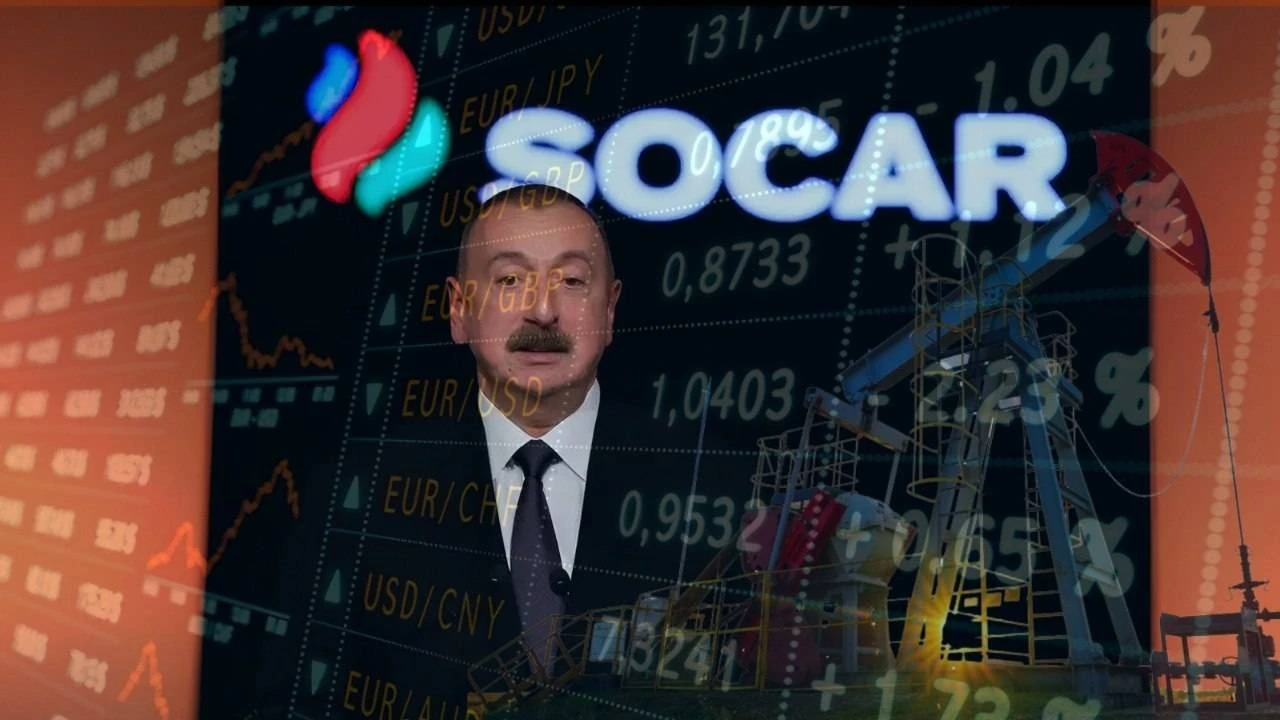
According to the results announced by the State Statistics Committee on June 10, the growth of the country's economy for the 5 months of the year is rounded to 0.0%. The published report shows that the oil and gas sector, which has played the role of a blood vessel for the Azerbaijani economy over the past 30 years, has shrunk by 1.0%, while the 30-year fairy tale of economic diversification, the growth in the non-oil sector, was 0.4%. Since this weak movement is, of course, not enough to compensate for the major loss, the economy has officially entered a period of stagnation. Moreover, budget revenues also fell by 4.5% compared to the same period last year, and non-oil investments, which are considered the guarantee of the future, decreased by 14.7% (AZSTATKOM, 2026). For those who understand the mechanisms of political systems, this "zero" is a serious signal indicating that the governance model which Aliyev's authoritarianism has relied upon for the last twenty years has hit a wall. Because this model is built on the distribution of oil rent to elites and a silent social contract with society. Today, that mechanism of distribution and social agreement with society is breaking down.
Why is stagnation more dangerous than a crisis?
The memory of the hyperinflationary days of the 1990s, the early years of the father Aliyev's rule, still haunts the minds of the country's people like a nightmare. This article does not claim that Azerbaijan will return to those days again. Because the existing resources, the billions in the State Oil Fund, and the low level of foreign debt will protect Azerbaijan from sudden bankruptcy in the coming years. The government still has room for maneuver. The real danger is completely different: Stagnation (long-term stagnation). It is precisely chronic stagnation that is more ruthless for authoritarian systems than a sudden crisis. When a crisis hits, governments can frame it as a "state of emergency" or the impact of global processes, temporarily mobilizing society. Stagnation, however, is a disease that lasts for years, secretly gnawing away at the system from the inside. The invisible trap: Against the backdrop of weak population growth, the economy is treading water. This means that real per capita income and the related level of welfare drop a little further each year. In other words, the cake is the same size, but the number of people sitting at the table is increasing. Moreover, despite the reduction of the state's social burden in previous years by raising the retirement age, the fact that these people are now turning 65 en masse—in other words, the aging of the population—creates a significant increase in the number of pensioners, which will intensify the fiscal pressure on the social burden of the budget. In addition, economic stagnation caught Azerbaijan at a stage where the Gross Domestic Product (GDP) per capita is only 7 thousand dollars (worldbank, 2024a). For comparison, in Kazakhstan this indicator is 14 thousand dollars, and the country ranks first in the former post-Soviet space, excluding the Baltic countries (worldbank, 2024b). Azerbaijan falling behind Kazakhstan by half in terms of GDP, and even lagging behind resource-limited Georgia (worldbank, 2024c) and Armenia (worldbank, 2024d), reveals that the country is entering economic stagnation with the lowest indicators. This economic picture will directly affect both the social and political fabric of the country in the coming decade. These effects will manifest themselves in several main directions. In its analytical article titled "The Nightmare of the Post-Oil Era" published last December, the KHAR Center published extensive research indicating that a deep crisis awaits Azerbaijan between 2027-2035, that the governance model based on energy revenues for thirty years will become a victim of the resource curse, that the financial stability formed during the oil boom will gradually drop to a critical level, and that the decline will not be limited only to the economy but will also manifest itself at the political and institutional levels. The research notes that even if the regime manages to maintain the current situation for a certain period, it is not reasonable to expect its capacity to react to impending shocks to be adequate. The rampant repressions taking place in the country, the abolition of politics, and generally, the branding of every dissenting opinion as treason, indicate that the system is preparing to face this approaching difficult period with traditional methods (Kharcenter, 2025). Now it appears that, as shown in that article by the Khar Center, the country's situation is increasingly beginning to be characterized by the inevitable reality of the post-oil era, the silent and gradual depletion of resources. The relative stability in the state budget and the currency reserves still looking "sufficient" are deceptive. In reality, the rent is decreasing, the core principles of the social contract are weakening, and the "silence in exchange for money" agreement, an essential element of authoritarian rule, is already beginning to lose its former strength. For this reason, the upcoming period should be evaluated as a time when the existing model can no longer reproduce itself, has lost its ability to adapt to changing realities, and is approaching a historical crossroads.
The Erosion of Legitimacy
For many years, society unofficially accepted the restriction of basic political freedoms in exchange for stability, statistical salary increases, new roads, and the propaganda of prosperity. When the economy stalls, a fundamental question arises: If there is neither political participation nor economic development, with what will the system justify the continuity of its existence?! The historic victory won in 2020 and, finally, the complete restoration of sovereignty in September 2023 granted the government immense political capital and legitimacy. However, political history has repeatedly proven that even dazzling victories cannot cover up daily socio-economic concerns forever. Over time, citizens begin to question real wages, living costs, and the quality of education and healthcare. Victory propaganda no longer fills stomachs.
The Breach of the Social Contract
In Aliyev's authoritarianism, the unofficial social contract operates on a simple principle: "You do not interfere in politics. If you interfere, you will pay a heavy price. In return, we provide for your minimum livelihood. Stay silent and be satisfied!" During a period of stagnation, however, the state cannot fulfill its part of this contract, the minimum guarantee of welfare. Of course, although dissatisfaction may not immediately turn into mass protests, it paves the way for deep distrust towards state institutions and the depletion of faith in the country's future.
The Intensification of Intra-Elite Competition
When the economy grows, everyone, especially various groups of the elite and the upper-middle links of the bureaucratic chain, gets a share of the newly generated resources. In the period of stagnation that has already begun, however, the intra-elite struggle will be fought not for new revenues, but to get a larger share of the existing and daily depleting "cake". The experience of researching authoritarianism shows that in such periods, intra-elite conflicts escalate, and inter-group competition for wealth completely paralyzes the quality of decision-making.
The Rising Cost of Repression
In times when resources are abundant, the government can comfortably finance both the security apparatus and social projects simultaneously. In conditions of stagnation, in an environment where budget revenues are decreasing, the regime loses the ability to maintain power structures, the public sector, and social obligations at their previous level all at once. As a result, both the financial and international political cost of the repression mechanism necessary to protect the system increases. On the other hand, the dissatisfaction created by stagnation continues to accumulate internally. Naturally, people do not immediately take to the streets. The process is still just beginning. Society's intuition tells it that the regime's coercive apparatus has not yet eroded enough. However, the continuation for years of processes such as the continued drop in purchasing power and the further restriction of job opportunities could one day start a huge wave of protests sparked by any small, unexpected incident. The coming decade lying ahead of the country will be a period in which problems will deepen step by step, rather than a scenario of sudden collapse: 2027-2030: A period of chronic weakening of economic growth, internal and external investments dropping to a minimum, and the cementing of economic stagnation, 2030-2033: Fiscal pressures reaching their peak. A period where rising budget expenditures become a burden that the stagnant economy will not be able to bear, 2033-2035: The stagnation taking on the character of a structural crisis. This will be characterized as a period when the economic deficit shifts to the political plane, leading to intra-elite fragmentations and a test of legitimacy for the governance system (Kharcenter, 2026).
The End of Authoritarian Modernization
The source of pride for Azerbaijan's authoritarianism was its propaganda of modernization, the double-digit growth volume of the country's economy, mega state investments, and the circulation of oil money. Ilham Aliyev even used to boast that the country was developing at high speed, stating in a Stalin-esque manner, maybe we should slow down a bit?! However, this euphoria is now ending. To transition to a new stage of development, completely different conditions are required: independent courts, inviolability of property rights, a competitive economic environment, and a free flow of information. The paradox lies here: these values are the very issues that Azerbaijani authoritarianism fears the most, has destroyed, and takes pride in destroying. The restoration of these institutions would necessitate the elimination of political monopoly and, consequently, the gradual dismantling of the Aliyevs' dynastic rule. From this perspective, the main question regarding the country's future at present is whether Azerbaijan will enter the post-oil era with an outdated authoritarian rentier model, undergoing a gradual erosion process that absolutely conditions the collapse of the country, or whether it will be able to transition to a stage of real development through the renewal of its economic and political institutions and the elimination of authoritarianism. If the answer to this question is the preservation of the existing system, the years 2027–2035 will be characterized as a period of inevitable political and economic structural erosion for Azerbaijan.
Note: The article you have read was originally written in the Azerbaijani language. Artificial intelligence tools were used only in the translation.
References:
AZSTATKOM. 2026. "Macroeconomy." State Statistical Committee of the Republic of Azerbaijan. https://www.stat.gov.az/news/macroeconomy.php?lang=en&page=1&utm.
World Bank. 2024a. "Azerbaijan." World Bank Open Data. https://data.worldbank.org/country/azerbaijan.
World Bank. 2024b. "Kazakhstan." World Bank Open Data. https://data.worldbank.org/country/kazakhstan.
World Bank. 2024c. "Georgia." World Bank Open Data. https://data.worldbank.org/country/georgia.
World Bank. 2024d. "Armenia." World Bank Open Data. https://data.worldbank.org/country/armenia.
Kharcenter, 2025. Post Neft Dövrü kabusu. https://kharcenter.com/arasdirmalar/postneft-dovru-kabusu
Kharcenter, 2026. Nəhəng sərvət üstündə yatan hesabatsız renta diktaturaları: Azərbaycan nümunəsi. https://kharcenter.com/nesrler/neheng-servet-ustunde-yatan-hesabatsiz-renta-diktaturalari-azerbaycan-numunesi
