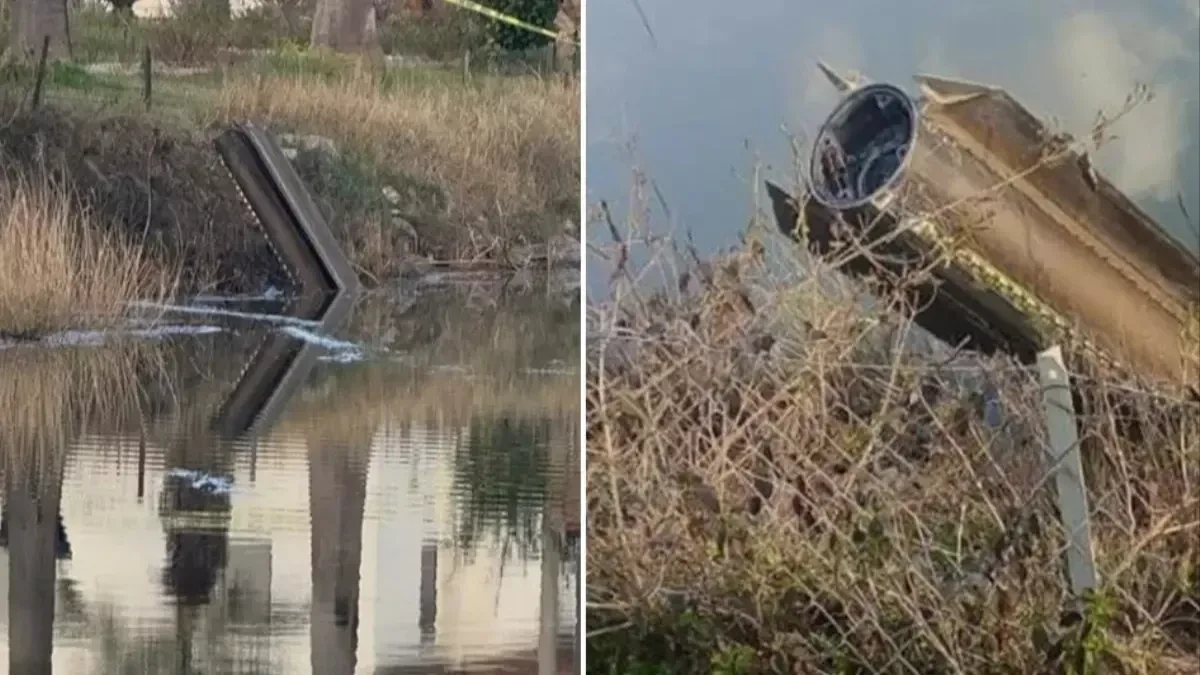
On the fifth day of the war following the United States and Israel’s attack on Iran, the conflict also “spilled over” into Turkish territory. On March 4, the Turkish Ministry of National Defense released an official statement saying that “a ballistic munition launched from Iran, which passed through Iraqi and Syrian airspace and was determined to be heading toward Turkish airspace, was intercepted by NATO defense systems in the eastern Mediterranean.” The statement noted that a fragment of the missile belonging to the air defense system that intercepted the Iranian munition fell in the town of Dörtyol in Hatay province. In Ankara’s official position, it was emphasized that consultations with “NATO and other allies” would continue (MSB, March 4, 2026).
Particular attention was drawn to the fact that the missile was intercepted not by Turkiye’s own defense systems but specifically by NATO systems. NATO was also strongly emphasized in President Recep Tayyip Erdoğan’s statement: “We are taking all necessary measures and responding immediately in close consultation with our NATO allies” (TRT Haber, March 4, 2026).
The missile incident occurred just one day after statements by Turkish Foreign Minister Hakan Fidan containing political assessments regarding Iran that triggered serious discussions. In his statement on March 3, Fidan said that “Iran directly targeting U.S. bases located in Arab countries in the region increases the likelihood that the steps taken may turn into a much larger regional security crisis.” He described both this behavior by Tehran and the potential closure of the Strait of Hormuz as strategic mistakes. Fidan stated that Iran was trying to increase the “cost of war” through these steps and to organize pressure from Gulf countries on the United States and Israel, but he also expressed that he did not believe this strategy would succeed.
When asked about the possibility that Iran might target Turkiye, Fidan responded: “Turkiye always protects itself. We possess both the determination and the capability necessary to do so” (Anadolu Agency, March 3, 2026). Perhaps the most striking sentence of the Turkish foreign minister on this issue was his assessment that Iran was not ready to confront Israel and the United States. Fidan questioned Tehran’s defense capabilities by stating: “If you have not done your homework and developed your capabilities, you should not even engage in a war of words with Israel and America” (Birgün, March 4, 2026).
From this perspective, Iran including Turkiye among the regional countries toward which it launched ballistic missiles just one day after Fidan’s statement can be interpreted as a test of Ankara. The absence of any statement from Iran regarding the incident further strengthens this interpretation. Despite attempts by Iran’s supporters and Eurasianists in Turkiye to find “arguments” claiming that the Iranian missile had accidentally been directed toward Hatay (Doğu Perinçek, X profile, March 4, 2026), Turkiye summoning Iran’s ambassador to the Ministry of Foreign Affairs (TRT Haber, March 4, 2026b) and the clarity of the statements made by the Ministry of Defense and President Erdoğan demonstrate that Ankara also interpreted the incident precisely as a test by Tehran. At the same time, Ankara’s emphasis on NATO can be interpreted as a message to Tehran that any future attacks targeting Turkiye would be treated as attacks on NATO. NATO’s statement immediately after the incident—“We condemn Iran’s targeting of Turkiye and stand by our allies, including Turkiye”—also indicates that Ankara’s consultation mechanism with the alliance has already been activated (Yeni Şafak, March 4, 2026).
There are additional factors strengthening this conclusion. Twenty-four hours after the incident, the Iranian Armed Forces released a statement saying, “We did not launch a missile at Turkiye; we respect Turkiye’s sovereignty.” However, only a few hours later, the Turkish Ministry of National Defense once again emphasized that the missile had come from Iran and that Ankara was coordinating with NATO (MSB, March 5, 2026).
All of this undoubtedly presents an undesirable picture for Turkiye. Despite the multifaceted political, geographical, ethnic, and religious disagreements and conflicts of interest between Iran and Turkiye, Ankara has no interest in the U.S.–Israel–Iran war spreading throughout the entire region. When the first signs of a possible U.S. intervention emerged in January, the process had somewhat de-escalated with Turkiye’s involvement, and negotiations had resumed. Ankara had even assumed a primary mediation role and proposed establishing the negotiating table in Istanbul. Even when Iran declined Turkiye’s mediation and hosting role in early February and moved the negotiations to Oman, Ankara did not change its diplomatic rhetoric. Rather than acting as an “offended mediator,” Turkiye continued to position itself as a partner interested in resolving the problem without war (Khar Center, February 2026).
When the first strikes by the United States and Israel against Iran began on February 28, the framework of Turkiye’s initial response—after a brief period of silence—was the reminder of international law, the continuation of diplomacy, and the prevention of wider escalation. In statements by both the Turkish Ministry of Foreign Affairs and President Recep Tayyip Erdoğan, the U.S. and Israeli attacks were described as violations of Iran’s sovereignty, while at the same time Iran’s expansion of escalation toward the Gulf countries was described as unacceptable (AA, February 2026; Directorate of Communications, March 1, 2026). Foreign Minister Hakan Fidan also stated that efforts were underway to re-establish the negotiating table.
Turkiye’s position in this regard is clear and understandable to everyone. Surrounded by zones of instability such as Ukraine in the Black Sea and Iraq and Syria in the Middle East, and experiencing tense relations with Israel, Ankara certainly does not want a new conflict zone in its neighborhood. At the same time, Ankara evaluates the current crisis as part of Israel’s attempts to establish regional hegemony, which emerges as a serious problem for Turkiye given the current state of Ankara’s relations with Tel Aviv (The National, March 4, 2026).
The Iran war carries greater risks for Turkiye than all other crises currently facing the country. The first of these concerns direct security. Turkiye is one of the closest deviation points—indeed, as the March 4 incident demonstrated, even one of the potential targets—of the missile and drone traffic over the Middle East. The continuation of this threat could pull Turkiye from a diplomacy-and-negotiations position into a position of escalation and direct involvement.
Second, Ankara wants to remain prominent as an actor that both works with the West as a NATO member and maintains relations with Iran and the Gulf countries. Continued escalation could disrupt this balance.
The third threat concerns energy and trade. The closure of the Strait of Hormuz and, more broadly, the energy shocks generated by U.S.–Iran escalation could be felt more quickly and more severely in countries such as Turkiye that are energy importers. In recent years, Ankara has sought to repair and develop its relations with Gulf countries through trade. Escalation in the region has created a direct threat to this policy.
Fourth, plans by the United States and Israel to use Kurdish groups in an intervention-or-uprising strategy against the Iranian regime promise highly undesirable scenarios for Turkiye. According to recent reports, U.S. President Donald Trump is holding discussions with Iranian and Iraqi Kurdish actors regarding a possible armed Kurdish uprising in Iran. It is reported that the plan of the U.S. Central Intelligence Agency is based on the calculation that a Kurdish uprising would draw the Iranian army’s attention to the country’s northwest and facilitate revolutionary changes by Iranians in major cities such as Tehran (CNN, March 4, 2026).
Claims that the United States and Israel have armed Iranian Kurds are not new. There have long been allegations that Washington and Tel Aviv support PJAK—the Iranian branch of the PKK—as a destabilizing element in Iran (Kardaş, 2009). Although PJAK was recognized as a terrorist organization during the Obama administration, the issue of U.S. and Israeli support for Kurdish groups has reemerged following last year’s twelve-day war between Israel and Iran (Washington Institute, 2025). The British ITV News channel claims that the United States and Israel have been arming thousands of Kurds in Iran since last year and that a possible armed uprising could occur within a matter of days. It is reported that Kurdish groups have requested air support from the United States and Israel for this purpose (ITV News, March 4, 2026).
There is no information on whether the United States has discussed this plan with Ankara. In a statement on March 5, the White House spokesperson said that “reports claiming that the President approved such a plan are completely false” (AA, March 5, 2026). However, this does not necessarily mean that such a plan will not eventually be approved.
This plan contains serious risks for Turkiye. If Iraqi Kurds support an uprising by Kurds in Iran, there is a possibility that Tehran could strike northern Iraq, which would mean an attack on Turkiye’s existing interests in the region and a potential confrontation with Iran (Kınıklıoğlu, March 4, 2026). Even more importantly, it is highly likely that the target of a potential Kurdish armed uprising would be the most strategic region along the Turkiye–Iran corridor—the West Azerbaijan province. This would create risks for Ankara in several respects. The region lies at the most sensitive point for Ankara, which has declared the goal of a “terror-free Turkiye,” along a large border stretching from Hakkari to Iğdır where Kurds constitute a majority population. At the same time, the situation on the other side of the border is far from stable. West Azerbaijan serves as a major center of both Kurdish nationalism and Turkish nationalism in Iran. This raises the likelihood that a potential Kurdish armed uprising would not be limited solely to confrontation with the Iranian regime but could also ignite ethnic clashes in cities such as Urmia, Naqadeh, Salmas, Khoy, and Maku. Even if the Kurdish uprising does not produce the rapid and targeted results desired by the United States and Israel, the escalation itself could lead to hundreds of thousands of refugees—both Turks and Kurds—arriving in Turkiye from Iran (Kınıklıoğlu, March 4, 2026). This would create additional financial, political, and security problems for Ankara (The National, March 4, 2026). The Turkish Ministry of National Defense’s latest statement (MSB, March 5, 2026) drawing attention to the PJAK terrorist organization and emphasizing that such structures inciting ethnic separatism affect not only Iran’s security but also the peace and stability of the entire region also demonstrates the sensitivity of this issue for Ankara.
Finally, another sensitive issue for Ankara relates to signs that Iran will not confine the escalation solely to the Gulf and the Middle East. One example of this emerged today: Iranian drones struck Azerbaijani territory—targeting Nakhchivan International Airport and other civilian infrastructure (APA, March 5, 2026). The incident occurred less than 24 hours after Azerbaijani President Ilham Aliyev paid a condolence visit to the Iranian Embassy (President.az, March 4, 2026). The Azerbaijani side stated unequivocally that responsibility for the incident lies with Iran. The Ministry of Defense also issued a statement indicating that this step would not go unanswered (MOD, March 5, 2026).
This incident is not only relevant to Turkiye within the framework of the obligations of the Shusha Declaration, which also envisages military alliance; it is also doubly significant because Nakhchivan is Azerbaijani territory under Turkiye’s guarantee pursuant to the Kars Treaty (BBC, 2014).
The course of events shows that Turkiye is being drawn—despite not wanting it and having no interest in it—into a war that it wants to end as soon as possible, and that the complexity of the situation is steadily increasing. This war does not resemble the Russia–Ukraine war, in which Ankara could maneuver relatively more easily and claim neutrality. Distances are closer, risks are higher, and relationships are more complex. Erdoğan’s government, on the one hand, does not want war in the region and instability in Iran; on the other hand, it is also not interested in damaging its recently warming relations with U.S. President Donald Trump. Even though Erdoğan has assessed the U.S.–Israeli intervention as a violation of Iran’s sovereignty and international law, a further escalation could confront Ankara with Trump’s demands for coordination. Although experts for now predict that such a coordination request may take forms such as monitoring and early warning rather than direct intervention, this does not substantially change the essence of the matter (The National, March 4, 2026). If this possibility materializes, it could also place Turkiye before another contradiction: a transition from an adversarial stance toward Israel in Gaza to a position of indirect partnership in Iran. The view voiced over the past few days by individuals close to the Turkish government—namely that “there should be dialogue and direct, open diplomacy with Israel, as with Egypt”—can be interpreted as a pulse-check in this direction (T24, March 1, 2026).
In lieu of a conclusion
Although Ankara is trying to continue the diplomatic line in order to minimize risks, a new reality now exists in the region. This reality consists of Ankara—like all countries in the region—being confronted with a new balance of power. On one side of this balance are the United States and Israel, who appear determined to obtain what they want from Tehran at any cost; on the other side is Iran, which is burning bridges not only with the United States and Israel but also with its Gulf neighbors. Moreover, the complex and intricate character of relations with the powers on one side of the balance (the U.S.–Israel) confronts Ankara with yet another dilemma.
Undoubtedly, Ankara is not in a position to prevent these developments from unfolding in ways contrary to its interests. For now, Turkiye is trying, on the one hand, to demonstrate that it is not part of the U.S.–Israel coalition by emphasizing international law; on the other hand, it is attempting to preserve its room for maneuver by responding to the reality of a physical threat extending as far as Turkish airspace with an emphasis on acting “in consultation with NATO allies.” Yet the prolongation and deepening of the escalation will further narrow these maneuvering spaces. In this respect, Hakan Fidan’s words about Iran—“if you have not done your homework, if you have not been able to develop your capabilities, you should not even get into a war of words with the United States and Israel”—may turn into a test and trial for Ankara itself.
References:
T.C. Milli Savunma Bakanlığı. 4 Mart 2026. Etkisiz Hâle Getirilen Balistik Mühimmat ile İlgili Açıklama. https://www.msb.gov.tr/SlaytHaber/07143319492f4a9b96207d73c28616c4
TRT Haber. 4 Mart 2026a. Cumhurbaşkanı Erdoğan: NATO ile birlikte gerekli müdahalede bulunuyoruz. https://www.trthaber.com/haber/gundem/cumhurbaskani-erdogan-nato-ile-birlikte-gerekli-mudahalede-bulunuyoruz-936505.html
Anadolu Agentliyi, 3 Mart 2026. Bakan Fidan: Sükunetin sağlanması ve yeniden bir barış ortamı oluşması için yoğun bir çaba içindeyiz. https://www.aa.com.tr/tr/gundem/bakan-fidan-sukunetin-saglanmasi-ve-yeniden-bir-baris-ortami-olusmasi-icin-yogun-bir-caba-icindeyiz/3847839
BirGün. 4 Mart 2026. Hakan Fidan’dan İran yorumu: Sen yeteneklerini geliştirmediysen İsrail’le, Amerika’yla ağız dalaşına bile girmemen lazım. https://www.birgun.net/haber/hakan-fidandan-iran-yorumu-sen-yeteneklerini-gelistirmediysen-israille-amerikayla-agiz-dalasina-bile-girmemen-lazim-697288
X, Doğu Perinçek, 4 Mart 2026. https://x.com/Dogu_Perincek/status/2029261538360471802
TRT Haber. 4 Mart 2026b. İran Büyükelçisi Dışişleri'ne çağrıldı. https://www.trthaber.com/haber/gundem/iran-buyukelcisi-disislerine-cagrildi-936500.html
Yeni Şafak, 4 Mart 2026. NATO Sözçüsü:Türkiye dahil tüm müttefiklerin yanındayız.
https://www.yenisafak.com/gundem/nato-sozcusu-turkiye-dahil-tum-muttefiklerin-yanindayiz-4802916
MSB, 5 Mart 2026.Millî Savunma Bakanlığında Haftalık Basın Bilgilendirme Toplantısı Gerçekleştirildi
https://www.msb.gov.tr/SlaytHaber/d242abb9e6124e038ee0496fe62dc0ed
KHAR Center, fevral 2026. Ankaranın sülh ambisiyası: hər masada olmaq istəyən ölkə, heç bir masada görünmür. https://kharcenter.com/arasdirmalar/ankaranin-sulh-ambisiyasi-her-masada-olmaq-isteyen-olke-hec-bir-masada-gorunmur
Anadolu Agentliyi, fevral 2026. Türkiye calls on US, Israel and Iran to cease hostilities immediately. https://www.aa.com.tr/en/turkiye/turkiye-calls-on-us-israel-and-iran-to-cease-hostilities-immediately/3843702
T.C. İletişim Başkanlığı. 1 Mart 2026. Recep Tayyip Erdoğan: ABD ve İsrail’in İran’a yönelik saldırısı, İran’ın egemenliğini açıkça ihlal etmektedir. İran’ın körfez ülkelerine yönelik saldırısı da kabul edilemez (1TV). https://www.iletisim.gov.tr/turkce/dis_basinda_turkiye/detay/recep-tayyip-erdogan-abd-ve-israilin-irana-yonelik-saldirisi-iranin-egemenligini-acikca-ihlal-etmektedir-iranin-korfez-ulkelerine-yonelik-saldirisi-da-kabul-edilemez-1tv
The National, 4 Mart 2026. How is Turkey responding to the US-Israel-Iran war? https://www.thenationalnews.com/news/mena/2026/03/04/how-is-turkey-responding-to-the-us-israel-iran-war/
CNN, 4 Mart 2026. CIA working to arm Kurdish forces to spark uprising in Iran, sources say. https://edition.cnn.com/2026/03/03/politics/cia-arming-kurds-iran
Kardaş, Saban. 26 Mart 2009. PJAK, Iran and the United States: Kurdish Militants Designated Terrorists by the United States. https://jamestown.org/pjak-iran-and-the-united-states-kurdish-militants-designated-terrorists-by-the-united-states/
Washington İnstitute, 2025. Caution and Fear of a Crackdown: Iranian Kurdish Opposition Responses to the Israel-Iran Conflict. https://www.washingtoninstitute.org/policy-analysis/caution-and-fear-crackdown-iranian-kurdish-opposition-responses-israel-iran
İTV News. 4 Mart 2026. United States seeking an armed uprising inside Iran, with ground operation expected within days. https://www.itv.com/news/2026-03-03/united-states-seeking-an-armed-uprising-inside-iran
AA, 5 Mart 2026. Beyaz Saray: Trump’ın İrana yönelik kürt grupları silahlandırma planına onay verdiği iddiası tamamen yanlış
https://www.aa.com.tr/tr/dunya/beyaz-saray-trumpin-irana-yonelik-kurt-gruplari-silahlandirma-planina-onay-verdigi-iddiasi-tamamen-yanlis/3850411
Kınıklıoğlu, Suat. 4 Mart 2026. Suat Kınıklıoğlu yazdı: İran Kürtleri ve tehlikeli ayaklanma senaryoları. https://medyascope.tv/2026/03/04/suat-kiniklioglu-yazdi-iran-kurtleri-ve-tehlikeli-ayaklanma-senaryolari/
APA, 5 Mart 2026. Azərbaycan MN: İranın dron zərbələri ilə bağlı zəruri cavab tədbirləri hazırlanır, bu hücum aktları cavabsız qalmayacaq.
Prezident.az, 4 Mart 2026. İlham Əliyev İranın ölkəmizdəki səfirliyində olub, başsağlığı verib.
https://president.az/az/articles/view/71771
MOD, 5 mart 2026. Azərbaycan Respublikası Müdafiə Nazirliyinin açıqlaması. https://mod.gov.az/az/news/azerbaycan-respublikasi-mudafie-nazirliyinin-aciqlamasi-56663.html
BBC, 2014. 21-ci ilin Qars müqaviləsi: bu necə baş verdi?
https://www.bbc.com/azeri/azerbaijan/2014/10/141014_kars_agreement
T24, 1 Mart 2026. Eski AKP'li Birinci'den "İran" yorumu: Mısır ile yürütülen diplomasi diyaloglarının benzeri, mecburiyetten İsrail ile de başlatılmalı. https://t24.com.tr/gundem/eski-akpli-birinciden-iran-yorumu-misir-ile-yurutulen-diplomasi-diyaloglarinin-benzeri-mecburiyetten-israil-ile-de-baslatilmali%2C1303480
