
(The article was prepared within the framework of the "Authoritarian Regimes and Transregional Influence Mechanisms" research of the KHAR Center)
Türkiye's democratic framework, which has experienced severe democratic backsliding in recent years, sustained another devastating blow yesterday. May 21 has been inscribed in the nation's political history as the day a systematic attempt was initiated to depose the leadership of the main opposition party, the Republican People's Party, through a heavily politicized judiciary acting as a proxy for the Erdoğan administration. The Turkish government has resorted to judicial intervention to forcibly alter the leadership of its primary political rival, following nearly two years of continuous efforts to undermine the party through politically motivated detentions, systemic repression, and orchestrated media campaigns. This development fundamentally signifies a critical juncture wherein the ruling administration has effectively abandoned even the superficial facade of a managed democracy.
The analytical salience of this phenomenon is intrinsically linked to the critical socio-political paradigm that Türkiye entered following the 2023 presidential elections. Throughout this period, the authoritarian governance model has undergone significant consolidation, thereby reducing the operational space for legal political opposition to near obsolescence. Within the context of contemporary Turkish socio-legal dynamics, this intervention materializes at a juncture where the incumbent regime demonstrates an incapacity to reconcile with electoral realities. Consequently, the mechanism of judicial usurpation is deployed against the main opposition, which is widely perceived as the final institutional bastion of democratic resistance. From a sociological vantage point, for a populace enduring acute macroeconomic instability, hyperinflation, and systemic repression, this judicial decree may solidify the perception that the constitutional order and the rule of law have been comprehensively dismantled. Politically, this trajectory harbors the distinct peril that the executive apparatus will monopolize the state's mechanisms of coercion and jurisprudence to irrevocably terminate the multi-party system, precipitate a transition toward a hegemonic party framework, and ultimately catalyze a comprehensive wave of civil disobedience.
This analysis systematically delineates the underlying catalysts and strategic objectives of these developments, alongside a chronological examination of the procedural dimensions of the judicial decree. Furthermore, it projects the potential socio-political trajectories for Türkiye, advancing the hypothesis that the nation is increasingly susceptible to descending into widespread civil disobedience.
The Rationale Behind the Declaration of Absolute Voidness
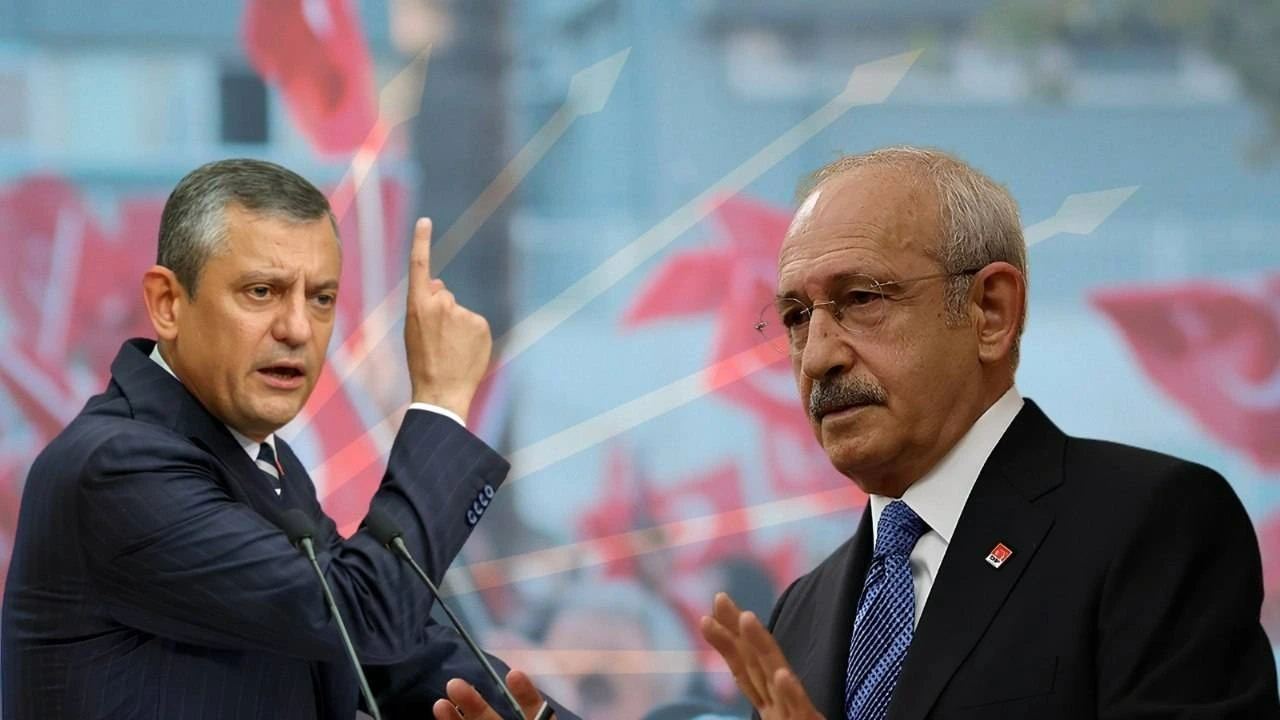
Yesterday, the 36th Civil Chamber of the Ankara Regional Court of Justice articulated a decree of absolute voidness concerning the Republican People's Party congress convened on November 4-5, 2023. Furthermore, the judicial body expedited the process by issuing an interim injunction, thereby circumventing the standard procedural timelines requisite for a verdict to achieve binding legal force. The ruling mandated the immediate dismissal of the incumbent party chairman, Özgür Özel, alongside the current executive apparatus, instructing the preceding chairman, Kemal Kılıçdaroğlu, and the pre-2023 congress administrative organs to resume their former executive functions pending the finalization of the verdict.
Consequently, the jurisprudential concept of absolute voidness, traditionally confined to the parameters of civil law to denote conditions of fundamental voidness, was unprecedentedly injected into the Turkish political sphere. The application of this doctrine to the main opposition party is inherently political; the statutory limitations period to formally contest the validity of the party congress had lapsed, rendering a favorable judicial ruling ostensibly impossible under prevailing electoral law. It was precisely to circumvent this procedural barrier that the litigation was structured around the premise of absolute voidness. However, the requisite evidentiary burden demonstrating conditions that would fundamentally invalidate the proceedings, such as the participation of unauthorized delegates, remained entirely unmet. Moreover, given that the party congress had been subsequently reconstituted on multiple occasions, the core subject matter of the litigation had effectively dissolved. Acknowledging this reality, the court of first instance had previously dismissed the necessity of a substantive ruling, citing the absence of an actionable claim. The lower court reasoned that the party's administrative organs had been legitimately re-elected in subsequent extraordinary congresses, thus rendering the annulment of the original congress legally moot. Nevertheless, the appellate court entirely rescinded this lower court judgment, endorsing the decree of absolute voidness. The legal implication of this appellate decision dictates that the 2023 congress, all sequentially convened congresses, and all corresponding administrative resolutions are retrospectively classified as legally non-existent.
Chronological Trajectory of the Judicial Intervention
The 2023 party congress initiated a transformative paradigm shift within the internal dynamics of the opposition. During the second round of balloting, Özgür Özel secured a decisive mandate, defeating the incumbent Kemal Kılıçdaroğlu and assuming the role of the party's eighth chairman. Kılıçdaroğlu formally conceded, concluding his thirteen-year tenure, and ceremonially relinquished the leadership.
Shortly following the congress, on March 31, 2024, the newly reconstituted leadership secured a profound victory in the municipal elections. This triumph represented the party's most substantial electoral achievement in contemporary history. The main opposition not only maintained its administrative control over paramount metropolitan centers such as Istanbul and Ankara but also decisively penetrated historical strongholds of the incumbent regime and conservative factions. By emerging as the leading political force nationwide, capturing a plurality of the popular vote, these elections signified a historically unprecedented systemic defeat for the executive administration and its twenty-two-year tenure.
Upon assuming leadership, the new chairman initially articulated a rhetoric of political normalization regarding relations with the incumbent administration, facilitating a period of reciprocal diplomatic engagements between the opposition headquarters and the presidency. However, this transient détente was decisively shattered in October 2024, marking the commencement of a systematic state-sponsored offensive against the opposition. The initial vector of this campaign materialized with the detention of a prominent district mayor in Istanbul under contentious allegations of terrorist affiliation, culminating in his immediate replacement by a state-appointed trustee. This intervention constituted the inaugural maneuver in a broader strategy of coercion targeting municipal governance structures. Concurrently, this incident precipitated severe internal factionalism within the opposition apparatus; a former metropolitan mayor publicly aligned with the ruling coalition's narrative, castigating his own party's diplomatic engagements with minority political factions. Consequently expelled from the opposition ranks at the culmination of 2024, this individual would subsequently emerge as the primary instigator in the orchestrated legal complaints that catalyzed the judicial deposition of the party leadership.
The preliminary indication of a coordinated stratagem targeting the validity of the opposition congress was articulated by the President of the Republic in early 2025. In public discourse, the executive administration framed the 2023 leadership transition as inherently illegitimate, characterizing the ouster of the former chairman as an orchestrated political exile achieved through dubious procedural mechanisms. Factions aligned with the deposed leadership seized upon this rhetoric, demanding formal investigations into the legitimacy of the electoral proceedings, while the incumbent opposition administration dismissed these provocations as calculated psychological warfare designed to instigate intra-party fragmentation. This symbiotic convergence of narratives between the state executive and the deposed opposition faction rapidly escalated into formal legal action. Within days, judicial authorities announced a retroactive criminal investigation into the 2023 congress. The prosecution alleged that intelligence regarding electoral malfeasance had been obtained a year prior; however, the deliberate timing of the investigation's public disclosure, precisely synchronized with the opposition's highly anticipated strategic declarations regarding future presidential candidacies, manifested a clear politicization of the judicial process. This intervention occurred concurrently with critical internal deliberations that had successfully consolidated the opposition's prospective executive candidates.
The reliance on anonymous denunciation proved legally insufficient to precipitate the comprehensive annulment of the party congress. Consequently, the previously expelled municipal mayor formally petitioned the judiciary, alleging systemic voter coercion and rampant transactional clientelism during the electoral proceedings, thereby demanding the categorical invalidation of the democratic outcome. Following this formalization of the legal complaint, state-sponsored institutional pressure upon the opposition intensified exponentially. Exactly one month subsequent to the materialization of this formal grievance, the metropolitan mayor of Istanbul—widely recognized as the opposition's most formidable prospective presidential candidate—was subjected to pre-trial detention, coincidentally on the precise day the party formalized his candidacy. In an urgent maneuver to fortify its institutional legitimacy against the escalating threat of state-appointed usurpation, the opposition convened an extraordinary congress, reaffirming the mandate of the incumbent chairman. Despite this democratic consolidation, institutional coercion persisted uninterrupted. The judicial proceedings concerning the annulment of the congress were strategically protracted, effectively weaponizing the legal ambiguity to maintain a persistent existential threat over the opposition's operational capacity.
By late 2025, the trajectory of judicial intervention intensified when the provincial leadership of the party's paramount Istanbul chapter was systematically dismantled by court decree, replaced by an externally mandated transitional committee. The unprecedented legal usurpation of the party's largest regional apparatus drastically amplified institutional anxieties regarding an imminent replication of this stratagem at the national executive level. In defensive response to the imminent peril of administrative confiscation, the opposition mobilized a subsequent extraordinary congress, culminating in a definitive vote of confidence that reaffirmed the current leadership. Following this consolidation at the national level, the party proactively executed renewed electoral procedures within its Istanbul provincial organization to re-establish localized democratic legitimacy.
Ultimately, the judicial court of first instance summarily dismissed the litigation seeking the annulment of the congress. The jurisprudence articulated that the succession of democratically convened extraordinary congresses fundamentally vitiated the legal standing of the claim, rendering the lawsuit demonstrably devoid of substantive subject matter. Nevertheless, this legal rationale was systematically subverted by the appellate instance, which manifested the politically motivated judicial coup orchestrated by the executive administration against its principal democratic rival.
A Critical Juncture in Türkiye's Democratic Regression
Notwithstanding the systematic, multi-tiered institutional coercion deployed by the state apparatus to dismantle the main opposition, the appellate decree has precipitated profound destabilization across the Turkish socio-political spectrum. The incumbent party leadership has categorically repudiated the judicial mandate, initiating a mass mobilization of political networks and civic constituents at the national headquarters. The comprehensive coalition of provincial chairpersons unanimously articulated their unwavering commitment to the sovereign will of the delegates, constitutional legality, and the democratically elected administration. The opposition chairman has publicly affirmed a doctrine of unconditional resistance, emphasizing principles of institutional dignity, civic courage, and systemic non-compliance, whilst simultaneously declaring comprehensive electoral readiness to confront the escalating discourse surrounding potential snap elections.
Prominent municipal executives, including the incarcerated mayor of Istanbul and the incumbent mayor of Ankara, have uniformly consolidated their political capital behind the beleaguered leadership. Substantive legal critiques highlight profound jurisdictional irregularities within the judicial decree; specifically, the assertion that the adjudication of electoral integrity inherently resides within the exclusive purview of the Supreme Election Council. Consequently, lower appellate courts preemptively determining electoral fraud prior to the culmination of substantive criminal proceedings constitutes a flagrant violation of foundational rule of law principles. Concurrently, incarcerated opposition figures have disseminated vehemently resolute declarations, characterizing the judicial maneuvering as an orchestrated political usurpation executed through jurisprudence. They articulate a comprehensive doctrine asserting that the decree of nullity is fundamentally devoid of legitimate authority, framing the state's intervention not merely as an assault upon a singular political entity, but as a systemic, existential threat to the Republic's constitutional architecture, democratic integrity, and institutional longevity, thereby necessitating transcendent, supra-partisan civic mobilization.
Conversely, the judicially appointed transitional chairman appealed for institutional tranquility, asserting the party's structural resilience and capacity to internalize administrative disputes. However, the prevailing empirical indicators and intra-party dynamics strongly suggest an absolute deficit of internal legitimacy for the deposed leader. The severe manifestations of grassroots hostility—characterized by widespread digital condemnation and the physical defacement of the former chairman's iconography at the national headquarters amidst accusations of systemic betrayal—underscore the profound impossibility of his administrative integration and signal a trajectory toward extreme institutional polarization.
The judicial mandate has provoked unanimous condemnation across the broader spectrum of oppositional political organizations, encompassing nationalist, pro-minority, socialist, and conservative factions alike. These entities have collectively diagnosed the intervention as an egregious paradigm of judicial engineering designed to artificially recalibrate the political ecosystem. In stark contrast, executive officials—notably the Minister of Justice, whose ascension to the cabinet was ostensibly a reward for orchestrating analogous legal campaigns against the opposition—have paradoxically asserted that the judicial decree serves to fortify systemic faith in democratic institutions.
The destabilizing ramifications of the judicial decree have seamlessly transcended the political domain, triggering acute volatility within the macroeconomic infrastructure. Empirical financial data indicates that immediately following the verdict, state financial institutions were compelled to liquidate roughly six billion dollars in foreign currency reserves in an urgent attempt to artificially stabilize the depreciating national currency. The national equity markets exhibited a precipitous contraction, concluding the trading session with a severe deficit. Furthermore, the international financial community's reaction was unequivocally adverse; high-level negotiations occurring in London between top-tier foreign investors and Türkiye's sovereign economic architects were abruptly terminated by the investors upon receiving news of the judicial intervention. Consequently, the national financial regulatory bodies were forced to initiate emergency systemic interventions to mitigate the escalating institutional panic.
Administrative Bifurcation and Institutional Paralysis
The judiciary's expedited transfer of administrative authority, juxtaposed with the incumbent administration's adamant refusal to concede legitimacy, has effectively bifurcated the political institution. Given the overwhelming parliamentary allegiance retained by the democratically elected chairman, any endeavor by the judicially installed leadership to exert legislative authority or orchestrate parliamentary group operations is structurally predisposed to systemic failure. This structural dichotomy inaugurates a paradigm of dual administration, wherein two distinct executive entities will concurrently assert operational sovereignty—a state of profound institutional paralysis that is projected to endure until the definitive adjudication by the Supreme Court of Appeals.
Procedural law mandates the availability of an appellate mechanism to the Supreme Court of Appeals; however, the crux of the institutional crisis hinges upon the locus of legal representation. The interim injunction structurally transfers the authority to initiate the appellate process to the pre-2023 executive cadre. Should this faction deliberately abstain from filing an appeal, the legal recourse is definitively extinguished. Under this scenario, the nullification of the 2023 proceedings renders the immediate convocation of a new congress a statutory imperative. Alternatively, civic litigation initiated by an individual constituent could compel the judiciary to mandate a new electoral convention, particularly considering the expiration of the statutory limitation period governing administrative terms. Consequently, strategic analysis suggests that the judicially installed leadership will purposefully engage the appellate mechanism, not to vindicate the institution, but as a calculated stratagem of procedural attrition designed to artificially prolong their provisional executive mandate.
Furthermore, the retroactive application of the judicial decree to 2023 systematically destabilizes the entirety of the party's institutional architecture, encompassing structural decisions and statutory revisions. This retroactive invalidation creates a profound administrative vacuum. It is analytically highly probable that the judicially appointed leadership is fundamentally averse to the immediate convocation of a renewed electoral congress. This faction ostensibly requires a protracted transitional period to systematically disenfranchise the current delegate base and execute internal purges targeting loyalists of the democratically elected administration, thereby maximizing their reliance on extended appellate delays to engineer a more favorable internal demographic.
Should the judicially installed faction consolidate administrative control, the internal structural dynamics of the Party Assembly will inherently reflect the fragmented composition of 2023, wherein the progressive elements, although present, will lack the quantitative threshold to assert majoritarian dominance. The locus of legislative leadership is equally contentious. While judicial authority endows the installed leadership with nominal control over parliamentary proceedings, the incumbent administration possesses the substantive political capital to convene robust alternative legislative sessions. Intelligence suggests that the transitional chairman—allegedly operating with precursory knowledge of the judicial timeline and actively constructing an alternate shadow cabinet—will strategically abstain from initiating an immediate physical takeover of the national headquarters. This hesitation is driven by the acute political liability of occupying the administrative epicenter exclusively through the explicit deployment of state coercive forces, thus confining his operational theater largely to the parliamentary sphere. Nevertheless, this strategy generates an unprecedented constitutional paradox: lacking formal status as an elected parliamentary deputy, the transitional chairman inherently lacks spatial allocation within the legislative assembly, despite being judicially recognized as the supreme executive authority of the primary opposition bloc.
The democratically elected chairman has established that his paramount strategic objective is to sustain operational resilience within the existing institutional framework and coordinate widespread systemic resistance. Nonetheless, the formation of an alternative political apparatus remains a viable contingency within his strategic calculus. Although preliminary reports indicated developmental efforts toward establishing a successor political organization, internal consensus subsequently recognized that such institutional fragmentation would precipitate a mutually assured destruction of both the historical party and the nascent entity. The incumbent administration has successfully initiated appellate proceedings targeting the annulment of the interim injunction, engaging higher judicial echelons empowered to suspend the immediate execution of the lower court's mandate prior to substantive adjudication. Realistically, however, the probability of such jurisprudential intervention is critically marginal. The overarching teleology of these events elucidates a highly coordinated state strategy engineered to systematically dissect the opposition via the proxy mechanism of the judicially installed transitional leadership. The executive apparatus currently operates within a remarkably unconstrained political environment to actualize this paradigm: international diplomatic constraints have been comprehensively neutralized, the judiciary is deeply integrated into the executive architecture, constitutional checks and balances have been systematically eroded, the press and civil society exist under draconian surveillance, and the internal security apparatus remains perpetually mobilized to suppress civic dissent. Within this profoundly constrained matrix, the mandate of the incumbent opposition administration fundamentally transcends the preservation of partisan infrastructure; their imperative now lies in orchestrating the massive civic mobilization required for the fundamental preservation of Turkish democratic integrity.
Civil Disobedience: The Terminal Refuge or the Inevitable Trajectory for Türkiye?
Formulating predictive assessments regarding the subsequent evolutionary phases of this systemic crisis remains analytically complex. The pronounced jurisprudential absurdity inherent within this decree underscores the structural futility of traditional legal resistance mechanisms. Concomitantly, this legally vacuous intervention injects profound instability into a myriad of interlinked socio-political dimensions. Within a paradigm where the judiciary operates seamlessly as the coercive extension of the executive, and legitimate avenues for democratic contestation are systematically blockaded, the probability of the onset of a large-scale, systemic civil disobedience movement within the Republic manifests unprecedented viability. This judicial maneuver strategically invalidates not only the leadership of the primary opposition but also effectively disenfranchises the more than seventeen million citizens who articulated a distinct mandate for democratic restoration during the 2024 municipal electoral cycle. This escalatory trajectory, inaugurated by the arbitrary detention of high-profile municipal leaders and culminating in the institutional confiscation of the primary opposition, portends the total obliteration of societal faith in electoral mechanics as a viable catalyst for political change. In a structural environment where the democratic mandate is capriciously nullified via judicial fiat, the philosophic and jurisprudential doctrine of civil disobedience ascends as a fundamentally legitimate mechanism of civic resistance under both international legal frameworks and classical political theory. The instantaneous mass mobilization of the provincial organizational networks at the national epicenter, synergized with the incumbent leadership's doctrine of non-surrender, possesses the kinetic potential to catalyze widespread urban mobilization, encompassing mechanisms such as targeted fiscal boycotts, protracted occupational protests, and comprehensive mass demonstrations. Particularly within metropolitan conglomerates like Istanbul and Ankara, the profound civic resilience demonstrated during the municipal elections could organically transition into coordinated acts of physical and systemic non-cooperation aimed at paralyzing the execution of the state's judicial dictates. Furthermore, the acute macroeconomic trauma precipitated by the decision—evidenced by severe equity market contractions and the abrupt exodus of international capital—ensures that the demographic constituency of this potential civil disobedience will not be sequestered to the traditional ideological opposition. Rather, the compounding effects of acute structural impoverishment are highly likely to radicalize the broader socio-economic strata, propelling them into the vortex of systemic protest. Should the transitional leadership initiate a forcible occupation of the party apparatus and parliamentary infrastructure, backed by state coercive forces, the ensuing friction with a fiercely mobilized electoral base will inevitably precipitate an uncontrollable constitutional and political crisis for both the executive administration and its proxies. Historical determinism elucidates that when the structural integrity of the ballot box is systematically degraded, the resolute and sustained non-violent mobilization of the populace inherently becomes the definitive arbiter of political destiny.
Conclusion
In the forthcoming period, the Republic of Türkiye is positioned to navigate an exceptionally volatile epoch characterized by intense intersections of legal contestation and physical civic resistance. While the executive administration strategically attempts to isolate and manage this phenomenon under the guise of an internal administrative dispute within the opposition, the severe contractionary shocks immediately registered across domestic and international financial markets categorically debunk this localized narrative. The abrupt withdrawal of transnational capital from high-level sovereign economic dialogues serves as an empirical indicator that this politically engineered crisis is actively precipitating profound macroeconomic destabilization. The instantaneous market regressions elucidate a prevailing global consensus that this judicial intervention represents a fatal deterioration of structural legal security and institutional predictability within the Republic. This environment possesses the intrinsic capacity to propel an economy, already suffering acutely under rigid austerity protocols, into an exponentially amplified crisis of hyperinflation and severe liquidity contraction. Ultimately, the definitive socio-political trajectory of this crisis will hinge entirely upon the behavioral response of the disenfranchised electorate—whether they succumb to systemic, engineered apathy or successfully mobilize through the architecture of non-violent civil disobedience to aggressively assert and reclaim their fundamental democratic sovereignty.
References
Anadolu Ajansı, 2026. Kurultay davasında Kılıçdaroğlu yönetiminin CHP yönetimini devralmasına karar verildi. https://www.aa.com.tr/tr/gundem/kurultay-davasinda-kilicdaroglu-yonetiminin-chp-yonetimini-devralmasina-karar-verildi/3944890
Tahincioğlu, Gökçer, 2026. Mutlak butlan gündemi: Kılıçdaroğlu ve ekibi nasıl dönecek, CHP bölünecek mi, Özgür Özel yeni parti kuracak mı? https://t24.com.tr/politika/mutlak-butlan-gundemi-kilicdaroglu-ve-ekibi-nasil-donecek-chp-bolunecek-mi-ozgur-ozel-yeni-parti-kuracak-mi,1323607
Independent Türkçe, 2023. Kılıçdaroğlu dönemi sona erdi: Özgür Özel CHP’nin yeni genel başkanı oldu. https://www.indyturk.com/node/671991/siyaset/k%C4%B1l%C4%B1%C3%A7daro%C4%9Flu-d%C3%B6nemi-sonra-erdi-%C3%B6zg%C3%BCr-%C3%B6zel-chpnin-yeni-genel-ba%C5%9Fkan%C4%B1-oldu
OSW, 2024. Türkiye: opposition wins local elections. https://www.osw.waw.pl/en/publikacje/analyses/2024-04-02/turkey-opposition-wins-local-elections
Anadolu Ajansı, 2024. Cumhurbaşkanı Erdoğan, CHP Genel Başkanı Özel’i 2 Mayıs’ta kabul edecek. https://www.aa.com.tr/tr/gundem/cumhurbaskani-erdogan-chp-genel-baskani-ozeli-2-mayista-kabul-edecek/3205479
Medyascope, 2025. Ahmet Özer’in tutukluluğunun birinci yılı: Neler yaşandı? https://medyascope.tv/2025/10/30/ahmet-ozerin-tutuklulugunun-birinci-yili-neler-yasandi/
Bianet, 2024. CHP, Lütfü Savaş’ı partiden ihraç etti. https://bianet.org/haber/chp-lutfu-savasi-partiden-ihrac-etti-302603
İhlas Haber Ajansı, 2025. Cumhurbaşkanı Erdoğan: “Seçimlerin faturasını Bay Kemal’e çıkartıp şaibeli bir kurultayla kendisini tehcir ettiler...” https://www.iha.com.tr/manisa-haberleri/cumhurbaskani-erdogan-secimlerin-faturasini-bay-kemale-cikartip-saibeli-bir-kurultayla-kendisini-tehcir-ettiler-simdi-ne-kapisini-calan-var-ne-fikirlerini-merak-eden-var-184966789
Yetkin Report, 2025. CHP’ye şaibe soruşturmasının perde arkası: turpun zamanlaması manidar. https://yetkinreport.com/2025/02/10/erdogan-ve-kilicdaroglu-saibe-dedi-chp-kurultayina-sorusturma-acildi
Anadolu Ajansı, 2025a. Lütfü Savaş, CHP’nin 38. Olağan Kurultayı’nın iptali için dava açtı. https://www.aa.com.tr/tr/gundem/lutfu-savas-chpnin-38-olagan-kurultayinin-iptali-icin-dava-acti/3483374
Reuters, 2025. Turkish prosecutors demand Istanbul mayor Imamoglu be jailed pending trial. https://www.reuters.com/world/middle-east/turkish-prosecutors-demand-istanbul-mayor-imamoglu-be-jailed-pending-trial-2025-03-23/
Anadolu Ajansı, 2025 b. Özgür Özel yeniden CHP Genel Başkanı seçildi. https://www.aa.com.tr/tr/politika/ozgur-ozel-yeniden-chp-genel-baskani-secildi/3529745
Bianet, 2025. CHP’nin İstanbul kongresi iptal edildi; il yönetimi görevden alındı. https://bianet.org/haber/chp-nin-istanbul-kongresi-iptal-edildi-il-yonetimi-gorevden-alindi-311079
Euronews Türkçe, 2025. CHP Olağanüstü Kurultayı’nda Özgür Özel tekrar genel başkan seçildi. https://tr.euronews.com/2025/09/21/chp-olaganustu-kurultayinda-ozgur-ozel-tekrar-genel-baskan-secildi
Anadolu Ajansı, 2025 c. CHP’nin 38. Olağan Kurultayı ve 21. Olağanüstü Kurultayı’nın iptaline ilişkin davada karar. https://www.aa.com.tr/tr/gundem/chpnin-38-olagan-kurultayi-ve-21-olaganustu-kurultayinin-iptaline-iliskin-davada-karar/3725415
DW Türkçe, 2026. CHP lideri Özel’den hodrimeydan: Baskın seçime hazırız. https://www.dw.com/tr/chp-lideri-%C3%B6zelden-hodrimeydan-bask%C4%B1n-se%C3%A7ime-haz%C4%B1r%C4%B1z/a-77253569
Euronews Türkçe, 2026. CHP’ye mutlak butlan kararı: Kılıçdaroğlu “göreve iade”. https://tr.euronews.com/2026/05/21/chpye-mutlak-butlan-karari-kilicdaroglu-goreve-iade
X, Medyascope, 2026. https://x.com/medyascope/status/2057519548501315666
X, Timothy Ash, 2026. https://x.com/tashecon/status/2057478465180332506
X, T.C. Hazine ve Maliye Bakanlığı, 2026. Basın Duyurusu — 21.05.2026. https://x.com/HMBakanligi/status/2057543991915143481
X, Ömer Faruk Eminağaoğlu.
