(This article was prepared within the framework of KHAR Center’s “Security and State Architecture” research project)
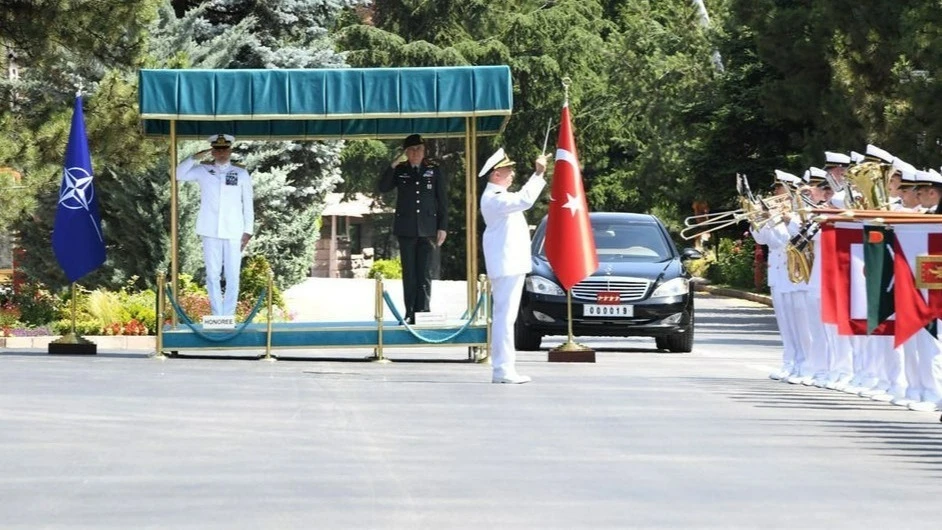
We can say that the 36th summit of the North Atlantic Treaty Organization (NATO) held in the capital of Türkiye has successfully concluded. The Ankara meeting is NATO's sixth summit (one online, one extraordinary, four planned) since the beginning of the Russia-Ukraine war, which radically changed the security environment in Europe. As this war increased risks on the eastern flank of the military bloc and in the Black Sea, it is no coincidence that Türkiye, the largest NATO state in the basin, was selected as the host. The decision on this was adopted at the alliance's Washington summit in 2024.
Introduction
The North Atlantic Treaty Organization (NATO), which became the main guarantor of global security after the Second World War, is currently experiencing one of the rapidly changing and significant turning points of its time. The "NATO 1.0" model, created to combat the expansion of the Soviet Union in the bipolar system of the 1950s, and the "NATO 2.0" era, in which uncertain partnerships were sought after the collapse of the USSR, are already left behind. The Russia-Ukraine crisis, which began with the annexation of Crimea in 2014 and turned into a large-scale continental war in 2022, has once again brought Europe face-to-face with a harsh geopolitical reality. This new reality is the "NATO 3.0" phase, which rebuilds collective defense principles and shifts the center of the alliance from the transatlantic plane directly toward the shores of Europe. Today, the reorganization of world power centers and the shift in priorities of US foreign policy necessitate Europe to increase its defense potential. In such a situation, we observe that the role of Türkiye, located at the intersection of geostrategic regions such as the Black Sea, the Middle East, and the South Caucasus, has shifted from the periphery to a strategic center. Ankara, with both its strong military potential and its legal capabilities based on the Montreux Convention, is transforming into an irreplaceable partner in Europe's security system. Along with this, its rapidly developing defense industry further strengthens this role. Despite ideological differences within the alliance and internal political characteristics, for Western strategists, the alliance with Türkiye is indispensable in terms of providing rapid responses to regional crises and maintaining deterrence capabilities. The 36th summit of the alliance, in addition to testing the strength of transatlantic cooperation, became a historical event demonstrating the collective will of the West, from providing continuous military support to Ukraine to jointly combating global threats. The purpose of this analysis by the KHAR Center is to examine Türkiye's changing geostrategic role in the Europe-centric NATO 3.0 phase and the impacts of the Ankara summit on transatlantic solidarity. The analysis answers questions such as: As the influence of the United States of America decreases, how does Türkiye play a significant role in ensuring European security? How did the declaration adopted at the Ankara summit resolve the disputes within the alliance?
NATO 3.0. Türkiye transforms from the periphery to a strategic center
Türkiye, which became a member of NATO in 1952, had a leading role in defending the southeastern flank of the bloc during the "Cold War" era. Bordering the USSR by land and sea and controlling the straits, Türkiye's geostrategic importance to NATO was immense. Possessing the second largest army in NATO after the US in terms of numbers, Türkiye was a valuable component of the alliance by creating significant deterrence against Soviet expansion. The collapse of the USSR, the disappearance of the bipolar system, and the end of the "Cold War" led to the emergence of a completely different strategic situation, and changes in priorities and threat assessments. This was the NATO 2.0 phase. The new phase was a paradoxical period where, on one hand, the alliance expanded eastward to include former socialist bloc countries, but in parallel, discussions were held about the extent to which NATO's existence was needed. Because a very serious symmetrical threat in the form of the USSR had disappeared, and there was no concrete, unequivocal answer to the question "who is the enemy?". NATO saw the Russian Federation, the successor to the USSR, as a partner state in the new era. Even in the 1990s, Boris Yeltsin and Vladimir Putin verbally proposed to then-US President Bill Clinton that Russia be admitted to NATO (RBC, 2024); (TASS, 2017). The NATO-Russia Council was established in 2002, and within this format, strategic stability topics and bilateral cooperation issues were discussed with the participation of the Russian president. When NATO's operations in Afghanistan began in 2001, Russia provided logistical and technical support for these operations. The European wing of NATO, led by Germany, had established a deep strategic partnership with Russia in the energy sector. Even Putin's famous 2007 Munich speech, which called for a revision of the unipolar world order and was evaluated as the beginning of a "new cold war," did not change the West's view of Russia. On the contrary, the strategic concept adopted at the Lisbon summit in 2010 stated that cooperation with Russia was of strategic importance because it helped create a unified space of peace, stability, and security (nato.int, 2010). Demonstrating such a position after Russia's military intervention in Georgia in 2008 and its occupation of the territory of a sovereign state showed that the alliance, and the West in general, was experiencing strategic blindness. At such a stage, Türkiye naturally lost its strategic importance for NATO that it had during the "Cold War" period. However, Russia's military intervention against Ukraine, which began with the annexation of Crimea in 2014 and turned into a continental war in 2022, returned Europe to the harsh realities of the "Cold War" era once again. The necessity of taking measures against Russian expansion on the eastern flank of the alliance, including in the Black Sea, made the reality of Türkiye being an important and necessary ally relevant again.
New NATO structuring in Türkiye
After the start of the war in Ukraine, NATO has implemented a number of new initiatives in Türkiye and begun forming headquarters and commands. The Maritime Component Command (MCC) was established in the Beykoz district on the Black Sea coast of Istanbul (BBC, 2026). This command operates in connection with the Operational Headquarters of the Multinational Forces created under the leadership of Great Britain and France to support Ukraine. The Operational Headquarters of the Multinational Forces is not a NATO structure. This headquarters was formed within the framework of the Coalition of the Willing, which includes Türkiye, intending to deploy a military contingent in Ukraine as a guarantee for the country's security after the war. In March of this year, the commander of the Operational Headquarters of the Multinational Forces, French General Jean-Pierre Fague, and his deputy, British General Richard Stewart Charles Bell, visited the NATO Maritime Component Command in Istanbul (Hürriyet, 2026). The first information regarding the new command was also disseminated in connection with this visit. In addition to the maritime component of the multinational forces to be deployed in Ukraine, the existence of land and air components is also planned. Another NATO structure formed in Türkiye is the Multinational Corps Türkiye (MNC-TUR) headquarters located in the territory of the Adana province, where the Incirlik military base is situated. Work in this direction began on the basis of the decisions of the 2023 NATO Vilnius summit. The task of the newly established headquarters is to ensure the integration of the forces assigned to it within the framework of regional plans and to carry out deterrence and defense activities in its zone of responsibility. The headquarters must fill the gap in the defense of NATO's southern borders and contribute to security in the Mediterranean region. As can be seen, NATO does not limit itself solely to taking measures against the Russian threat, but implements a comprehensive 360-degree defense strategy. In addition to this, NATO's Combined Task Force-Black Sea (CTF-Black) headquarters operates in Türkiye. At the same time, one of the headquarters of NATO's Rapid Deployable Corps is located in Istanbul. This is one of the 9 analogous headquarters in the NATO area. In 2024, a special group for combating mines in the Black Sea (Mine Countermeasures Black Sea) was also created by Türkiye, Romania, and Bulgaria (Anadolu, 2026). All of this shows how much Türkiye's role and importance have increased in ensuring Europe's security. In the current phase called NATO 3.0, just as in the NATO 1.0 era, Türkiye is once again transforming from the periphery to a strategic center within the bloc.
Türkiye transforms into an indispensable ally in a Europe-centric NATO
After annexing Crimea and joining operations in Syria, Russia's power and influence in the Black-Mediterranean Sea basin had seriously increased. However, during the course of the Ukrainian war, the destruction and disablement of many ships belonging to the Russian Black Sea Fleet (including the flagship "Moskva"), and the permanent movement of Ukrainian naval and aerial drones in the water area have minimized Russia's activity in the Black Sea. Türkiye, in accordance with the Montreux Naval Convention, has suspended the passage of Russian (and other states') military ships through the straits during wartime. The overthrow of the Bashar al-Assad regime in Syria has weakened Russia's positions in this country and the Middle East in general. The initiative in the Azerbaijan-Armenia peace and cooperation process passing to the US and the agreement on the TRIPP route, as well as the pro-Western Pashinyan government winning the last election and preserving its power, limit Russia's status as a dominant player in the South Caucasus, which it considered its vital zone of interest until the recent past. The Turkish state is one of the actors trying to fill Russia's void in these regions, whether within a multilateral-institutional (NATO) framework or individually. Its geographical proximity to regional crises, in turn, also increases NATO's capabilities and capacity to provide flexible responses to these crises. The Trump administration's initiation of limiting the irreplaceable role that the US plays in NATO and European security is another factor increasing the need for Türkiye. Now, the center of gravity in the North Atlantic Treaty Organization is shifting from the American shores of the ocean toward the European shores. NATO's transformation into a Europe-centric military bloc has begun. Against the background of these new realities, Türkiye has become an indispensable partner in Europe's security with its large army and developing military industry. The silence of the European Union, along with the Trump government, on harsh repressions against the opposition and gross human rights violations in Türkiye is related to this. After Viktor Orbán's defeat in the elections and departure from power in Hungary, Türkiye remains the only NATO state ruled by an authoritarian regime. The last NATO summit in Türkiye was held 22 years ago – in Istanbul in 2004. Among the heads of state and government attending the Istanbul summit, the only leader who currently continues to remain in power is Turkish President Recep Tayyip Erdoğan. The Ankara summit showed that currently, there is no Turkish internal issue among the problems worrying transatlantic unity, and the allies do not see a problem in close partnership with the autocrat Erdoğan.
Transatlantic solidarity
On the eve of the summit, differing worldviews and political contradictions stemming from ideological antagonism between the US administration and Western Europe had caused pessimistic predictions regarding NATO's future. There were even reports that Donald Trump did not want to attend the gathering. However, what was feared did not happen, and the statements of those who predicted a short life for NATO did not justify themselves. Except for Trump's negative remarks about Spain, the Ankara summit will be remembered as one of the important meetings where the integrity of the alliance was preserved and a US-Europe consensus was achieved. This consensus is reflected in the adopted final Declaration.
In the declaration, adherence to collective defense in accordance with Article 5 is expressed, emphasizing that an attack on one member country will be considered an attack on all members (nato.int, 2026). Russia and terrorism are pointed out as the 2 main sources of threat to NATO. In the document, Russia is assessed as a long-term threat to Euro-Atlantic security and stability. Over 50 billion dollars of new procurements in the field of armaments are announced, and commitments are undertaken in the direction of expanding collective production power and accelerating innovations. Compared to the 2025 Hague summit held with Trump's participation, the main novelty in Ankara is the presentation of a unified position on the Ukraine issue. The declaration states that Ukraine contributes to transatlantic security, and member states stand in solidarity in supporting this country in defending its freedom, sovereignty, and territorial integrity. The member states undertaking a commitment to allocate 140 billion euros in military aid (weapons, military equipment, military training) to Ukraine for the years 2026-2027 is one of the important decisions of the summit. The US and Europe starting to act from a common position on the Ukraine issue again is a very crucial event for Kyiv. President Trump's announcement that they will give a license to Ukraine to organize the local production of "Patriot" missiles, and his de facto support for the Ukrainian army striking deep into Russia, is also one of the indicators of Washington moving away from the role of an impartial mediator and approaching Europe.
In the Ankara Declaration, although not directly related to the Euro-Atlantic space, the allies also touched upon the Iran issue with a single sentence as a gesture to Trump. At the end of the document, it is stated that Iran can never possess nuclear weapons and full compliance with free navigation in the Strait of Hormuz must be observed.
Conclusion
The successful completion of the Ankara summit revealed that the North Atlantic Treaty Organization (NATO), despite its internal difficulties, is still a mechanism capable of coming together and reacting agilely against global threats. The new geopolitical situation created by the Russia-Ukraine war has paved the way for the alliance's transition to structural reforms. In this period, the shift of the center of gravity of the transatlantic axis towards Europe seriously increases the importance of regional powers, especially Türkiye. Türkiye, thought to have lost its geopolitical role after the "Cold War" period, has today become a key actor filling the strategic gaps in the Black Sea, the South Caucasus, and the Middle East, ensuring Europe's security with its strong army and developed military industry. The new Maritime Component Command (MCC), Multinational Corps (MNC-TUR), and other operational headquarters established within the country bring Türkiye to the status of a strategic management center for NATO. The alliance's indifferent approach to autocratic governance and human rights violations shows that strategic interests are more important than ideological principles. The Ankara Declaration, in addition to reaffirming collective defense commitments, also demonstrates that the agreement between the US and Europe is preserved. This was realized through the 140 billion euro military aid package directed to Ukraine. As a result, the Ankara summit confirmed the 360-degree defense strategy against threats like Russia and terrorism. In this new formation, Türkiye transforms into a significant center defending the West's eastern borders and defining Europe's future defense model.
Note: The article you have read was originally written in the Azerbaijani language. Artificial intelligence tools were used only in the translation.
REFERENCES:
RBC, 2024. Ельцин заявлял Клинтону, что Россия «должна первой вступить в НАТО». https://www.rbc.ru/politics/26/01/2024/65b31bcc9a7947b8bad62e39?utm_referrer=https%3A%2F%2Fwww.google.com%2F
TASS, 2017. Путин предлагал Клинтону рассмотреть вариант вступления РФ в НАТО. https://tass.ru/politika/4310986
NATO.int, 2010. Lisbon Summit Declaration. https://www.nato.int/en/about-us/official-texts-and-resources/official-texts/2010/11/20/lisbon-summit-declaration?selectedLocale=ru
BBC, 2026. NATO'nun Türkiye'de kuracağı yeni karargâhlar hakkında neler biliniyor? https://www.bbc.com/turkce/articles/cwy3641kzklo
Hürriyet, 2026. İstanbul - Uluslararası askeri heyetten Deniz Unsur Komutanlığı'na ziyaret. https://www.hurriyet.com.tr/yerel-haberler/istanbul/istanbul-uluslararasi-askeri-heyetten-deniz-u-43138355
Anadolu, 2026. Karadeniz'de "Mayın Karşı Tedbirleri Karadeniz Görev Grubu" kuruldu. https://www.aa.com.tr/tr/gundem/karadenizde-mayin-karsi-tedbirleri-karadeniz-gorev-grubu-kuruldu/3263157
NATO.int, 2026. The Ankara Summit Declaration. https://www.nato.int/en/about-us/official-texts-and-resources/official-texts/2026/07/08/the-ankara-summit-declaration?selectedLocale=ru
