
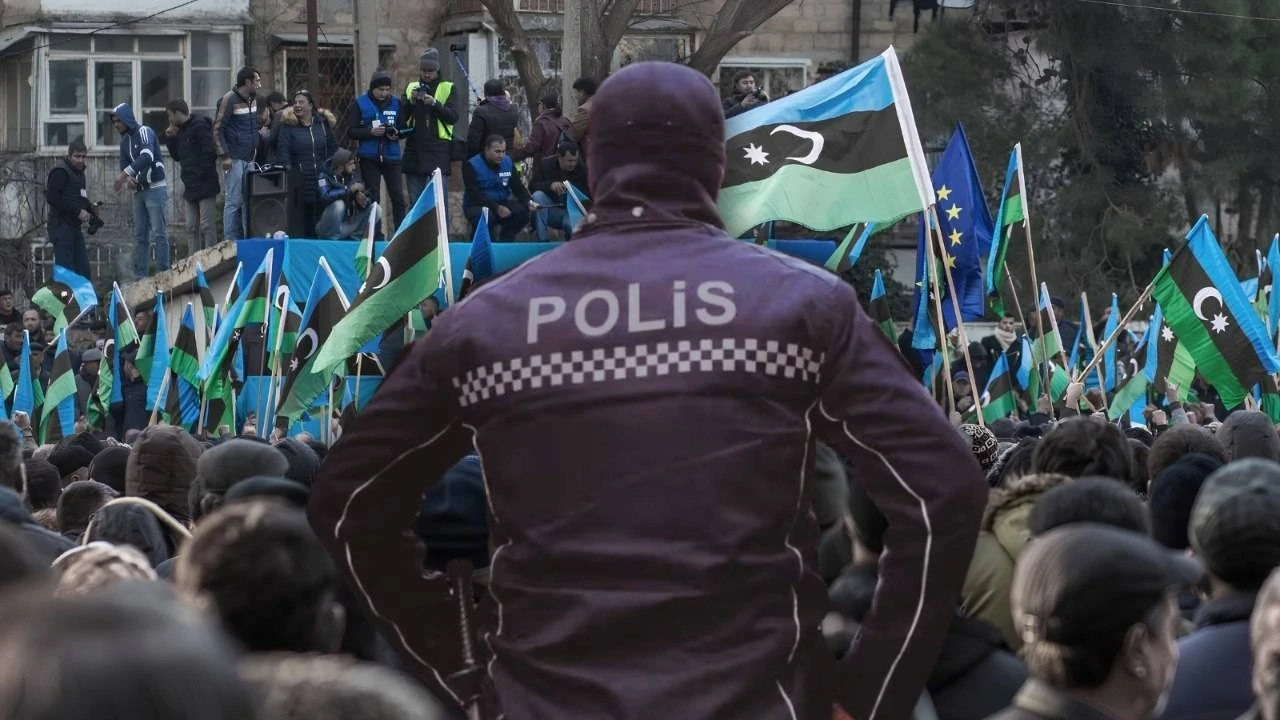
(The article was prepared within the framework of the Khar Center's studies on Azerbaijani authoritarianism)
Author: ✍️ Elman Fattah and the political analytics group of the KHAR Center
Structural transformation of Azerbaijani authoritarianism and political deadlock
This two-part study investigates how the authoritarianization, which has taken on a sharper character in Azerbaijan since 2020, has completely closed off the political environment and how these structural changes have made civil disobedience an objective necessity within society. In a situation where political institutions are effectively abolished and traditional forms of civic participation are impossible, civil disobedience appears not as a challenge, but as a structural consequence of political deadlock. The study explains various types of civil disobedience (symbolic, normative, economic) in a networked context. The impact of these types on regime stability is modeled based on three main scenarios. In conclusion, the study characterizes disobedience as a potential socio-psychological reaction of society in the post-political era and accepts it as a preliminary normative stage for future changes.
Introduction
Post-2020 Azerbaijan is a stage where the political space has been structurally completely reconfigured. This stage is characterized by transcending the previous boundaries of Azerbaijani authoritarianism, with political institutions either completely abolished or preserved in the form of formal traces. In this model, there is no longer any room for the opposition or political activity in general. When analyzing the current situation in the context of political science theory, we can confidently say that the "competitive authoritarianism" model proposed by Levitsky is left in the past. In that model, institutional frameworks (elections, courts, independent media, and political parties) preserve at least some functional capabilities, and while political competition is restricted, it is not completely abolished. However, in the case of Azerbaijan, it is clear that this structure has now collapsed, the state operates solely through repressive functions, and has turned into a "strict governance + security regime." This is more in line with Guillermo O'Donnell's "post-totalitarian rule" model. In this model, regimes rely more on bureaucratic control and institutional mechanisms, but real political competition and democratic freedoms do not exist. The political developments of recent years have revealed the following systematic trends: Legal and political opportunities for independent political parties have been completely restricted. The new law "On Political Parties" adopted in 2022, with its registration and activity requirements, enables the legal existence of only those parties close to or under the influence of the government. Among the parties trying to maintain their independence, the APFP has faced an uncertain situation regarding official state registration, and the party's chairman, Ali Karimli, has been arrested. Musavat, on the other hand, has turned into an observing actor. Elections in Azerbaijan have long turned into a procedure with predetermined outcomes: although elections continue to be held, their practical significance has completely been lost. The legal and institutional foundations ensuring the free activity of the media and civil society have been abolished. Complete control over the press has been established. The arrest and intimidation of journalists have become systematic. In addition to the law "On Media" that came into force in 2021, the strict requirements applied to the registration and financing of non-governmental organizations have also made the implementation of independent activity impossible. Today in Azerbaijan, any public initiative or activity is evaluated as a potential "criminal suspicion." Political activity, the formation of social organizations, and even the expression of free thought on social media are subjected to a repressive response. The activity of law enforcement agencies is entirely directed toward maintaining public silence. As a result of these processes, the legal and institutional avenues of political struggle (parliament, parties, elections, media, and courts) in Azerbaijan have been completely eliminated. The only potential resource left in the hands of society now is non-institutional methods of pressure. That is, society has no way out other than turning toward civil disobedience.
Methodology
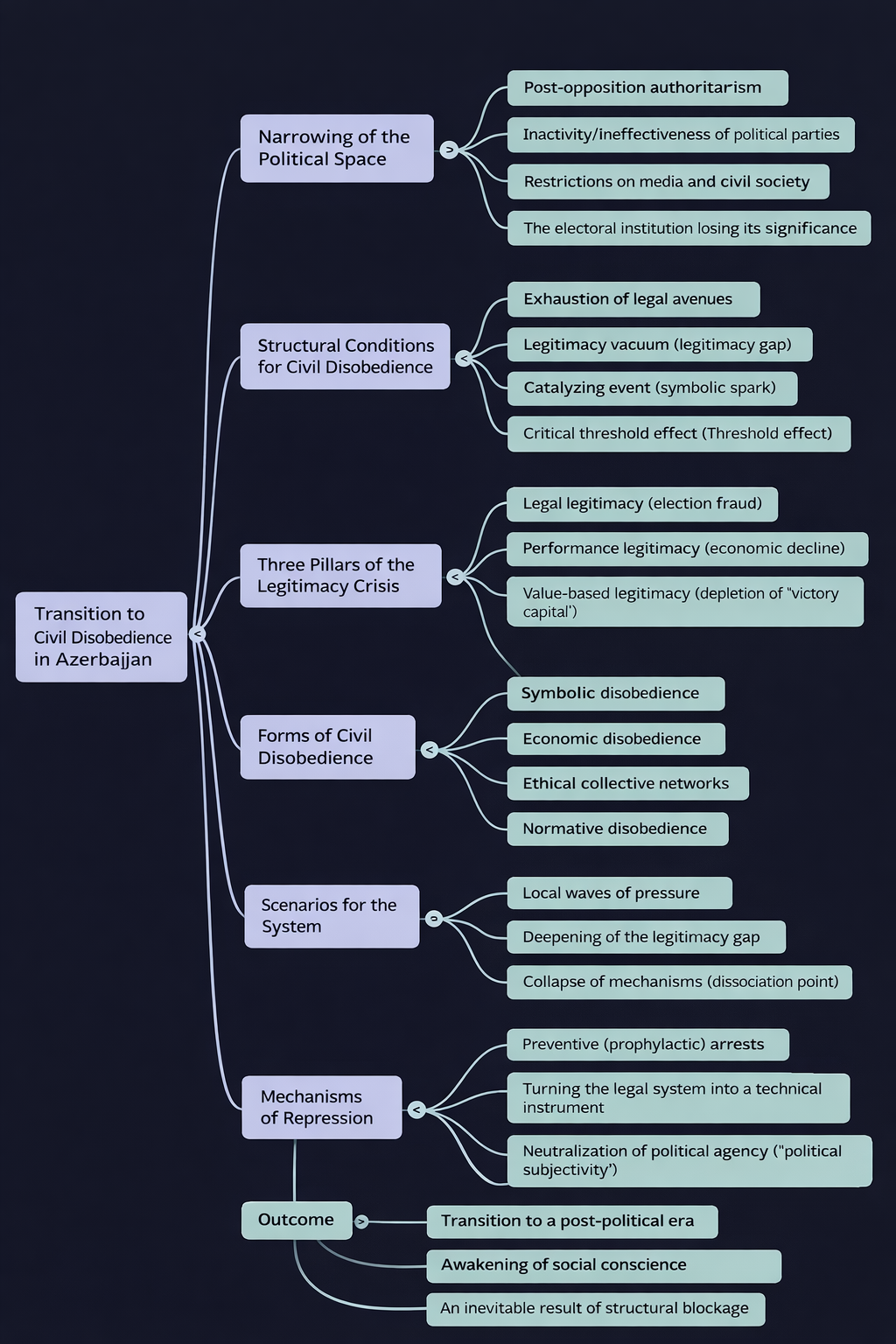
As seen from the diagram, this research is based on a conceptual, interpretative, and comparative analysis method built on the structural transformation of political activity and the objective conditions of civil disobedience. Alongside empirical data, the analysis primarily focuses on the theoretical analysis of regime characteristics, the explanation of social processes in a structural context, and the interpretation of the normative essence of public behavior, benefiting from interdisciplinary approaches such as political theory, social psychology, and regime analysis. This methodological approach allows the concept of civil disobedience to be understood also as a structure- and context-centered phenomenon. The goal is to explain how civil disobedience is formed within the framework of structural mechanisms related to the transformation of the political system. For this purpose, the research attempts to answer the question: Under the condition of the complete breakdown of institutional politics in Azerbaijani authoritarianism, from what structural conditions can civil disobedience arise?
Theoretical framework
The main theoretical aspect of the research is the emergence of post-institutional authoritarianism and the loss of functions of traditional forms of politics in such regimes. The classic "competitive authoritarianism" model is a regime where, up to a certain stage, repression and formal pluralism occur simultaneously. However, the Azerbaijani example has long departed from this framework. The research refers to the studies conducted by philosophers such as John Rawls and Hannah Arendt on civil disobedience. Rawls evaluates civil disobedience as a moral conflict that arises when the law is not just. Arendt views civil disobedience as an indicator of personal moral responsibility and a symptom of the challenges of authoritarianism. Both perspectives emphasize the difference between the formal existence of the law and its actual power (John Rawls, 2007, Hannah Arendt, 1972). This difference is extremely important, especially for post-political regimes like Azerbaijan. Another theoretical anchor point is James C. Scott's concept of "hidden resistance". Scott emphasizes that in authoritarian conditions where open protest is not possible, "everyday practices of disobedience" turn into the main carrier of resistance (Scott, J. C, 1990). Additionally, the framework of threshold models of collective behavior explains the stages of the psychological and social critical threshold for civil disobedience to take on a mass character. The concept of the dissociation point also expresses the critical threshold at the psychological level where society's identical bond with the system is lost.
What is civil disobedience and what is it not?
From a legal perspective, civil disobedience is a civic act that carries a contra legem (contrary to the law) character, but bases its legitimacy on ethical and public grounds. According to the case law of the Court of Human Rights, in cases where the state eliminates real and effective opportunities for peaceful political activity, non-violent forms of protest, even if accompanied by a formal violation of the law, can act as a self-defense mechanism of a democratic society (CHR, 2025). This is the legal and political framework of civil disobedience. Based on the approaches of authors such as John Rawls, Hannah Arendt, Henry David Thoreau, and Jürgen Habermas, it is possible to clearly outline scientifically what civil disobedience is and what it is not.
What is civil disobedience?
We can explain civil disobedience more simply through four main principles:
- Its primary goal is to inform society about violated rights and ongoing injustices. The struggles of leaders like Mahatma Gandhi and Martin Luther King are classic examples of this principle;
- Its main goal is to question the lost legitimacy of the government by reviving public morality;
- Its target is to achieve the reconsideration of non-legal laws and the implementation of political changes by ensuring the mobilization of society;
- Civil disobedience is paradoxical at first glance. It violates existing reactionary laws, but for the sake of protecting the supreme principles of law. In the words of Henry David Thoreau, “to obey an unjust law is to be a participant in injustices.” (Henry David Thoreau, 1849). That is, the philosophy of civil disobedience is a protest against extra-legalization for the sake of the rule of law.
What is not civil disobedience?
Clarifying what civil disobedience does not entail is important in terms of distinguishing it from anti-democratic forms of behavior:
- Creating aimless chaos or causing violent conflicts is contrary to the logic of civil disobedience;
- Civil disobedience aims not to overthrow the existing political regime by force, but to reform it and return it to the law through public pressure, and if this fails, to force its resignation;
- Civil disobedience does not involve secret activity, terrorist acts, or sabotage; on the contrary, its strength lies in morality and conscientiousness (JOHN RAWLS, 1971).
- Thus, currently in the reality where severe pessimism about the future has taken on a mass character in Azerbaijan, this theoretical framework provides grounds to say that civil disobedience can emerge in Azerbaijan's authoritarian political system as well.
The exhaustion of opportunities for political activity
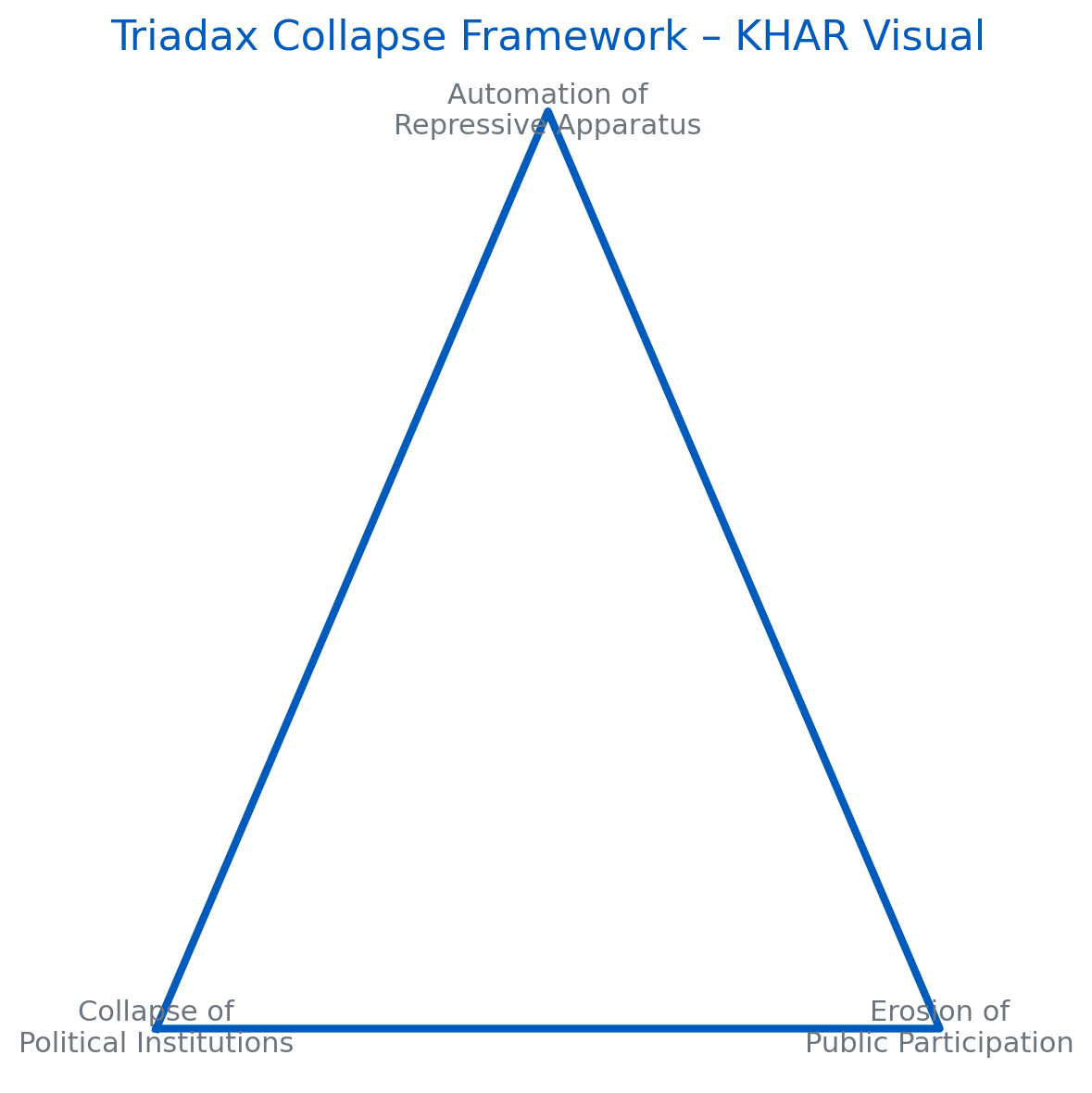
This section will investigate at which structural levels and by what methods the opportunities for political activity are restricted, as well as how this process systematically contributes to the long-term sustainability of authoritarian regimes. It does not merely discuss various human rights violations or tactical repressions; at the root of the issue lies the systematic and purposeful elimination of political activity. The de facto abolition of parties, civil society, the media, and the institution of elections has reduced society's opportunities for political participation to zero. In the absence of political alternatives, the government now tries to ensure its legitimacy based on coercive stability.
The technical nature of repression
One of the main features observed during the evolution of authoritarian systems is the "automation" of repression mechanisms. In Azerbaijan, this form has been applied more prominently, especially since 2020. While acts of political repression were previously resorted to as temporary measures tied to specific events, in the new stage, they are implemented in a regular and systematic form. This demonstrates the transformation of repression from political goals into a "mechanical management" function (Kwan Nok Chan, 2024). That is, the operational logic of the repressive system is formed along two main lines, and each produces significant consequences in terms of both the elimination of organized political activity and the dragging of society into apathy.
Preventive arrests: punishing intent
Targeting even intentions perceived as a potential threat in order to preserve the authoritarian rise is called "preventive repression" in political literature (Dragu and Przeworski 2018). This form of repression resonates with Michel Foucault's concept of the "preventive network of power": here, the goal is to pre-neutralize all spaces and subjects that could pose a risk (Foucault 1977-78). The most profound impact of repression taking on a technical character is the complete transformation of the legal system (investigative bodies, courts, prosecutor's office) into the executor of political directives. The legal system in Azerbaijan has already become functionalized as a repressive apparatus. This two-sided mechanism shapes repression as an everyday management technology, thereby deepening passivity and fear in society.
The eradication of political subjectivity
The consolidation of authoritarian regimes aims to weaken the activities of individuals and groups possessing the capacity for political participation, representation, and initiative. In the Azerbaijani environment, this process has been further accelerated by preventing the emergence of new leaders and driving intellectual potential out of the country. Although opposition parties operated as important political alternatives for a long time, over time they have distanced themselves from real political influence and turned into closed "dissident clubs". Their activities consist mainly of statements and press releases. Opportunities for genuine organization and expansion have been completely restricted (Elman Fattah, 2025a). This has resulted in the abolition of the previously existing "partial pluralism" and, logically, the structural collapse of partial political competition. Another consequence of the authoritarian environment is the prevention of the natural renewal process of political leadership. For the younger generation, politics is not only unappealing and inaccessible as a career or field of activity, but it is also very dangerous. Young people joining political activity are either systematically persecuted or encounter repression at an early stage and withdraw from this field (Human Rights Watch, 2013). Leadership is repeated only among the older generation of dissidents. This leadership vacuum paves the way for the exhaustion of political alternatives and the structural lack of competition of the current regime. Another aspect of the eradication of political subjectivity is the forced migration of political thought production and alternative political discourse out of the country as a result of stifling intellectual potential domestically. This shift causes the phenomenon of "émigré opposition" or "transnational political discourse". Although journalists, researchers, and activists operating abroad play the role of an alternative information source, their domestic influence capabilities remain limited due to their weak direct physical and social connections with society. As a result, the domestic political space empties out both ideologically and organizationally (Elman Fattah, 2025b). Another factor as important as repression and legal control in ensuring the long-term stability of authoritarian regimes is the systematic depoliticization of society. In the context of Azerbaijan, this process is realized on a sociological level along two parallel lines: security-conditioned public apathy and the devaluation of politics.
Currently in Azerbaijan, staying away from politics has formed as a kind of self-defense instinct. Staying out of politics to protect security, stability, and personal well-being has become an adaptive behavioral model. In conditions where activism carries risk, people accept abandoning political participation as a "rational choice". Aliyev's authoritarianism instills the concept of "politics" into society as a subject of top-down management, completely stripping politics of democratic elements that reflect people's participation and representation. The regime frames political activity as a technical field "not belonging to ordinary citizens" and "decided at the center". Such a picture reinforces the conviction of the "impossibility of political activity" in society's subconscious. (Elman Fattah, 2025).
The ground for civil disobedience
This two-sided depoliticization process may bring stability to the regime in the short term, but in the long term, it will create conditions for the emergence of non-institutional behaviors. When society's opportunities for legal political participation come to an end, public energy begins to look for other ways, and this gradually takes the form of civil disobedience. Such a situation recalls the breach of contract described by John Locke and Jean-Jacques Rousseau in classical political theory (Rousseau, 1762). Jean-Jacques notes that when the state fails to perform its duties and reduces the people's opportunities for participation, citizens have the right to resist. That is, the formula "the impossibility of legal activity directs public energy into an alternative channel" can condition the transition of social tension to a new stage. The level of organization and sustainability of these transitions mainly depend on society's capacity for organized resistance and its ability to combine its intellectual-political potential with external means of pressure.
Structural conditions for the transition to civil disobedience
Civil disobedience never arises solely as a result of a purely emotional or spontaneous reaction. On the contrary, this form of collective behavior can only become a possible and legitimate socio-cultural practice when certain objective structural conditions exist (Charles Tilly, 2004). Without such conditions, dissatisfaction either remains in the form of passive apathy or fragments into uncoordinated and ineffective individual grievances (such as the Shaki, Ismayilli, Guba, and Soyudlu events). For civil disobedience to form, there must be a complex structural ground consisting of political, legal-institutional, as well as psychological-public factors.
The exhaustion of legal and institutional means
The main condition for civil disobedience is that the opportunities for legal political participation have completely disappeared. In other words, democratic institutions such as elections, judicial protection, freedom of assembly, and freedom of expression must no longer function. Theorists like John Rawls and Jürgen Habermas place this condition at the center when explaining the normative foundations of civil disobedience: citizens can suspend their duty of obedience to the system only when the system does not allow them to express their opinions through legal means. In social movement theory, this situation is explained by the concept of "political opportunity structures": that is, a social movement can turn into collective action only against the background of the loss of the above opportunities, and simultaneously under certain socio-cultural conditions. Independent media, diaspora support, human rights defenders, and intellectual resources are of exceptional importance in the revival of such activity (Doug McAdam, 1999). Authoritarian regimes maintain their dominance not only through physical force and institutional control, but also over legitimacy. A crucial turning point for civil disobedience to occur is the loss of belief in the regime's legitimacy by a significant part of the citizens. At this stage, obeying existing laws becomes a moral contradiction for citizens, and systematic disobedience begins to appear as a legitimate way out.
Catalyst event
Finally, the transition to civil disobedience is often activated by a symbolic spark. This can be related to an arrest, a sudden human rights violation, or an event that causes widespread public resonance. Such sparks play the role of a psychological impetus that turns dissatisfaction into a movement. A similar mechanism is clearly visible in the "Arab Spring" processes that took place in the Middle East and North Africa in the 2010s, as well as in the civil protests observed in Armenia in 2018 or in Kazakhstan in recent years (Jason Brownlee, Tarek Masoud, Andrew Reynolds, 2015. Rayhan Demytrie, 2018. Abdujalil Abdurasulov, 2022.). Thus, civil disobedience is a social consequence brought about by certain structural conditions. The political space is narrowing with repression, the restriction of citizens' capacity for subjectivity, and the closing of political avenues, ultimately leading to citizens' political participation by means of breaking the law. The paradox is that in an authoritarian environment where lawlessness increases, breaking the law sometimes emerges as the only manifestation of civic responsibility.
Click here to read the second part of the article.
Note: The article you have read was originally written in the Azerbaijani language. Artificial intelligence tools were used only in the translation.
References
John Rawls, 2007. Civil Disobedience. https://plato.stanford.edu/archives/win2016/entries/civil-disobedience/
Hannah Arendt, 1972. Crises Of The republic. https://blogs.law.columbia.edu/uprising1313/files/2017/10/Arendt-Disobedience.pdf
Scott, J. C, 1990. Domination and the Arts of Resistance: Hidden Transcripts. https://files.libcom.org/files/scott_dominationandresistance.pdf
ECHR, 2025. Guide on the case-lawof the European Conventionon Human Rights. https://ks.echr.coe.int/documents/d/echr-ks/guide_mass_protests_eng
Henry David Thoreau, 1849. Civil Disobedience. https://blogs.law.columbia.edu/uprising1313/files/2017/10/Civil-Disobedience-by-Henry-David-Thoreau.pdf
JOHN RAWLS, 1971. A THEORY OF JUSTICE, Revised Edition. https://files.blogs.baruch.cuny.edu/wp-content/blogs.dir/4124/files/2015/12/A-Theory-of-Justice-Excerpts.pdf
Kwan Nok Chan, 2024. Public administration in authoritarian regimes: propositions for comparative research. https://www.tandfonline.com/doi/full/10.1080/23276665.2024.2306554
TIBERIU DRAGU and ADAM PRZEWORSKI, 2018. Preventive Repression: Two Types of Moral Hazard. https://www.cambridge.org/core/journals/american-political-science-review/article/abs/preventive-repression-two-types-of-moral-hazard/5D6751CC4C05BB5D03BE7C2B9FA228FF
MICHEL FOUCAULT, 1977-78. Security, Territory, Population. LECTURES AT THE COLLÈGE DE FRANCE, https://mirror.explodie.org/Foucault-Security-Territory-Population.pdf
Elman Fəttah, 2025a. Hardening After Victory: The Trajectory of Azerbaijani Authoritarianism Toward Dictatorship. https://kharcenter.com/en/researches/hardening-after-victory-the-trajectory-of-azerbaijani-authoritarianism-toward-dictatorship
Human Rights Watch, 2013. Azerbaijan: Authorities Targeting Youth Activists. https://www.hrw.org/news/2013/04/02/azerbaijan-authorities-targeting-youth-activists
Elman Fəttah, 2025b. Hardening After Victory: The Trajectory of Azerbaijani Authoritarianism Toward Dictatorship. https://kharcenter.com/en/researches/hardening-after-victory-the-trajectory-of-azerbaijani-authoritarianism-toward-dictatorship
Elman Fattah, 2025. The Stability and Legitimacy Mechanism of Azerbaijani Authoritarianism. https://kharcenter.com/en/publications/the-stability-and-legitimacy-mechanism-of-azerbaijani-authoritarianism
John Locke, 1689. Two Treatises of Government. https://www.yorku.ca/comninel/courses/3025pdf/Locke.pdf
Jean-Jacques Rousseau, 1762. The Social Contractor Principles of Political Right. https://www.files.ethz.ch/isn/125486/5017_Rousseau_The_Social_Contract.pdf
Charles Tilly, 2004. Social Movements. https://voidnetwork.gr/wp-content/uploads/2016/09/Social-Movements-1768-2004-by-Charles-Tilly.pdf
Doug McAdam, 1999. Political Process and the Development of Black Insurgency, 1930-1970. https://press.uchicago.edu/ucp/books/book/chicago/P/bo5939918.html
Jason Brownlee, Tarek Masoud, Andrew Reynolds, 2015. Breakdowns and Crackdowns. https://academic.oup.com/book/27599/chapter-abstract/197644888?redirectedFrom=fulltext
Rayhan Demytrie, 2018. Why Armenia 'Velvet Revolution' won without a bullet fired. https://www.bbc.com/news/world-europe-43948181
Abdujalil Abdurasulov, 2022.Kazakhstan unrest: 'If you protest again, we'll kill you'. https://www.bbc.com/news/world-asia-60058972
