(The article was prepared by the "Khar Center" within the framework of research on Azerbaijani authoritarianism)
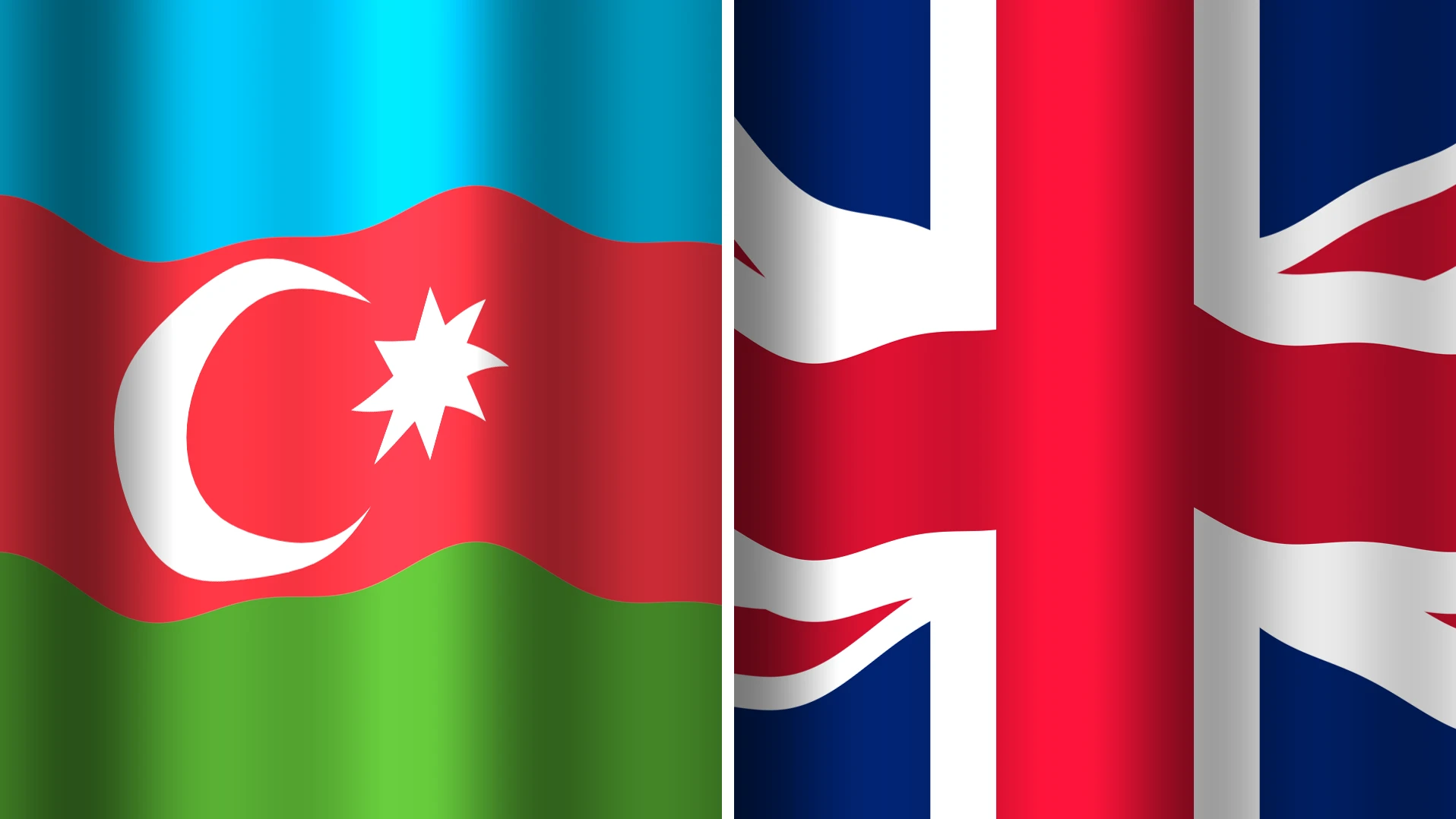
On 12 November in Dublin, on the sidelines of the 9th Summit of the European Political Community, a Joint Declaration on Strategic Partnership was signed between the United Kingdom of Great Britain and Northern Ireland and the Republic of Azerbaijan. The document, signed by the President of Azerbaijan Ilham Aliyev and the Prime Minister of Great Britain Andy Burnham, covers areas such as defence and security, trade and investment, and education and innovation (President.az, 2026a).
In the field of defence, the Declaration envisages the training of military personnel, strengthening institutional capacity, developing interoperability between armed forces, and exploring joint initiatives in the defence industry. The document also provides for expanding cooperation between law enforcement agencies, in border management, and between judicial and legal institutions. In the economic sphere, it envisages expanding the existing ties in the energy sector towards renewable energy, green finance, infrastructure, transport and logistics, and financial markets. In this context, special place is given to the Middle Corridor project. In education and innovation, the development of links between universities, research institutes and technology companies, and cooperation on artificial intelligence, digital governance and vocational training are planned. The Declaration also states that Britain supports the efforts aimed at lasting peace between Azerbaijan and Armenia (President.az, 2026a).
The Dublin Declaration is in fact not a new beginning in the relationship, but the expression in a strategic document of cooperation that has been intensifying in recent years. It was announced in advance by Britain's Minister for European Affairs Stephen Doughty during his visit to Baku in August 2025. The minister announced that the relations would be raised to the level of a strategic partnership (Gov Uk, 2025a). Two months after this announcement, Britain lifted its arms embargo on Azerbaijan and Armenia (UK Parliament, 2025). In the last month of 2025, the expansion of military cooperation was discussed during the visit of Britain's Defence Minister Vernon Coaker to Baku (APA, 2025). Shortly after that same visit, the British government announced that, since the lifting of the embargo in October, the broadest bilateral defence cooperation programme to date between Baku and London had been signed (Gov Uk, 2025 b). The military-security dimension of the Dublin Declaration is the formal reflection of these processes in an official document.
As for economic relations, since the first years of Azerbaijan's independence Britain has been one of the country's main foreign economic partners and one of the key participants in its oil and gas projects. BP's participation in the Azeri–Chirag–Gunashli and Shah Deniz projects has made Britain one of Azerbaijan's most important partners and has been one of the main factors determining the nature of the relations between the two countries. During the Dublin meeting, Ilham Aliyev stressed that Britain is the largest European investor in Azerbaijan (President.az, 2026 b).
In the new Declaration, however, the relationship goes beyond the boundaries of oil and gas: it extends to defence technologies, military training opportunities and new sources of investment, and envisages expanding access to international financial markets.
The Dublin Declaration contains no specific figures, agreements or contracts; it defines a framework and at the same time creates a permanent dialogue mechanism in the form of strategic partnership meetings to be held every year.
For Britain, beyond protecting its economic interests, this Declaration is an opportunity to expand its possibilities of participation in regional transport, infrastructure and energy projects, and at the same time to strengthen its position in the South Caucasus through the defence-security track. Considering that London also signed a strategic partnership declaration with Armenia in May of this year (Gov Uk, 2026), this means that Britain's main goal is to become one of the key actors in the region, to take advantage of the new opportunities created by the peace process, and to take a more active part in the future regional security architecture. However, even the difference between the contents of these two documents reveals how important a role economic interests play in the erosion of political values. Indeed, while the partnership declaration with Armenia places special emphasis on the principles of democracy, human rights, the rule of law and good governance, these issues have been completely "forgotten" in the document signed with Azerbaijan. In the document signed with Armenia, the parties
- reaffirmed their commitment to democratic values, transparent and effective governance, and inclusive institutions;
- stressed the importance of ensuring free and fair elections;
- supported the development of the fight against corruption;
- stressed the importance of creating an enabling environment for independent media and civil society;
- agreed to explore additional bilateral cooperation that will strengthen democratic resilience (Gov Uk, 2026).
The strategic partnership declaration signed with Azerbaijan makes no reference at all to democracy, human rights, political freedoms, or media and freedom of expression. The "principle of the rule of law" is mentioned only once – and that in the context of strengthening cooperation between law enforcement agencies, in border management, and in judicial and legal matters. The concept of "civil society" is likewise highlighted not in the context of the freedom of activity of independent non-governmental organisations or the protection of their rights, but in the context of cultural ties and people-to-people exchanges in the field of education and innovation. That is, Britain has defined the expansion of cooperation with Azerbaijan's security institutions as a strategic priority, while issues such as democratic governance, the protection of fundamental rights and the guaranteeing of political freedoms have not been included among the conditions or principles of this partnership.
This difference in itself shows the erosion of values in Britain's approach to Azerbaijan, and it appears even more starkly against the background of the position that Azerbaijan demonstrated at the Dublin summit. Official Baku did not join three documents put forward within the European Political Community summit – the Declaration on the Core Principles of European Security, the Statement on Migration and the Statement of the European Coalition against Drugs. The Azerbaijani Ministry of Foreign Affairs openly stated that these documents were not signed because they create additional legal and political obligations (Azerbaijani MFA, 2026). It should be noted that the declaration on European security, which Baku did not sign, presents democracy, human rights, media freedom and an open civil society as key elements of Europe's long-term security. That is, on the one hand the Azerbaijani authorities raise defence, security and economic cooperation with Britain to the level of a strategic partnership, and on the other hand they refuse to join the new multilateral political commitments put forward by Europe in the areas of security, migration and the fight against drugs. Although Britain is an active participant in the summit and one of the main parties on European security, in its declaration with Azerbaijan it makes no reference to any of the values that are envisaged as the key elements of Europe's long-term security.
This is not surprising given the authoritarian character of the Azerbaijani government and its "pampered" attitude, which is based on the growth of Europe's needs against the background of global changes and the increased importance of oil and gas resources. For the authoritarian Azerbaijani government, raising relations with a permanent member of the UN Security Council and one of NATO's main powers to this level means increased international diplomatic weight and bargaining power, political patronage, an additional layer of legitimacy and an armour of political immunity. Particularly against the background of the complete "killing" of democratic institutions in Azerbaijan and of human rights violations becoming an integral part of the state bureaucracy, such international partnerships are one of Ilham Aliyev's most powerful weapons.
In this regard, the fact that on the very day the strategic partnership declaration with Britain was signed, public activists in Baku were sentenced to heavy prison terms for crimes they did not commit is not a symbolic coincidence, but a logical consequence of the unprincipled stance of the West, including London. On 12 November the Baku Grave Crimes Court sentenced the public activist Elgiz Gahraman to 9 years, and Imran Aliyev, head of the independent parliamentary monitoring platform Meclis.info, to 10 years of imprisonment. Throughout the trial Elgiz Gahraman rejected the charges and was arrested in the courtroom immediately after the verdict was announced (Radio Azadliq, 2026). This is a glaring indication of the contradiction between London's declarations of commitment to democratic values and the real substance of its relations with Baku.
The West's failure to make democratic reforms and human rights a condition of strategic partnership, and even its complete disregard of them, gives Ilham Aliyev an additional incentive to bring the already grave situation of democratic institutions, independent media and civil society in Azerbaijan to a dramatic extreme. The government retains and increases the ability to continue its repressive policy without the risk of international isolation and serious political pressure. Yet this is harmful and dangerous also from the standpoint of the West's own medium- and long-term interests. For several years, in the example of Russia, Western countries have been tasting the bitter consequences of the line of encouraging and rewarding authoritarian leaders for the sake of short-term economic or political interests and turning a blind eye to the disappearance of democratic institutions and fundamental freedoms. But it seems that lessons are not being learned from these bitter consequences; on the contrary, Western states are competing with one another in creating "little Putins" in the person of Ilham Aliyev. This is an open risk in the future, both for the regional projects the West is hoping so much for, and for the completion of the peace process with Armenia. Ilham Aliyev is a head of state who has repeatedly demonstrated that he is an unreliable ally, that he sees all alliances merely as a means of strengthening and prolonging his own power, and that he feels no discomfort at all in changing allies (for example, in the cases of Russia and Turkey). In this regard, declaring the Azerbaijani leader an unconditional strategic ally without obligations means, above all, that the West is shooting itself in the foot.
In a word, the Dublin Declaration is one of the countless examples of the West's selective behaviour in foreign policy and of its failure to make value-based decisions in relation to authoritarian regimes. This document shows that for London, energy security, economic opportunities and strengthening geopolitical positions in the South Caucasus are important enough to make it forget democracy and human rights. For Baku, it is a godsend – by taking advantage of the opportunities created by economic interests, it consolidates its international legitimacy without making any concessions in the authoritarian model of governance. As a result, this international patronage reduces the political costs of repressive policy to zero, undermines the credibility of the values the West itself proclaims, and at the same time strikes a blow at the West's long-term interests.
Note: The article you have read was originally written in the Azerbaijani language. Artificial intelligence tools were used only in the translation.
REFERENCES
President.az, 2026 a. Joint Declaration on Strategic Partnership between the Republic of Azerbaijan and the United Kingdom of Great Britain and Northern Ireland. https://president.az/az/articles/view/74690
Gov Uk, 2025a. UK Minister visits Baku to advance UK-Azerbaijan partnership. https://www.gov.uk/government/news/uk-minister-visits-baku-to-advance-uk-azerbaijan-partnership
UK Parliament, 2025. Upgrading of UK Bilateral Relationships with Armenia and Azerbaijan and Lifting the UK Arms Embargo. https://questions-statements.parliament.uk/written-statements/detail/2025-10-13/hlws948
APA, 2025. UK Defence Minister visits Baku to strengthen UK-Azerbaijan defence partnership. https://en.apa.az/social/x-485483
Gov Uk, 2025 b. UK Defence Minister visits Baku to strengthen defence partnership. https://www.gov.uk/government/news/uk-defence-minister-visits-baku-to-strengthen-defence-partnership
President.az, 2026 b. Ilham Aliyev met with the Prime Minister of Great Britain in Dublin. https://president.az/az/articles/view/74694
Gov.Uk, 2026. Joint Declaration on a Strategic Partnership between the United Kingdom of Great Britain and Northern Ireland and the Republic of Armenia. https://www.gov.uk/government/news/joint-declaration-on-a-strategic-partnership-between-the-united-kingdom-of-great-britain-and-northern-ireland-and-the-republic-of-armenia
Azerbaijani MFA, 2026. No: 431/26, Response of the Press Secretary of the Ministry of Foreign Affairs Aykhan Hajizada to a media question regarding the documents adopted during the 9th Summit of the "European Political Community". https://mfa.gov.az/az/news/no43126?
Radio Azadliq, 2026. Imran Aliyev sentenced to 10 years, Elgiz Gahraman to 9 years in prison. https://www.azadliq.org/a/imran-eliyev-elgiz-qehreman-hebs/33897129.html
