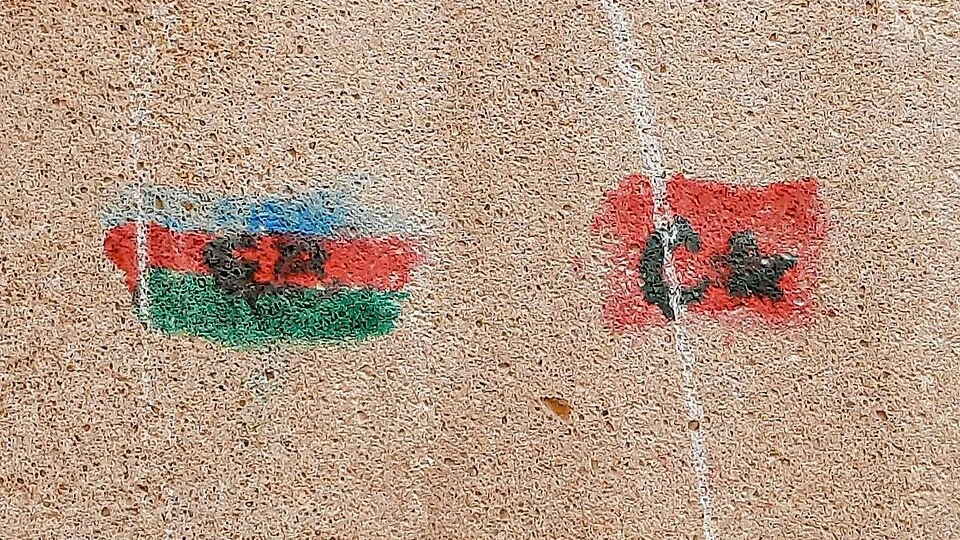
Over the past 20 days, Azerbaijan–Turkey relations have gone through the second major crisis of their modern history. After the Turkey–Armenia protocols and the Turkish Martyrs’ Memorial–flag crisis of 2009–2010, relations between the two countries have once again become strained to the point of reaching the level of an interstate crisis.
In this latest tension, the expectation of “gratitude” held by Turkish President Recep Tayyip Erdoğan, and by the Turkish public in general, collided with the “victorious” hubris of Azerbaijani President Ilham Aliyev.
The Turkish public, which expects continuous gratitude from Azerbaijan in return for the unparalleled support Ankara provided in the Second Karabakh War (weapons, military equipment, command, advisory, political and moral), was shaken in early October by Ilham Aliyev’s arrogant remark that “we paid for all the weapons we bought” (President.az, 2026a). Circles close to the Turkish government initially tried to cover up this statement of Aliyev’s, saying “he did not name names, he does not mean us.” In Azerbaijan, too, there were those who suggested that the target of the statement was Iran (Pressklub, 2026). However, the subsequent course of events rendered this assessment void.
Before the shock of Aliyev’s speech had even worn off, the protests coming from Turkey’s conservative segment against the hijab ban in Azerbaijan became, for official Baku, a pretext to “open the chest and pour out the cotton” [i.e., to air all its accumulated grievances]. APA, the subservient media outlet of the Azerbaijani government, with an article titled “456 ship voyages from Turkey to Israel: The unseen side of ‘zero trade’,” demonstrated that official Baku had long been preparing for “battle.” Although the article was deleted from the website a short time later, it was an open message from the Azerbaijani government to Turkey (IntelliNews, 2026). In parallel, the number of accusations against Turkey on social media also increased. Although the Azerbaijani government did not say so officially, it began to convey to the Azerbaijani public messages claiming that the protests in Turkey against the hijab ban were organized directly by the Erdoğan government. The protests against the hijab ban by Oktay Saral, Chief Advisor to the President of Turkey, and AKP Member of Parliament Leyla Şahin Usta, in turn, became a godsend opportunity for the Azerbaijani government. An organized “attack” against Turkey, bearing the “signature style” of the Azerbaijani Presidential Administration, began across all official and unofficial propaganda tools – from the New Azerbaijan Party to the Media Council, from AZTV to websites, from public accounts on social networks to bots (YAP, 2026). The main motif in the attacks was “the inadmissibility of interference in Azerbaijan’s internal affairs by the AKP mindset that is dragging Turkey backward.” However, this motif was also embellished with accusations that Turkey had betrayed Azerbaijan at various stages of history, threats to introduce visas for Turkey, and so on.
During the period when tension was rising, official Baku turned into a “personal matter” the fact that it was Hakan Fidan, rather than Erdoğan, who came to Baku to attend the summit of the Conference on Interaction and Confidence-Building Measures in Asia (CICA) held in Baku on October 14, as well as his leaving the hall during the Israeli president’s speech at the conference. As soon as Fidan left Baku, an article accusing Turkey’s foreign minister of a coup d’état in Azerbaijan was published on Qafqazinfo, a website known to be under the patronage of the Azerbaijani Presidential Administration. Shortly afterward, the article was deleted from the Azerbaijani-language version of Qafqazinfo, but it remained on its Russian-language page. At the same time, these accusations also began to be shared on other websites under the control of the Azerbaijani government. Turkey’s embassy in Baku, which usually chooses to remain silent on political matters, was compelled to issue a statement regarding the accusations and to refute them in harsh language (AA, 2026).
Neither Turkish President Recep Tayyip Erdoğan’s “my brother Ilham Aliyev” statement on October 18 on the occasion of Azerbaijan’s Independence Day, nor the message of Nationalist Movement Party leader Devlet Bahçeli, nor the countless congratulatory statements coming from Ankara reduced the tension. Media outlets under the control of the Azerbaijani government continued to publish articles accusing Turkey on October 18 and in the days that followed. While Azerbaijan’s official and unofficial broadcasters were accusing Turkey’s highest-ranking officials of a coup d’état, the Aliyev government declared “war” on those in Turkey who harshly criticized the hijab ban.
The “attack” of the Azerbaijani authorities was not limited merely to articles and statements. Having first opened a criminal case against journalist Celal Çiftçi, the Azerbaijani authorities announced on October 19 that they had issued in absentia arrest warrants for 7 more Turkish citizens and put them on the international wanted list, and, in addition, had declared 31 Turkish citizens persona non grata (Meydan TV, 2026).
As the Azerbaijani government was raising the dose of tension, claims began to circulate behind the scenes that Ilham Aliyev had put forward conditions to Ankara. According to these claims, official Baku demanded that Oktay Saral be removed from office, that persons who insulted Aliyev be held criminally liable, and that their social media accounts be closed. The report also stated that the Azerbaijani authorities had submitted a list of these sites to Turkey (MEE, 2026a). The report was denied by neither the Azerbaijani nor the Turkish side. On October 21, the Azerbaijani authorities declared 31 Turkish citizens persona non grata – among these individuals, who come mainly from the conservative segment, are New Welfare Party (Yeniden Refah) leader Fatih Erbakan, journalists Adem Özköse, İsmail Kılıçarslan, Hakkı Eren and Yusuf Kaplan, and theology professor Mehmet Boynukalın. Individuals such as Member of Parliament Ömer Faruk Gergerlioğlu, who defends human rights and frequently criticizes the Azerbaijani government, and Yahya Uğraş, deputy chairman of the right-wing Özgür Dava Party, are also on the list (MEE, 2026b).
As the tension was rising toward the peak of an interstate crisis, the main question in Ankara was whether or not Ilham Aliyev would attend the Organization of Turkic States summit to be held in Turkey on October 29–30. While reports that the Prime Minister of Georgia would visit Azerbaijan on the same dates further heightened the intrigue, Turkish President Recep Tayyip Erdoğan’s phone call to Ilham Aliyev changed the picture in an instant. The official statement issued by the Turkish side stated that Erdoğan emphasized the right of brotherhood between the two countries and invited Aliyev to the OTS summit (İletişim Başkanlığı, 2026). The statement of the Azerbaijani side, meanwhile, emphasized that Aliyev expressed his confidence that fraternal relations would continue to develop successfully from now on as well (President.az, 2026b). Immediately after the statements on the phone conversation, the tone of the media under the control of the Azerbaijani government changed. The Azerbaijani media, which had directly accused the Turkish state and even put forward accusations of a coup d’état, began to speak of the trust between Aliyev and Erdoğan, and switched to the tone of “it would not be right to attribute the positions of individual persons to the Turkish state and society as a whole.” Alongside this, the line of reproach still continues – through the voice of the media under its control, the Azerbaijani government is giving Ankara the message that this call came late. At the same time, in these articles it expressed its surprise that criticism of Azerbaijan in Turkey had not been stopped (Report, APA, 2026).
Did Erdoğan’s call end the crisis?
Although Erdoğan’s phone call relatively softened the open phase of the October tension between the two countries, nothing has changed in principle in the contradiction between them. The Turkish president – who, despite being known for his hubris, behaved quite restrainedly in this crisis – by calling Ilham Aliyev after his “brotherhood”-emphasizing message, took the pretext out of the other side’s hands. However, it would be rather presumptuous to say that this was the call that resolved the crisis. First of all, although there has been a certain change in the rhetoric of the media under the control of the Azerbaijani government, facts such as the preservation of the reproachful tone, Aliyev’s failure to give any response, positive or negative, to Erdoğan’s open invitation to attend the OTS summit, and the absence of any step back regarding the Turkish citizens declared persona non grata show that official Baku is not interested in reducing the tension. At the same time, the Azerbaijani authorities are interested in appearing “victorious” in this matter as well. The Aliyev government is trying to demonstrate that it has made Turkey accept its position and that Ankara “came to its doorstep” – the rhetoric of the Azerbaijani media, and of the networks it has activated in the Turkish segment of social media along with this crisis (such as the Şedevr website), shows this.
However, there is no fact showing that Aliyev’s position has been accepted by Ankara. Even if the Turkish government does not comment at the official level in order to avoid tension, it is very far from displaying the position the Azerbaijani government desires on the issue of the hijab ban. The headscarf issue is an identity issue for the Turkish government. Erdoğan’s political career has been built, to a large extent, on a struggle symbolized by the headscarf. For this reason, expecting the conservative public in Turkey to accept the restrictions the Azerbaijani authorities have imposed regarding the headscarf in schools simply as another country’s internal affair does not correspond with political reality.
The electorate of the AKP and of Erdoğan, who claims to be “the voice of the world’s Muslims,” may view with understanding his silence regarding the hijab ban in Azerbaijan as “a requirement of interstate relations,” but it would not, for that reason, understand his subjecting conservatives to repression as Ilham Aliyev wishes. For this reason, just as Erdoğan does not want to confront Aliyev, neither does he – nor will he – want to alienate Turkish conservatives at a time when his domestic support is already on a declining trajectory.
From this perspective, it seems more logical to say that Erdoğan’s call did not end the crisis. It simply appears that Turkey is trying to prevent the crisis from spreading to other areas of interstate relations. The mutual interests formed in the fields of energy, transport, military cooperation and regional security, as well as the personal-economic ties between the Aliyev and Erdoğan families, may increase the political and economic costs of continuing an open confrontation for a long period. For this reason, the current situation is not so much the end of the tension that has flared up between the two countries as its being swept under the rug.
Brothers, yet strangers…
This crisis experienced between Turkey and Azerbaijan will probably become the subject of analyses and assessments from many aspects. For now, it can be said unequivocally that the political elites of Turkey and Azerbaijan, as well as their societies, do not know each other. Common ethnic, linguistic and religious affiliation, historical memory, and the rhetoric of brotherhood repeated for many years have pushed into the background the reality that the political systems in the two countries, as well as the mentality and ideological approaches of their peoples, are different.
The difficulty the Azerbaijani authorities have in accepting criticism in Turkey, and their surprise that the critics are not silenced by Erdoğan, are among the facts that show the strangeness of the “two brothers” to each other. For Ilham Aliyev, the division consists of his own power and everyone else. The adoption of political decisions, the behavior of media outlets and the boundaries of public debate are determined by the logic of a centralized authoritarian system. In this system, it is difficult to imagine that any political statement by persons close to the government could take place outside the will of the authorities. At the same time, it is also difficult [for them] to understand why hundreds of critics on social media are not silenced. These elements exist in Turkey as well, but with sharp differences. Despite authoritarianism deepening day by day, in Turkey elections and the electorate are still an important factor, the ideological divide still remains, it has not been possible to bring the political environment completely under control, and, especially on social media, completely silencing critics is not as easy as it is in Azerbaijan. The fact that the Erdoğan government is conservative and religious does not mean that it is able to manage all religious, conservative and nationalist groups in Turkey from a single center – on the contrary, in many cases the AKP government is compelled to make concessions to these groups for the sake of votes. Ilham Aliyev, however, has no such compulsions – for him, concepts such as elections, votes, the electorate and public opinion carry no significance whatsoever. Ilham Aliyev reads Turkey’s political reality through the Azerbaijani model of governance. According to his reading, if there is a conservative critic, then Erdoğan must be the one organizing it, and Erdoğan can also stop it; if he does not stop it, that means he does not want to.
At the same time, the perceptions in Turkish public opinion regarding Azerbaijan’s political system, its understanding of secularism and state–religion relations are also quite limited. Turkish conservatives think that the dispute over the headscarf in Azerbaijan is a matter of religious sensitivity, just as it is in their own country. Whereas, for the vast majority of the people in Azerbaijan, no such problem exists. For one part of Azerbaijanis, this is a matter of “the government knows what it is doing”; for another part, “what was this needed for – but then again, what is it to us”; for a small part, a matter of religious sensitivity; and for an even smaller part, a matter of the violation of a democratic right. Azerbaijanis’ understanding of secularism is not the same as Turkey’s. Azerbaijanis’ view of religiosity is not the same as Turkey’s either. From this perspective, for Ilham Aliyev there is no restriction, hesitation or obstacle in implementing the hijab ban, just like any other law he wants; on the contrary, in many cases there is even support (artificial or natural). However, a large part of Turkish society is unaware of this. And the behavior of the vast majority of those who are aware of it changes in accordance with the conjuncture – in periods when Aliyev–Erdoğan relations are good and this goodness does not touch their own interests, they cover up the truths with an emphasis on “brotherhood”; when their own interests come into play, they remember the democratic Azerbaijan Republic [of 1918], its founder Rasulzade, and also that Ilham Aliyev is “corrupt and a dictator,” or else they recall Elchibey, who has been mythologized while almost none of the truth about him is known (or, even if it is known, is not voiced). These recollections are usually reflexive and episodic; once the dispute ends, the same groups return once again to the “brotherhood”-emphasizing agenda of veiling the truths. Just like groups close to the Azerbaijani government declaring Erdoğan a leader and a hero when relations are warm or when the need arises, and “remembering” in moments of crisis that the Turkish leader is “reactionary”…
In summary, although there has been a slight decrease in the temperature of the most serious crisis of recent years between the two countries with Erdoğan’s call, this does not mean that the tension and the contradictions have been eliminated. On the contrary, this crisis brought to the surface the contradictions that had for many years remained in the shadow of the “one nation, two states” rhetoric. The main factor deepening the contradictions, meanwhile, is that the Azerbaijani authorities feel very comfortable. If previously his weak position in the Karabakh conflict, his contradictions with the West and his problems with society made Turkey’s support a necessary factor for Ilham Aliyev, he now thinks that he no longer needs it. The energy “marriages” with Europe added on top of the Karabakh victory, the privileges this brings on the issue of democracy and human rights, and his warm relations with the US administration have further heightened Ilham Aliyev’s “victorious” euphoria. The image of one who “challenges Russia, Iran and Turkey alike” is more important to Ilham Aliyev than the breakdown of relations with the state that is Azerbaijan’s closest ally. Moreover, while trying to undermine these relations, he also uses (or, more precisely, abuses) factors such as the West’s dissatisfaction with Erdoğan’s Islamist-conservative course, the gradual weakening of the Turkish government’s economic positions, and Ankara being a state in disputes with many countries in its region. In this situation, Ilham Aliyev’s arrogance and his desire not to appear dependent on Turkey’s support collide with Erdoğan’s compulsion to preserve the comprehensively deepening alliance and with his claim to regional leadership. Until now, these points of contradiction had manifested themselves in the attitude toward Israel and in the approaches to how relations with Armenia will be shaped from here on. Now added to these are the hijab ban, which the Azerbaijani authorities call an internal matter and which the Turkish public regards as a matter of religious freedom, and Baku’s accusing Ankara of a coup d’état. Although strategic relations, as well as personal-economic ties, compel the Turkish and Azerbaijani governments to stay together, the spread of the contradictions into the fraternal societies, whose knowledge of each other is limited, shows that a return to the former effect of the “one nation, two states” rhetoric will not be very easy. Even if the crisis is overcome at the current stage, even if it appears to have been resolved, these contradictions will surface again – and perhaps in a sharper form – in any disagreement ahead.
Note: The article you have read was originally written in the Azerbaijani language. Artificial intelligence tools were used only in the translation.
REFERENCES
President.az, 2026 a.Yeni Azərbaycan Partiyasının VIII Qurultayı keçirilib [The 8th Congress of the New Azerbaijan Party has been held]. https://president.az/az/articles/view/73619
Pressklub, 2026. Hədəf Ankaradır, yoxsa Tehran? [Is the target Ankara or Tehran?] https://pressklub.az/az/xeber/hedef-ankaradir-yoxsa-tehran-338643-az
Bne IntelliNews, 2026. BEYOND THE BOSPORUS: Why Azerbaijan’s official news agency lifted lid on Turkey’s hidden trade with Israel. https://www.intellinews.com/beyond-the-bosporus-why-azerbaijan-s-official-news-agency-lifted-lid-on-turkey-s-hidden-trade-with-israel-474947/
Yeni Azərbaycan Partiyası, 2026. Yeni Azərbaycan Partiyasının Mətbuat Xidmətinin açıqlaması [Statement of the Press Service of the New Azerbaijan Party]. https://www.yap.org.az/az/view/news/109059/yeni-azerbaycan-partiyasinin-metbuat-xidmetinin-achiqlamasi
Anadolu Ajansı, 2026. Türkiye'nin Bakü Büyükelçiliğinden Bakan Fidan hakkındaki iddialara yalanlama [Denial from Türkiye’s Embassy in Baku of the allegations about Minister Fidan]. https://f.aa.com.tr/tr/dunya/turkiyenin-baku-buyukelciliginden-bakan-fidan-hakkindaki-iddialara-yalanlama/4092215
Middle East Eye, 2026a. Inside the Turkey-Azerbaijan rift: How a headscarf ban strained an alliance. https://www.middleeasteye.net/news/inside-turkey-azerbaijan-rift-how-headscarf-ban-strained-alliance
Middle East Eye, 2026b. Azerbaijan bans 31 Turks from entering country as headscarf ban dispute escalates. https://www.middleeasteye.net/news/azerbaijan-bans-31-turks-headscarf-ban-dispute
İletişim Başkanlığı, 2026. Cumhurbaşkanı Erdoğan’ın, Azerbaycan Cumhurbaşkanı Aliyev ile görüşmesine ilişkin açıklama [Statement on President Erdoğan’s conversation with Azerbaijani President Aliyev]. https://www.iletisim.gov.tr/turkce/haberler/detay/cumhurbaskani-erdoganin-azerbaycan-cumhurbaskani-aliyev-ile-gorusmesine-iliskin-aciklama-21-10-26
President.az, 2026c. Türkiyə Respublikasının Prezidenti Rəcəb Tayyib Ərdoğan Azərbaycan Respublikasının Prezidenti İlham Əliyevə zəng edib [President of the Republic of Türkiye Recep Tayyip Erdoğan called President of the Republic of Azerbaijan Ilham Aliyev]. https://president.az/az/articles/view/74257
Report.az, 2026. Bakı-Ankara münasibətlərində liderlərin rolu və siyasi məsuliyyət – Təhlil [The role of leaders and political responsibility in Baku–Ankara relations – Analysis]. https://www2.report.az/analitika/baki-ankara-munasibetlerinde-liderlerin-rolu-ve-siyasi-mesuliyyet-tehlil
APA, 2026. Ankaradan telefon zəngi: Ərdoğan-İlham Əliyev danışığından çıxan siyasi nəticələr – TƏHLİL [A phone call from Ankara: Political consequences of the Erdoğan–Ilham Aliyev conversation – ANALYSIS]. https://apa.az/siyasi/ankaradan-telefon-zengi-erdogan-ilham-eliyev-danisigindan-cixan-siyasi-neticeler-tehlil-1007164
