
(The article was prepared by the "Khar Center" within the framework of research on Azerbaijani authoritarianism)
In the history of international relations, the use of humanitarian themes, historical tragedies, and "genocide" claims by states as a foreign policy tool (weaponization of history) is not a new phenomenon. The transformation of Israel's strategic silence regarding the 1915 events over decades into a sudden decision during a period when relations with Ankara have deteriorated to a peak is the clearest example of this reality (Ministry of Foreign Affairs, 2026).
At a time when Nikol Pashinyan's government is trying to relegate the 1915 narrative to the background and normalize relations with Turkey by emphasizing the difference between "historical Armenia" and "real Armenia" (Jam news, 2025), Israel putting this card on the table proves that the issue has nothing to do with the search for "justice" or "historical truth." The incident is entirely a manifestation of geopolitical retaliation on the Ankara-Tel Aviv line and the deepening regional confrontation following the Gaza crisis. Furthermore, the adoption of such a genocide resolution by the Israeli government, which is itself being judged in the International Criminal Court precisely on charges of committing genocide in Gaza, will be a true tragicomedy (ICC, 2024).
Although the epicenter of this geopolitical earthquake is the Middle East, its most destructive waves are reaching Baku. The foreign policy architecture that Azerbaijani President Ilham Aliyev has built and "successfully" managed during his 23-year rule is perhaps facing its most existential crisis with this decision.
A "gift on a golden platter" for Erdogan's Turkey
Israel's move can be evaluated more as a "gift on a golden platter" given to the Erdogan administration in the domestic political conjuncture rather than a strategic loss for Ankara. Turkey is currently fluctuating with serious economic difficulties, inflation, social tensions, and political confrontations. In such a situation, igniting the themes of "national pride" and "foreign threat," to which Turkish society is most sensitive, will consolidate everyone, both ruling party and opposition, around the government.
It is clear to those familiar with Turkish political culture that a "national consensus" immediately forms in Turkish society against foreign pressure, especially biased moves coming from Israel and the West (Aslı Aydıntaşbaş, 2026).
Israel's move also creates an opportunity for Erdogan to:
- Neutralize the opposition's arguments;
- Tightly unite the society around himself against the profile of an "eternal and biased enemy";
- Further strengthen his image in the Islamic world and the Global South as a leader standing tall against Israel.
As the Turks say, if the topic is a religious and national issue, "the rest is just a story." Economic crises and internal political squabbles immediately take a back seat. Everyone starts applauding the leader who stands like a lion against Israel's injustice.
The three pillars of Ilham Aliyev's government
This reality, which is a means of domestic consolidation for Ankara, could turn into a geopolitical dilemma and nightmare for Baku. Ilham Aliyev's authoritarian governance model, alongside the domestic repressive apparatus over the last 23 years, has relied on three fundamental pillars built in foreign policy. Each of these pillars ensured the regime's legitimacy and untouchability:
- The Aliyev family, with the political support of the Kremlin, has been able to present Azerbaijan in the eyes of the world as the most "stable" country in the post-Soviet geography. For many years, the regime has insured its security through secret and open agreements with Moscow. Russia has demonstrated an unwritten loyalty not to interfere with Azerbaijan's internal political system (Koen Claessen, 2025).
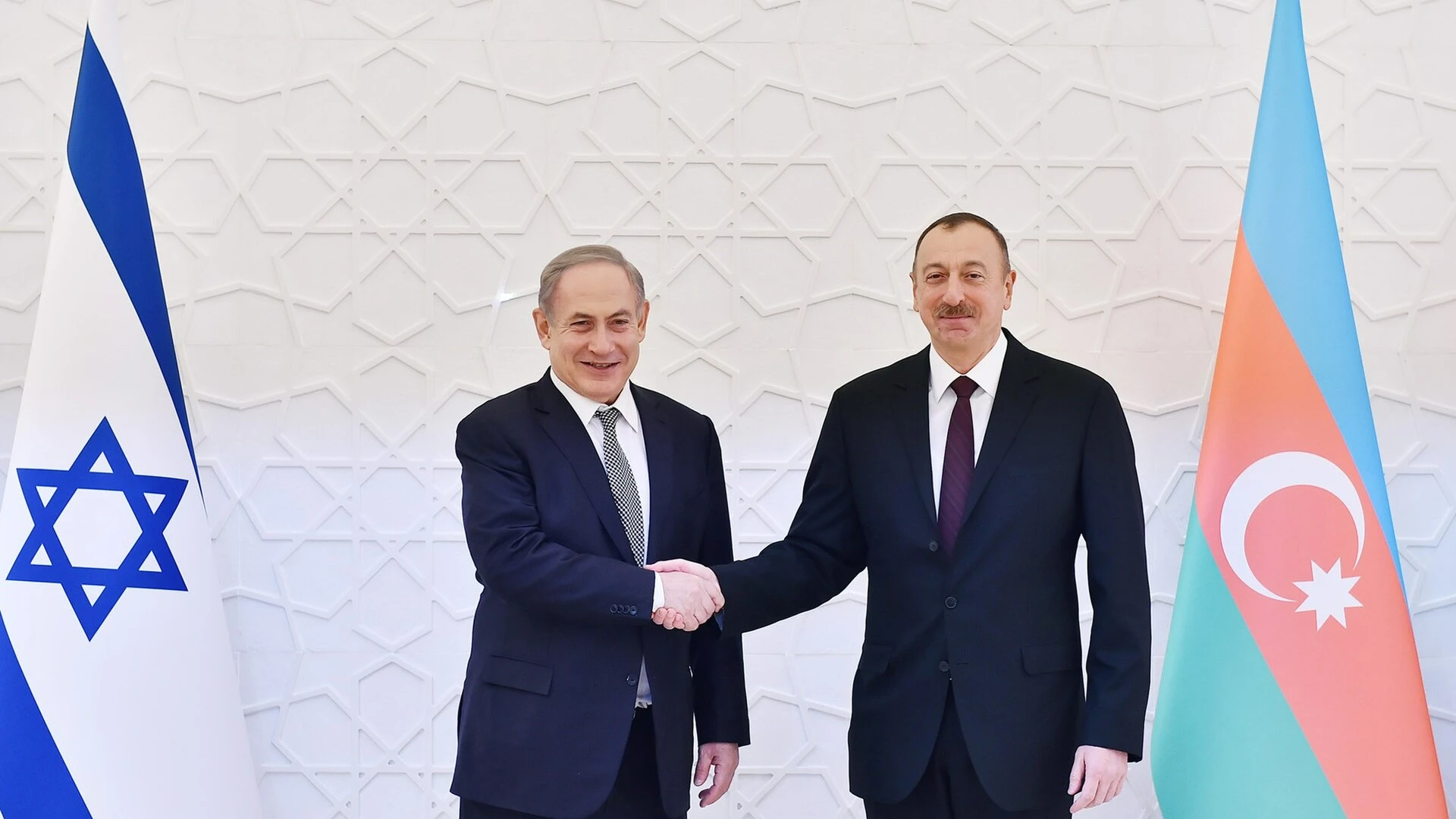
- Azerbaijan has strengthened the role it plays in the energy security of the West with its deep military-strategic and intelligence partnership with Israel. The Jewish lobby in Washington and Brussels has been the most effective tool for softening the Aliyevs' authoritarian image and defending the regime's interests in Congress and on international platforms. In return, Baku has played the role of an "open door" for Israel against Iran and a supplier of oil (Fuad Shahbazov, 2023).
- To manage the contradictions between the two different and frequently clashing powers mentioned above (Moscow and Tel Aviv/the West), Turkey's brotherhood and military alliance support have played the role of the most crucial buffer zone. Turkey has been the last fortress of Azerbaijan's independence and the longevity of the regime.
The collapse of the pillars and the changing reality
Today, the first of these three pillars, against the backdrop of the Russia-Ukraine war and global isolation, has significantly lost its former absolute hegemony and attractiveness in the South Caucasus. Moscow is no longer the guarantor of regional security; it is rather a risk factor.
The second and third pillars (Israel and Turkey), on the other hand, were previously complementary factors for Azerbaijan. Baku was both "one nation, two states" with Ankara and a strategic partner with Tel Aviv. However, Israel's latest historical/political move brings these two pillars into a state of direct and sharp confrontation with each other (Altay Goyushov, 2026). The breaking of this line could put Ilham Aliyev before the most difficult and dangerous choice of his tenure.
Ilham Aliyev's difficult choice: Between two abysses
The polarization of Israeli-Turkish relations at this level realizes the scenario Baku fears the most: the "loss of neutrality." Aliyev had been able to please both Israel and Turkey until now. But now, he will be forced to make one of two choices, and the cost of either choice could be heavy enough to bring about the end of his rule.
Scenario A: Ruining relations with Erdogan (Standing by Tel Aviv)
If Ilham Aliyev does not react sharply against this decision by Israel and maintains military, intelligence, and logistical cooperation with Tel Aviv at the same level, this will be evaluated by official Ankara as a "stab in the back" and betrayal.
There is deep love and sympathy for Turkey in Azerbaijani society. After the 2020 Karabakh war, the popularity of Turkey (and Erdogan personally) in Azerbaijan is at its peak. Although the Azerbaijani people are dissatisfied with corruption and authoritarianism in domestic governance, they grant Aliyev a certain credit of legitimacy due to the factors of "alliance with Turkey" and the "Karabakh victory." The rupture of relations with Turkey could immediately reset all of Aliyev's moral and electoral legitimacy in the eyes of the domestic public, and the Aliyev government, having lost Turkey's support, would weaken in the eyes of both the people and the pro-Turkey forces within the army. And this could provide an impulse for the regime to be dismantled from within (Ragip Soylu, 2026).
Scenario B: Ruining relations with Israel (Siding with Ankara)
If Aliyev fully takes refuge in the rhetoric of brotherhood and acts synchronously with Ankara in relation to Israel, this step will cause even greater consequences than losing Tel Aviv – because losing Israel automatically means losing the Jewish lobby, and consequently, being deprived of Western support.
For many years, Ilham Aliyev has been able to maintain the image in Western political circles of a "secular, multicultural, friend to Israel, smart and sympathetic leader who ensures Europe's energy security." It is precisely thanks to this image that the West has turned a blind eye to human rights violations and the crushing of the opposition in Azerbaijan.
In the event of a severance or cooling of relations with Israel, the Jewish lobby in the US and Europe will launch a large-scale demonization campaign against Azerbaijan within a matter of days. In Washington, the Aliyev family's offshore assets, human rights reports, and sanction bills (for example, the Magnitsky Act) will immediately go into circulation. Aliyev could step down from the status of a "reliable partner" in the eyes of the West and descend to the status of an "isolated dictator."
The risk of geopolitical isolation and unmanageable chaos
The biggest danger awaiting Aliyev is that he could become the common target of the foreign powers he has manipulated until now. Losing the support of the West (the Israeli lobby), Baku would remain completely defenseless on a regional level.
For instance, the historical hostility of our southern neighbor Iran towards Baku due to its close ties with Israel must not be forgotten. Parting ways with Israel, Baku would simultaneously be deprived of Tel Aviv's military-technological support (UAVs, air defense systems), which could weaken Azerbaijan's military balance.
Giving up on Ankara paves the way for internal revolution or the dissatisfaction of the military elite, while giving up on Israel leads to global sanctions and the seating of the regime in the defendant's dock at international courts. This would be a true no-win (zeitnot) situation.
In summary, Israel's decision to use the 1915 events as a political hammer could turn into a massive domino effect on a regional scale:
The tension between Israel and Turkey further strengthens Erdogan in domestic politics. However, Ilham Aliyev turns into one of the most at-risk players in this geopolitical arena. He must either choose Ankara and be branded a dictator in the Western world, subjecting himself to economic and political sanctions, or he must choose Israel and damage his fragile legitimacy in the eyes of his own people and army.
Even though Ilham Aliyev has "successfully" bypassed many regional crises during his 23-year rule, perhaps for the first time, he has reached the limits of his balancing policy. This situation is one of the dark dead ends that will determine his future foreign policy strategy and the prospects of his rule. The foreign policy strategy held in Ilham Aliyev's hand has already turned into a double-edged sword: whichever way he swings the sword, he will inevitably wound one of the main pillars of his own power.
Note: The article you have read was originally written in the Azerbaijani language. Artificial intelligence tools were used only in the translation.
References:
ICC, 2024. Situation in the State of Palestine: ICC Pre-Trial Chamber I rejects the State of Israel’s challenges to jurisdiction and issues warrants of arrest for Benjamin Netanyahu and Yoav Gallant. https://www.icc-cpi.int/news/situation-state-palestine-icc-pre-trial-chamber-i-rejects-state-israels-challenges
Ministry of Foreign Affairs, 2026. The Government of Israel unanimously approves FM Sa’ar’s proposal to recognize the Armenian Genocide. https://www.gov.il/en/pages/the-government-of-israel-unanimously-approves-fm-sa-ar-s-proposal-to-recognize-the-armenian-genocide-28-jun-2026
Jam news, 2025. Ararat to be removed from Armenia’s border stamps - bowing to Turkey? https://jam-news.net/ararat-to-be-removed-from-armenias-border-stamps-bowing-to-turkey/
Aslı Aydıntaşbaş, 2026. Turkey’s post-American hesitation. https://www.brookings.edu/articles/turkeys-post-american-hesitation/
Koen Claessen, 2025. With Partners Like These: The Future of Baku-Moscow Relations after the Azerbaijan Airlines Crash. https://icds.ee/en/with-partners-like-these-the-future-of-baku-moscow-relations-after-the-azerbaijan-airlines-crash/
Fuad Shahbazov, 2023. Azerbaijan’s Deepening Energy Ties With Israel. https://www.stimson.org/2025/azerbaijans-deepening-energy-ties-with-israel/
Altay Goyushov, 2026. Between Turkey and Israel: Azerbaijan’s Strategic Dilemma and a Potential Opening for Moscow. https://bakuresearchinstitute.org/en/between-turkey-and-israel-azerbaijans-strategic-dilemma-and-a-potential-opening-for-moscow/
Ragip Soylu, 2026. Azerbaijan issues rare rebuke against key ally Israel over Armenian genocide recognition. https://www.middleeasteye.net/news/israel-faces-rare-azerbaijani-rebuke-over-armenian-genocide-recognition
