(This article was prepared within the framework of KHAR Center’s “Security and State Architecture” research project)
Introduction
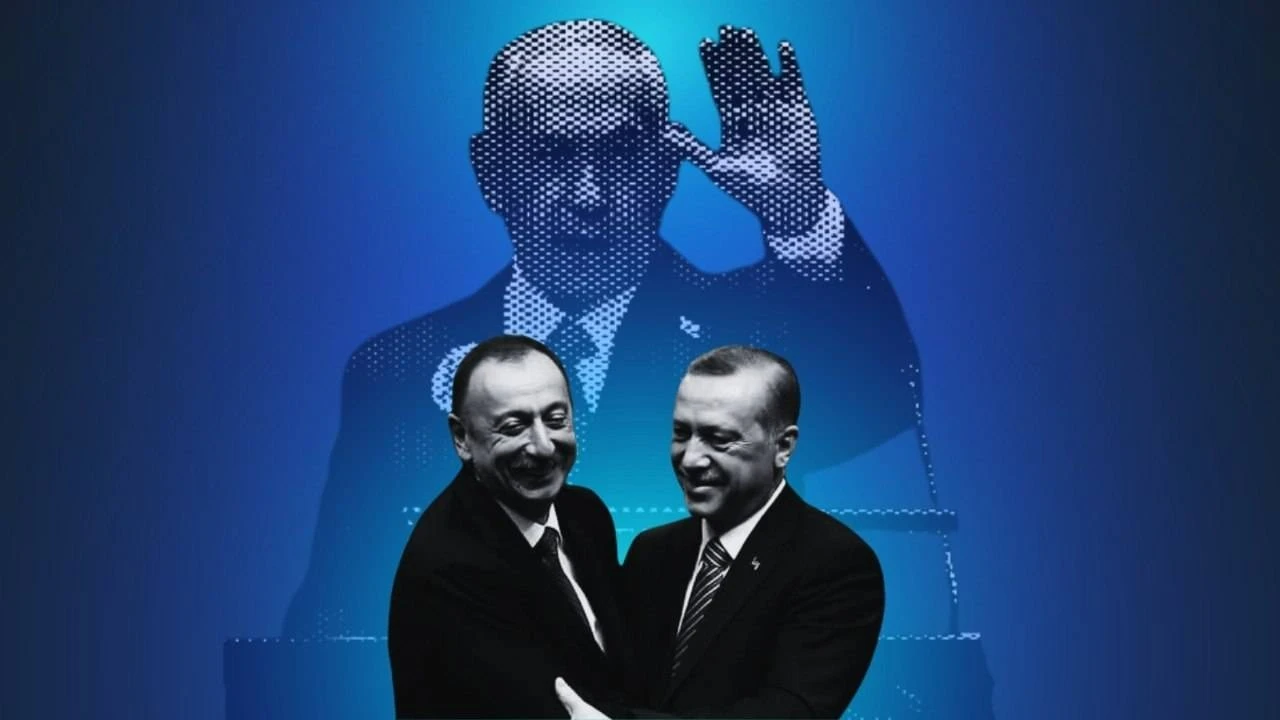
The KHAR Center used the phrase "strange alliance" in the title of its analysis examining the causes of the problems in Azerbaijani-Russian relations. (KHAR Center, 2026). The essence is that the relationship between these neighbors, who declared their alliance in 2022, has been unstable over the past two years, with serious tensions sometimes arising between them, but these tensions do not escalate to the level of confrontation and remain manageable. We see that relations with the Republic of Türkiye, a more legitimate ally compared to Russia, have also recently developed in a similar, zigzag-like manner. It is well known that Azerbaijani-Turkish relations have a different, sentimental-emotional component, with a romanticism of brotherhood forming an important component of the mutual interactions and the official rhetoric of both sides. This perspective also leads to the sometimes-overlooked fact in both societies that Azerbaijan and Türkiye, as separate states, can have different interests, resulting in irrational reactions to events. It is noteworthy that these misunderstandings, which have not yet seriously affected official interstate relations, have begun to take on a periodic, rather than episodic, character.
The purpose of this KHAR Center analysis is to attempt to identify and explain the reasons for the misunderstandings, grievances, and contentious situations between Baku and Ankara that have now moved from a latent to an openly observable level. The main question of the analysis is: "What lies at the root of the problems observed between Azerbaijan and Türkiye, which present their relationship as a brotherhood that transcends even an alliance?"
A New Factor in Azerbaijani-Turkish Relations: Palestine
The latest series of escalations, beginning with Hamas's terrorist attack on Israel on October 7, 2023, can be seen as the start of a new phase in the Middle East. What happens in this ancient region, the cradle of the three Abrahamic religions, inevitably has a ripple effect on the entire world. Israel's response to the Hamas attack—the brutal bombings in Gaza that resulted in the deaths of tens of thousands of civilians—has repercussions not only in the Muslim world, but it is clear that in the West as well; this has led to a rise in anti-Israel sentiment, and this wave has even begun to influence the domestic politics of the US and European countries like never before. Azerbaijani-Turkish relations were no exception in this regard.
Although the controversy that arose during Israeli Prime Minister Benjamin Netanyahu's speech at the 81st session of the UN General Assembly on September 24 quickly dropped to the bottom of the news cycle and faded from the headlines amid the relentless flow of world media reports, the repercussions of this incident in Azerbaijan and Türkiye are still being felt. As is known, when Netanyahu took the podium, delegations from many countries, including Türkiye, left the hall, while the Azerbaijani representative remained in the room. This fact has caused harsh criticism, and even rude, insulting reactions, in the Turkish social and traditional media. In particular, the fact that the Azerbaijani representative continued to listen to his speech, while Netanyahu used harsh language toward President Erdoğan (BBC News, 2026), was met with outrage in circles close to the current government in Türkiye. For example, the Islamist newspaper "Yeni Akit" reported the fact to its readers with the headline, "Everyone left the hall, they stayed: Support from Azerbaijan and the UAE for Netanyahu, who insulted the Islamic world and Erdoğan." (Yeni Akit, 2026). Ibrahim Karagül, a columnist for the ruling party-affiliated newspaper "Yeni Şafak" who accompanies the president on foreign trips, wrote, referring to the Azerbaijani diplomat, "You should not have been there when Netanyahu was hurling slanders and insults at Erdoğan from the podium. We would not have." (Ibrahim Karagül – X). Official Turkish state media has generally either reacted cautiously or ignored the incident. Nevertheless, the Azerbaijani authorities have not hesitated to assess the reactions in Türkiye as a purposefully organized campaign. "The said posts are not the random initiatives of separate individuals, but are part of a targeted campaign carried out on the basis of certain coordination and a unified approach, managed by certain circles," the statement from the state-run Media and Broadcasting Council said. (AzərTAC, 2026). The statement emphasizes that the smear campaigns against Azerbaijan in Türkiye are ongoing, with only short breaks, and notes with regret that no measures have been taken against them. The most important point in the text is that the restriction of entry to Azerbaijan for the "organizers and executors of the smear campaign" is not ruled out. In other words, Azerbaijan may impose sanctions on certain Turkish citizens. The statement from the National Assembly's Temporary Commission on Foreign Interference and Hybrid Threats also stated that the campaign is being conducted in a coordinated manner through targeted ads and real and fake social media accounts. (AzərTAC, 2026). The Commission believes that "the purpose of this campaign is to target the friendly, brotherly, and allied relations between Azerbaijan and Türkiye, as well as to mislead public opinion, create distrust in our citizens toward our state and its institutions, and also to create polarization in society.". This sentence implies that it is believed in Baku that this campaign in Türkiye has specific objectives and was organized with the intention of influencing internal affairs in Azerbaijan. The name of the institution that issued the statement says it all. In other words, this matter is classified as foreign interference and a hybrid threat.
Considering the weight and role of the aforementioned structures within the system, it could be said that Baku is content to respond at a lower level at this stage. However, in his speech at the New Azerbaijan Party congress on October 2, Ilham Aliyev deemed it necessary to address this issue, albeit somewhat obliquely (without naming the country). By declaring that Azerbaijan won the Second Karabakh War on its own, he effectively denied Türkiye's role in this success. (Report, 2026). Considering that in Azerbaijani public opinion, Türkiye is perceived as a partner and co-owner of the Karabakh victory, and that the view "We couldn't have won without Erdoğan" is even dominant, Aliyev's position signals a paradigm shift. The idea that the victory has only one author had been previously expressed in the official and pro-government press. As early as 2024, President Erdoğan stated, "We must be so strong that Israel cannot do what it did to Palestine. We will do to them something similar to what we did in Karabakh and in Libya." This statement was met with an article in the state-run newspaper "Azerbaijan" titled, "The Author of the Karabakh Victory is the Victorious Supreme Commander and the Armed Forces of Azerbaijan." The article contained harsh criticism of Türkiye and, without being named, President Erdoğan. (Azerbaijan, 2024).
In general, after the war, it was believed that with the Shusha Declaration signed in 2021, Azerbaijani-Turkish relations had reached their peak and the alliance was cemented, yet since 2024, the opposite process, a cooling-off, has been observed. This coincides with the Palestinian factor beginning to affect the relations. In May 2024, a protest was held in front of SOCAR's Istanbul office by activists from "A Thousand Youth for Palestine," a non-governmental organization of religious youth, and the activists, accusing Azerbaijan of selling oil to Israel, threw red paint at the building as a symbol of blood. (Cumhuriyet, 2024). Media close to official Azerbaijani circles (i.e., the regime itself) characterized the incident as an attack on the SOCAR office. (APA, 2024). In November of that year, Ekrem İmamoğlu, the mayor of Istanbul and a leading figure in the Turkish opposition, was invited to the COP29 summit in Baku and met with Eldar Azizov, the head of the Baku City Executive Authority. (Modern.az, 2024). For the first time during the Aliyev regime, a high-level representative of the Turkish opposition (an influential politician, moreover, who practiced real, not pseudo, opposition to the Erdoğan regime) was being officially received in Azerbaijan. This invitation and reception indicated that there were problems between the authoritarian regimes. The next informal tension between Azerbaijan and Türkiye coincided with the first days of the U.S. and Israel's military operation against Iran in late February 2026. The KHAR Center published an extensive article on this topic titled "Iran War Tests Aliyev-Erdoğan Friendship" (KHAR Center, 2026).
However, until the last congress of the YAP, no objection, criticism, or dissatisfaction had been expressed by any high-ranking official from Azerbaijan toward Türkiye. In addition to stating that no other state played a role in the victory, Aliyev said, referring to Türkiye (and presumably Iran as well): "We don't need anyone's help, nor do we need anyone's patronage. When we needed it, no one helped us. When we had one million refugees, no one extended a hand to us. Whatever we have acquired, we have acquired with money. Including all the weapons, which we bought with money, at world prices—to the last bullet. Not once have they given us a discount of a single manat or a single dollar. Sometimes they even sold to us at prices several times higher than the world price..." On the subject of armaments, what Aliyev said is a response to the opinions often voiced in Türkiye that the Bayraktar drones played a decisive role in Azerbaijan's victory.
The transformation of brotherhood into competition
The results of the Second Karabakh War shattered the long-established status quo in the South Caucasus, creating new realities. With this victory, Ilham Aliyev, whose ambitions have clearly grown, sees himself in a different role and with a different weight in establishing the new status quo—as the leader of the South Caucasus. The "region's leading state" thesis has long been a cornerstone of official Azerbaijani propaganda and has primarily referred to the country's economic size in comparison with Georgia and Armenia. However, after the military victory, which was a demonstration and celebration of Azerbaijan's hard power, this thesis has begun to take on a more realistic substance and seriousness. The new narrative, circulated in recent months, that Azerbaijan is a "middle power" indicates that Baku now considers itself a player of a different weight class, both regionally and globally, and is trying to get its partners to accept this. (AzərTAC, 2026).
Aliev's desire to establish a new system of relations with partners, his arrogance, and harsh rhetoric have caused particularly aggressive reactions from Iran and a crisis in relations in the post-war period. The occasional emergence of tensions with Russia and Baku's bold (but measured) demarches against Moscow can also be viewed within this framework. An important point that often gets overlooked is that these new realities have also begun to affect Azerbaijani-Turkish relations. Türkiye is undoubtedly one of the states belonging to the category of middle powers and is perceived as such globally. By positioning Azerbaijan in this category as well, Aliyev is effectively aligning the country's status with Türkiye's and his own with Erdoğan's. It is well-known that Türkiye claims leadership in the South Caucasus subregion, the broader South Caucasus-Central Asia geography, and the Middle Corridor. This ambition is justified and natural for the most powerful state of the Turkic world, an important geopolitical, geo-economic, and ethno-cultural component of the region. However, Ilham Aliyev no longer feels as much need for Türkiye's support as he did during the occupation ("we don't need anyone's help or patronage"); he does not see Azerbaijan in a "little brother" role in this cooperation; rather than supporting Türkiye's (Erdoğan's) leadership, it itself is playing for regional leadership. Thus, in the phase of establishing a new order after the collapse of the old regional balance, elements of competition have already begun to emerge between Azerbaijan and Türkiye.
It has been three years since the final resolution of the Karabakh issue (referring to Azerbaijan's one-day military operation in Karabakh in September 2023 and the departure of the Armenian population from the area). A peace treaty has been signed, and economic cooperation between the parties has also been launched. Azerbaijan exports fuel to Armenia and handles the transit of cargo sent from Russia to Armenia. Despite all this, Aliyev still opposes opening the Türkiye-Armenia border, preventing the start of comprehensive relations between the two countries. While Azerbaijan is demanding a constitutional amendment as a condition for signing a peace treaty with Armenia, Türkiye's desire to pursue normalization with Armenia unconditionally is one of the reasons for the recent cooling in the Baku-Ankara relationship. (Baku Research, 2024). It is clear that if the Turkish-Armenian borders are opened, relations between the two countries will develop intensively. Especially in a situation where Russia's position in Armenia has weakened, Ankara is ready to quickly fill the resulting vacuum. This, on the one hand, will allow Türkiye to dominate regional geopolitics, and on the other, will positively impact the well-being of the local population in its provinces bordering Armenia. However, because these attempts by Ankara are being blocked by Baku, the vacuum in Armenia is being filled by Europe and the United States. For this reason, although not openly stated at the official level, Aliyev's interference in Türkiye's foreign policy cannot naturally be well received in Ankara. The fact that the topic of Azerbaijan-Israel rapprochement has remained on the agenda in Türkiye with some interruptions for over two years, provoking protests, should not be seen outside this context. One of the goals here could be to undermine Aliyev's growing influence and power in Türkiye after the victory, as his ability to influence Turkish public opinion has also increased. It is worth recalling that as early as 2009, after the signing of the Zurich protocols, Azerbaijan's disinformation campaigns within Türkiye had caused concern for the Erdoğan government. Since then, Azerbaijan has made significant investments in Türkiye's energy and media sectors and has opened a television channel (Haber Global) in the country. It is also no secret that SOCAR financially supports various opinion leaders in Türkiye, and these individuals create a favorable background for Azerbaijan (Aliyev) in Turkish public opinion when necessary. It seems that the continuous bringing up of Aliyev's close ties with the state of Israel has been prioritized as the most effective way to discredit him in Turkish public opinion. Given the extreme sensitivity of Turkish public opinion toward Palestine due to the mass killings in Gaza, Azerbaijan's active partnership with Israel is undoubtedly perceived negatively by the Turkish people and undermines Aliyev's prestige among all segments of Turkish society.
The Azerbaijani government's decision last month regarding the dress code for students in public schools has also caused dissatisfaction in Türkiye's conservative circles. According to the decision, the use of clothing items that disrupt the uniformity of the school uniform and are inconsistent with the secular principle of public education will not be permitted. (BBC, 2026). This is being seen both inside and outside Azerbaijan as a ban on the hijab, or headscarf. Turkish Islamists have strongly condemned the decision on social media. On October 3, in front of the Consulate General of Azerbaijan in Istanbul, the Islamist non-governmental organization "Özgür Der" (Association for Freedom of Thought and Education Rights) activists organized a protest in front of Azerbaijan's Consulate General in Istanbul on October 3, suggesting that it could become, or has already become, the next contentious issue between the two countries. (INDEPENDENT Türkçe, 2026).
Conclusion
The emergence of competitive elements, differing interests, leaders' ambitions, and the resulting contradictions cannot have a destructive impact on the strategic nature of the Türkiye-Azerbaijan relationship. The ties have deepened so much over the past period that mutual dependencies have been created, and neither side has the luxury of breaking them. Explaining and selling a potential rupture to the public would be very difficult, and both regimes would suffer from it. While authoritarian leaders may be unable to do many things, they are adept at reaching pragmatic agreements and finding common ground the moment they see their own interests are being harmed. The current dispute is not the first misunderstanding between Türkiye and Azerbaijan, and looking at past practice, we see that the parties have ultimately been able to find common ground in such situations. This time, it will likely be the same.
But every small-scale crisis adds to the negative baggage between the two sides, eroding mutual trust. The "one nation, two states" romanticism undoubtedly has a positive effect on inter-state relations, but the relationships between individuals (political leaders) and their political decisions are based more on pragmatism. When problems arise, it is also observed that red lines are sometimes crossed very easily. For example, during the brief tension between Baku and Ankara this March after the start of the war in Ukraine, the Azerbaijani side did not hesitate to directly target Berat Albayrak, a member of Erdoğan's family. Ilham Aliyev likes to draw lines and set parameters in relations. In this regard, realpolitik will always be a more determining factor than the moral-ethical basis in the relations of states with common historical roots like Azerbaijan and Türkiye.
Note: The article you have read was originally written in the Azerbaijani language. Artificial intelligence tools were used only in the translation.
REFERENCES:
KHAR Center, 2026. A Strange Alliance: What Lies Behind the Russia–Azerbaijan Tension? https://kharcenter.com/arasdirmalar/qeribe-muttefiqlik-rusiya-azerbaycan-gerginliyinin-arxasinda-ne-gizlenir
BBC, 2026. Reactions from Türkiye to Netanyahu's remarks on President Erdoğan: 'Impudent and despicable'. https://www.bbc.com/turkce/articles/ckeq8ez1n4wjo
Yeni Akit, 2026. Everyone left the hall, they stayed: Support from Azerbaijan and the UAE for Netanyahu, who insulted the Islamic world and Erdoğan! https://www.yeniakit.com.tr/haber/hekres-salonu-terk-etti-onlar-kaldi-islam-alemine-ve-erdogana-hakaretler-eden-netnayahuya-azerbaycan-ve-baeden-destek-2024737.html
X, 2026. https://x.com/ibrahimkaragul/status/2103395954413953467
Azertac, 2026. Media and Broadcasting Council: Baseless claims aimed at undermining Azerbaijani-Turkish relations are a cause for concern. https://azertag.az/xeber/media_ve_yayim_surasi_azerbaycan_turkiye_munasibetlerine_xelel_getirmeye_yonelmis_esassiz_iddialar_narahatliq_dogurur-4433475
Azertac, 2026. The National Assembly's commission has issued a statement regarding the information campaign conducted from Turkish territory. https://azertag.az/xeber/milli_meclisin_komissiyasi_turkiye_erazisinden_aparilan_informasiya_kampaniyasi_ile_bagli_beyanat_yayib-4433166
Report, 2026. Ilham Aliyev: No one helped us, we bought the weapons with our own money. https://report.az/daxili-siyaset/prezident-xarici-siyasetimizi-ele-qurmaliyiq-ki-hec-kim-bizim-isimize-mudaxile-etmesin
Azerbaijan, 2024. The author of the Karabakh victory is the Victorious Supreme Commander and the Armed Forces of Azerbaijan. https://www.azerbaijan-news.az/az/posts/detail/qarabag-zeferinin-muellifi-muzeffer-ali-bas-komandan-ve-azerbaycan-ordusudur-1722458765
Cumhuriyet, 2024. Red paint protest in Istanbul against SOCAR, which supplies oil to Israel via Türkiye. https://www.cumhuriyet.com.tr/turkiye/turkiye-uzerinden-israile-petrol-saglayan-socara-istanbulda-kirmizi-2212776
APA, 2024. 13 people detained on suspicion of attacking SOCAR's Türkiye office. https://apa.az/hadise/socar-in-turkiye-ofisine-hucum-etmekde-subheli-bilinen-13-nefer-saxlanilib-video-846660
Modern.az, 2024. İmamoğlu met with Eldar Azizov. https://modern.az/az/dunya/494717/imamoghlu-eldar-ezizovla-grushdu-foto/
KHAR Center, 2026. The Iran War Tests the Aliyev-Erdoğan Friendship. https://kharcenter.com/arasdirmalar/iran-muharibesi-eliyev-erdogan-dostlugunu-sinaga-cekir
AzərTAC, 2026. President Ilham Aliyev: Azerbaijan is becoming a middle power. https://azertag.az/xeber/prezident_ilham_aliyev_azerbaycan_artiq_orta_guce_chevrilir-4314281
Baku Research Institute, 2024. What is happening in Azerbaijani-Turkish relations? https://bakuresearchinstitute.org/azerbaycan-turkiye-munasibetlerinde-ne-bas-verir/
BBC, 2026. Azerbaijan's hijab debate: an old topic is back in the news. https://www.bbc.com/azeri/articles/cmx2z8345lj5o
INDEPENDENT Türkçe, 2026. Reaction to the headscarf ban in Azerbaijan. https://www.indyturk.com/node/783326/haber/azerbaycandaki-ba%C5%9F%C3%B6rt%C3%BCs%C3%BC-yasa%C4%9F%C4%B1na-tepki
