
(This article was prepared within the framework of KHAR Center’s “Security and State Architecture” research project)
Abstract
This study analyzes the post-conflict peacebuilding process in Bosnia and Herzegovina within the framework of a hybrid peace approach. The main objective of the study is to assess the institutional outcomes of the liberal peacebuilding model to understand what hybrid forms of governance it has produced in the dynamics between local and foreign actors in Bosnia. This assessment, in itself, also offers a number of comparative lessons for the post-war context of Azerbaijan-Armenia. The conclusion shows that while the involvement of international organizations in peacebuilding and the coexistence of different ethnic groups after a war can end an armed conflict, it has failed to achieve the goal of making these people feel safe "beyond their own borders."
Introduction
“If you think about Azerbaijan and Armenia, they speak completely different language, culture and so on. Regardless of this here, it's just religion and people just interact in different ways. Imagine not having half of your family and still you return there. You engage with community in order to survive. And it's like this sense of return is the most difficult segment of peace building. If you want to have peace building, you need to have returned. Because if you don't have a people on the other side of the border living, in a sense that somebody will turn, then it's completely isolated. There's no peace building if there's no minority, if everywhere is majority then there's no need for dialog” (R.J. 2026).
The end of an armed conflict, a peace treaty between states, or the opening of borders does not necessarily mean that peace has been achieved. This process inherently involves activities such as the establishment of legitimate state institutions, the rebuilding of trust between communities, and ensuring long-term stability. Since the late twentieth century, the external actors such as the United Nations (UN), the World Bank (WB), and various donor governments and non-governmental organizations (NGOs) were using a liberal peacebuilding approach that aimed to establish democratic governance institutions and market-based economic systems as a key condition for sustainable peace (Paris 2004).
In this sense, one of the spaces where the aforementioned peacebuilding instruments were used most extensively and intensively was the territory of the former Yugoslavia. Liberal interventions in the region were met with questions about significant ethnic divisions and the viability of the states in the region, and consequently led to different outcomes depending on the various political and institutional contexts. Bosnia and Herzegovina, in particular, has been subject to high-level intervention and supervision by the international community, becoming one of the most institutionally complex examples of the peacebuilding process. However, ethnic divisions, a complex constitutional structure, and the extensive role of international governance have raised serious questions about the practical outcomes of the liberal peacebuilding model. For this reason, Bosnia and Herzegovina is considered a fertile case study for the analysis of the interaction between international and local actors, as well as the hybrid forms of governance that this interaction creates.
The contradictory findings regarding the application of the liberal peacebuilding approach in post-conflict societies necessitate a re-examination of existing theoretical frameworks. This study puts forward the concept of hybrid peace as an alternative analytical framework to explain the interaction between international interventions and local political and social dynamics (Mac Ginty 2010; Richmond 2011). In this context, the study not only describes the concept of hybrid peace but also analyzes the structural factors particularly institutional rigidity and legitimacy problems that determine how it is formed in the case of Bosnia and Herzegovina. The KHAR Center research discusses the following two main research questions:
- How does the interplay between Bosnia and Herzegovina's institutional rigidity and existing legitimacy crises shape the manifestations of hybrid peace?
- To what extent does the hybrid peace approach provide an adequate analytical framework for explaining the peacebuilding process in Bosnia and Herzegovina?
This analysis is primarily based on the existing theoretical literature on post-conflict peacebuilding, reports from international organizations, and empirical research on Bosnia and Herzegovina. It should be noted that the peacebuilding process is a dynamic one in international practice that continues for many years after a peace agreement is signed, and it is not concluded by a mere "symbolic signature" between governments. The institutional outcomes of the liberal peacebuilding model examined throughout the study in the Bosnian case allow for comparisons to be drawn for the post-conflict context of Azerbaijan-Armenia after the 2025 peace agreement (U.S. Department of State 2025). This comparison allows for parallels to be drawn for the post-conflict context of Azerbaijan-Armenia after the 2025 peace agreement (U.S. Department of State 2025).Heinrich Böll Foundation 2025). This comparison also allows for parallels to be drawn for the peacebuilding and reconciliation process conducted under the control of the authorities amid ongoing political repression against civil society members, political activists, and pacifists in Azerbaijan since 2023 (M. Hüseynli 2025; Heinrich Böll Foundation 2025) for parallels can be drawn to the peacebuilding and reconciliation process conducted under the control of the authorities (M. Hüseynli 2025; This comparison allows for parallels to be drawn to the peacebuilding and reconciliation process conducted under the control of the authorities (M. Hüseynli 2025;
Conceptual Foundations of Hybrid and Liberal Peace
The main theoretical aspect of the study is the distinction between the institutional establishment of peace by international actors and its de facto formation in local communities in the explanation of post-conflict peacebuilding. The research primarily focuses on the phenomena of "liberal peacebuilding," "hybrid peacebuilding," and "everyday peace," drawing on Roland Paris's "At War's End: Building Peace After Civil Conflict" (2004), Roger Mac Gintin's "Hybrid peace: The interaction between top-down and bottom-up peace" (2010) and Oliver P. Richmond's "Hybrid Forms of Peace: From Everyday Agency to Post-Liberalism" (2011) by referencing the phenomena of "liberal peacebuilding," "hybrid peacebuilding," and "everyday peace." To do this, we will first turn to an explanation of the fundamentals of Paris's liberal peacebuilding approach. We will then discuss Mac Gintis and Richmond's critiques of this approach, examining the role of local actors and everyday social relations in the formation of peace. The common argument of this literature is that post-conflict peace cannot be understood solely as the result of formal institutions created by international actors. Peace is also shaped by how those institutions are received, adapted, or resisted by local political and social actors. Therefore, the analysis of the case of Bosnia and Herzegovina is not limited to the liberal peacebuilding model, but the hybrid peace approach is also used as the main analytical framework to explain the interaction between international intervention and local agency.
When examining the explanation of post-conflict peacebuilding, we can see that the liberal peace approach has long been the dominant theoretical framework. According to this approach:
Democracy + Market Economy + Rule of Law = Sustainable Peace
In other words, the establishment of lasting peace depends on the creation of democratic political institutions, the rule of law, and an economic system based on a market economy. In this framework, democratic institutions refer to a free and fair electoral system, government accountability to its citizens, an independent judiciary, respect for human rights, and the rule of law. A market-based economic system, on the other hand, refers to a capitalist economic model with private enterprise, free trade, investment, and limited government control over markets. The liberal peace model attributes the root causes of conflict to weak state institutions and undemocratic governance. Therefore, the main goal of international interventions is state-building, institutional reforms, and the promotion of democratic governance (Paris 2004). In practice, however, this is what it looks like: international organizations (the UN, the World Bank, Western governments) come in, organize elections, privatize state industry, rebuild state security forces, and finance civil society groups, all based on Western institutions. This approach became standard at a time when, after the Cold War, liberal democracy seemed to be the final station of history. Interventions carried out by the European Union and other international actors in Bosnia and Herzegovina, particularly from the 1990s onward, are considered a practical expression of this very approach.
Critics such as Cooper, Turner, and Pew (2011) note that this approach measures success with the wrong tools. Thus, voter turnout and privatization rates say nothing about whether people feel safe, represented, or economically stable. In principle, critics argue that the implementation of neoliberal economic policies (spending cuts, market liberalization, privatization) is a form of soft imperialism that Western donors would never accept in their own countries and that deepens inequality in states where democracy is fragile. Proponents of the approach, such as Roland Paris (2004), argue that the model has done more good than harm and that abandoning it would deprive war-torn societies of structured international support. They also add that if this approach were to be completely rejected, there is no real alternative to replace it. Roland Paris (2004) also voices his objection, arguing in that most of the "alternatives" proposed to the liberal model are, in fact, liberal values with different branding. On the other hand, critics counter the "no alternative" argument by pointing to the development models demonstrated by states such as the East Asian countries and China. These examples show that economic development and political stability can be achieved to a certain extent without liberal democracy. It is also added that the fact that international peacekeeping interventions are formally carried out with the consent of host states does not mean they are entirely voluntary. International financial aid, loans, and donor conditions often become indirect pressure mechanisms that compel states to adopt certain institutional and political reforms. The conditions for European Union membership are particularly significant in the case of Bosnia and Herzegovina. In this regard, the "consent" achieved over time in international interventions is itself questionable.
One of the shortcomings of this approach is the insufficient consideration of the local political, social, and historical characteristics of societies emerging from armed conflict. As a result, the reforms implemented often have a universal character, and the same solutions are applied to conflicts with different histories, dynamics, and contexts. This leads to a "one-size-fits-all" approach. International organizations view the local population not as active participants in peacebuilding, but as passive participants in a pre-packaged "solution plan." However, local populations have their own political experience, informal institutions, and alternative mechanisms for conflict management. The area of intervention is their homeland, a part of their daily lives. From this perspective, peacebuilding must be viewed not only as the creation of institutions but also as a process of their acceptance, adaptation, or rejection by local communities. For this reason, while the liberal peace model in many cases directly prevents violence and armed conflict, it is insufficient in addressing the structural causes of conflict and the problems of trust within society. As a result, a situation arises that some authors call a "violent peace." In this case, formal institutions are in place, but the peace is not fully accepted as legitimate and sustainable by society and political actors. The central argument underlying these critiques is that the liberal peace model is based primarily on Western institutional imaginings and relies on an institutional framework that does not fully reflect the everyday socio-political realities of post-conflict societies.
Against this backdrop of criticism, Roger Mac Gintis (2010) develops the concept of hybrid peace. He assesses peace that forms in post-conflict societies as neither entirely the result of the liberal model imposed by international missions, nor solely the product of local communities. Instead, peace is formed through a continuous process of interaction, adaptation, and mutual transformation between these two levels. In this sense, hybrid peace is not an alternative model to liberal peace, but rather an analytical framework that explains how international missions are transformed in practice.
Mac Ginty explains the formation of hybrid peace through four interrelated dynamics:
- The first dynamic refers to the structural influence of liberal peace imposed by international organizations (compliance pressure). This includes the institutional frameworks, legal norms, and governance standards created by international organizations. Through this mechanism, local institutions and political actors are encouraged to act in accordance with certain international norms.
- The second dynamic is the incentives that international representatives use to influence the behavior of state institutions. These can take the form of financial aid, donor programs, and other political promises, such as the prospect of integration into the European Union. The resulting agreement is secured not only through pressure but also through material and political incentives.
- The third dynamic is local resistance and subversion. As the author notes, local actors do not passively accept foreign intervention. Examples of local resistance include open political confrontation, changing procedures, slowing down reforms, or adapting international norms to their own realities.
- The fourth dynamic is alternative local governance mechanisms (alternative systems) that exist outside or operate in parallel with international intervention. These include informal political institutions, religious and traditional leaders, as well as social cooperation networks operating outside state institutions. These alternative mechanisms, working alongside external organizations, can determine how peace is implemented in practice.
In post-war societies, peace is a hybrid form of governance and legitimacy shaped by the interplay of these four dynamics. This peace is neither purely liberal nor purely local in character. Oliver Richmond (2011) further develops this approach, arguing that peace is not a pre-determined, ready-made project, but rather the result of a continuously evolving and changing socio-political interaction between various external and local actors. In Richmond's approach, peace is a dynamic process shaped through continuous negotiation and compromise between international organizations, state institutions, and local communities. This approach links peace not only to the existence of these institutions but also to their acceptance by the local population in daily life. Richmond's "everyday peace" approach shows that the sustainability of peace depends not only on changes made to the constitution or state apparatus, but also on the daily interactions of communities and their trust in state institutions.
Furthermore, to understand the theory of hybrid peace, we must first know what the concept of "local" means. While early literature sometimes presents local actors as a single, homogeneous category (Paffenholz 2015), subsequent literature has criticized this approach (Mac Ginty 2015). Local actors can include various political elites, state institutions, civil society organizations, religious leaders, or different social groups (Leonardsson & Rudd 2015). It is important to note this diversity, as their interests, resources, and attitudes toward international intervention differ. Therefore, the local population's reaction to international intervention is not always uniform and is characterized by different strategies, forms of adaptation, and mechanisms of resistance. The analysis of hybrid peace also requires taking this diversity into account.
This study adopts the theoretical literature presented above as an analytical framework for analyzing the post-war peacebuilding period in Bosnia and Herzegovina from 1992 to 1995. The study's primary focus is on three interrelated concepts: institutional rigidity, legitimacy, and local agency. First, it examines the degree to which institutions created as a result of international intervention are flexible or rigid. Second, it assesses whether those institutions are considered legitimate by local political and social actors. The third examines the forms in which local actors adapt to, change, or resist these institutions. The institutional development of Bosnia and Herzegovina, described in the following sections, and the empirical material from the interviews are interpreted precisely within this analytical framework.
The Rigid Institutional Legacy of Liberal Peace and the Problem of Legitimacy in Bosnia and Herzegovina
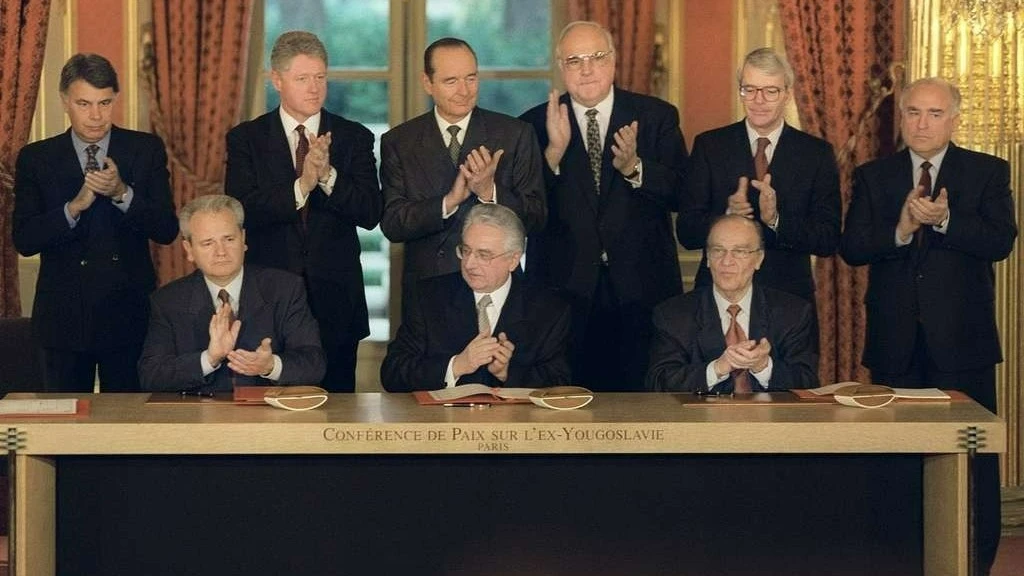
The Dayton Peace Accords, signed in 1995, not only ended the three-year war in Bosnia but also laid the foundation for the country's new political and institutional system. The post-war state-building process was carried out under a high degree of international supervision, and the Office of the High Representative (OHR) was granted extensive executive powers. The main goal of this system was to prevent a new armed conflict, restore state institutions, and transform Bosnia into a stable political system. The Dayton Agreement largely succeeded in this goal: the war was stopped, state institutions were created, and large-scale armed violence did not recur in the country. However, the Constitution also implements power-sharing mechanisms among Bosniaks, Serbs, and Croats to ensure the peaceful cooperation of different ethnic groups and to accommodate their desire for a strong stake in the state. This includes, for example, the existence of a three-member Presidency, composed of one Bosniak and one Croat (elected from the Federation of Bosnia and Herzegovina) and one Serb member elected in the Serbian part of Bosnia (the Republika Srpska). As a result, the institutional framework that ended the war - the Dayton Agreement also made the ethnic division a permanent element of state governance.
This feature, in fact, constitutes the core paradox of the Dayton system. As Gerard Toal (2011) also notes, while this model has succeeded in preventing the re-eruption of the conflict, it has not contributed equally to the formation of long-term political integration among the various ethnic groups. In other words, the system maintains stability but does not create favorable conditions for political cooperation and the development of a common civic identity. In this regard, the peace established in Bosnia is more of a "negative peace" that prevents violence, as described by Galtung (1969) (negative peace) rather than the "positive peace" (Janine Natalya Clark 2009) that restores deep relationships of trust and fosters social reconciliation within society. The other important characteristic of the Dayton system is its high institutional rigidity. The difficulty of political compromise in the country and the functioning of state institutions
Another important feature of the Dayton system is its high institutional rigidity. The difficulty of political compromise in the country and the frequent paralysis of state institutions are explained by the system's complex decision-making mechanisms and ethnic veto rights. David Chandler (2006) explains this situation with the concept of "imposed statehood": The intervention of international actors creates short-term stability, but it also weakens the accountability of local political elites to their citizens and reduces their interest in reforms. Thus, because a complex system of governance has formed in the country that combines features of both models, Bosnia can be characterized as neither a fully sovereign nation-state nor a classic international protectorate.
These institutional features allow for an analysis of Bosnia based on the four dynamics identified by Roger Mac Ginty. Thus, because international compliance pressure is more influential, the organization of state institutions, legal reforms, and governance standards are largely determined by international actors. The long-standing role of European Union integration as the primary incentive for political and institutional changes in Bosnia can be considered a practical example of the dynamics of foreign incentives. At the same time, local resistance in Bosnia does not take the form of an outright rejection of international intervention: although local political elites formally conform to international institutions, they often use them to suit their own political interests. On the other hand, the fourth element of Gint, alternatives for local governance and legitimacy, has developed only limitedly at the political level due to high institutional rigidity. As a result, in Bosnia, hybrid peace arises not from the confrontation of international and local actors, but from the reproduction of the existing political and institutional system through their interaction. In this sense, the Bosnian case is characterized in this study as blocked hybridity.
However, it would be insufficient to explain the hybrid peace in Bosnia solely by the actions of the political elites. Although state institutions exist legally, the initiative in areas such as shaping collective memory, recognizing war crimes, and restoring public trust comes from civil society. In this sense, the work of the "Srebrenica Mothers" is a notable example, and to understand the role of legitimacy and social relations formed outside of formal institutions, we will turn to Oliver Richmond's "everyday peace" approach. Since 1999, their work on preserving memory, recognizing war crimes, and ensuring justice has helped the group become a normative actor both in Bosnia and internationally (Hasić et al. 2020). Their appeal to the International Court of Justice and their long-term legal struggle are proof of the alternative social spaces that can emerge outside of formal political institutions. This example shows that the problem of legitimacy in Bosnia is not only political-institutional but also moral in nature.
Recent political events, particularly Milorad Dodik's policy of distancing from state institutions and his attempts to expand the powers of the Republika Srpska since 2021, also indicate that the blocked hybridity in Bosnia continues (VoxEurop 2025). This political tension also re-emerges the internal tensions of the Dayton system. Parallel to this, the continuation of the High Representative's legislative interventions and the slowdown of the integration process into the European Union show that it is difficult to change the existing institutional framework in Bosnia from both within and without, and that the system has acquired high institutional rigidity.
In conclusion, in Bosnia and Herzegovina, hybrid peace has not been sufficiently effective in changing the existing system. International actors seek to maintain political stability, while local political actors operate within the existing institutional framework. Therefore, their interaction leads to the continuation of the existing system rather than the creation of a new political order. In this regard, the Bosnian example shows that when the institutional system is closed to change, hybrid peace can also become a mechanism that preserves the status quo instead of creating transformation.
Methodology
This study examines how the interaction between international and local actors was shaped in the post-conflict peacebuilding process in Bosnia and Herzegovina, how different ethnic groups experience, direct, and negotiate everyday peace, using a qualitative research design to explore how the interaction between international and local actors was shaped in the post-conflict peacebuilding process in Bosnia and Herzegovina, and A qualitative approach was used, as the research questions were aimed at understanding the interactions between international and local actors and how peacebuilding is carried out in the specific political and social context of Bosnia. The main objective of the study is to understand how civil society members experience the constraints they face in the peacebuilding process, how these constraints are interpreted by the participants, and how they are managed within the existing institutional and political framework. The statements of the interview participants are considered the primary empirical source of data, illustrating how peacebuilding is practiced in Bosnia. Their perspectives constitute one of the main conceptual sources for the analysis.
The methodology combines two complementary methods. The first involves desk research, which includes reviewing existing literature, national and international political documents, and other relevant sources to interpret the interview data and contextualize peacebuilding. These materials are used to understand the post-war period in Bosnia, the role of international intervention, and the political and social context of peacebuilding. The second and primary method consists of semi-structured qualitative interviews with civil society representatives active in peacebuilding in Bosnia and Herzegovina. In total, three participants were selected through purposive sampling based on their direct relevance to the research questions, rather than statistical representation: R.J. is a lawyer with 15 years of experience at the Srebrenica Memorial Institute; A.H. previously worked with victims of conflict-related sexual violence as a legal advisor, and L.M. is a young peacebuilder working in the field. While the participants' names are real, they have been replaced with initials in the text for anonymity, and identifying information has been removed from the transcripts at the participants' request. This is to ensure their personal safety and that they do not face any problems in their professional activities, due to the political sensitivity of the topic and the potential for participants to be identified.
Interviews were conducted through one-on-one interviews in a semi-structured format, lasting approximately 50-60 minutes. This format is intended to allow participants to raise issues they considered important and elaborate on their experiences, while also following pre-defined thematic directions (donor priorities, project management, day-to-day relationships, political structure). The interview guide reflected the research questions and theoretical framework and incorporated open-ended questions: "Who do you consider partners, and are there any institutions you are hesitant to cooperate with?", "Have there been times when you tried to cooperate through official channels, but you were not understood?", "In the community where you currently live, is there a space where everyone can talk about what happened during the war?", "What does everyday communication look like within different communities outside of formal projects?" and "If you were to honestly describe how much your country has changed in the last ten years, not for a donor report, what would you say?".
The interviews were conducted in English and recorded with the participants' explicit consent. Only the author has access to the audio recordings and transcripts. The interviews were transcribed verbatim and then translated into Azerbaijani. Special attention was paid to preserving the meaning and nuances of the expressions during translation. The data, Mac Ginty's hybrid peace model (2010) with Richmond's everyday peace approach (2011) was analyzed using thematic analysis in the MAXQDA software, employing the stages of initial coding, theme development, cross-case comparison, and theoretical commentary, with attention to the analytical categories established in the theoretical framework. The coding was conducted manually, focusing on the analytical categories identified in the theoretical framework.
Findings
Introduction to the Findings
This chapter presents the main empirical findings from semi-structured interviews with three civil society members working in peacebuilding in Bosnia and Herzegovina. The main focus of the analysis is on participants' peacebuilding practices, the impact of international donor and organizational priorities on local initiatives, the gap between formal projects and local social impact, and the persistence of the war legacy in everyday relationships.
The interviews show that peacebuilding in Bosnia is shaped by the interplay of international and local factors. Donor priorities, the capacities of local organizations, everyday interactions, and the politico-institutional environment play a significant role. Although these interactions create certain hybrid forms, their transformative potential remains limited. A thematic analysis of the interview material reveals four main, interconnected dimensions: (1) the transformation of international donor priorities and the peace agenda, (2) the mismatch between formal projects and local legitimacy, (3) everyday peace, ethnic boundaries, and transmitted fear, (4) political and institutional gridlock and the limited transformative potential of peacebuilding.
This structure serves to answer the first research question: "How does the interplay between Bosnia and Herzegovina's institutional rigidity and the existing legitimacy crises shape the manifestations of hybrid peace?" The second research question, namely the extent to which the hybrid peace approach is analytically adequate to explain these processes, is answered primarily in the Discussion chapter. Here, the empirical findings are juxtaposed with McGarry's hybrid peace approach and Richmond's agenda peace concept to discuss their explanatory potential and limitations for the Bosnian case.
1. International Donor Priorities and the Transformation of the Peace Agenda
This heading responds to the part of TS1 on how international actors shape the local peacebuilding process. The most emphasized point in the interviews is that the role of international actors in Bosnia is not limited to just financial and technical support. This means that donor priorities also influence which issues are included on the peacebuilding agenda, which projects are funded, and which projects are continued. Participants' experiences reveal that donor priorities shift over time, affecting the work of local organizations, and that formal project outcomes do not always align with the social impact created in the community.
One participant characterizes the years 1995-2000 in Bosnia as a "huge international intervention" According to him, during that phase the main focus was on how to come to terms with the war and create certain "temporary solutions" regarding the past. In the subsequent period, however, issues of coming to terms with the past took a more prominent place on the donor agenda: “There was also greater interest in this because political actors had certain obligations, for instance, to the Hague Tribunal such as handing over individuals, cooperating on matters concerning missing persons, and so on” (R.J 2026).
This statement shows that international intervention is not just an external mechanism that provides resources. The priorities of donors and international institutions make certain issues more visible on the local political and public agenda. However, according to participants' experiences, these priorities are not fixed. Changes in the international context can directly affect the direction of ongoing projects in Bosnia. A.H. describes how the continuity of the project they were working on was disrupted after the war in Ukraine began: “My contract was ending, that's when the war in Ukraine started. So a lot of projects had been planned and were more or less a done deal had been canceled. All those fundings were being reallocated to Ukraine”. (A.H 2026). The participant reports seeing a broader trend in this shift, adding: “The priorities shifted - it's more focused on security rather than transitional justice” (A.H. 2026).
Thus, the sustainability of peacebuilding in Bosnia is not determined solely by local needs. Its continuation also depends on where international donors direct their attention. This experience is presented by the participant not only as a professional issue but also as a matter of concern for Bosnia's own security. The same participant emphasizes that the political situation in Bosnia was also tense when the war in Ukraine began, saying: “I was very much convinced that if the war in Ukraine hadn't started, that there would be some kind of conflict here” (A.H. 2026). The change in the participant's emotional tone while telling this part indicated not just a concern about the funding of projects, but a personal and professional worry about the possibility of conflict in Bosnia.
Thus, the interviews show that international peacebuilding is a variable phenomenon in terms of time and context. While reconciliation and dealing with the past in Bosnia were a key element of the international agenda at certain times, in later periods, security and new conflicts shifted donor priorities. This makes the sustainability of local peacebuilding dependent on international financial and political attention.
2. Mismatch between local legitimacy and formal projects
This heading responds to the part of TS1 on the consequences of the interaction between international and local actors. Thus, the second key theme highlighted in the interviews is that the possession of more professional project management, formalized bureaucratic structures, and financial capacity by international and large local organizations does not necessarily translate into greater social impact at the community level. At the same time, although some local initiatives do not present their activities as "peacebuilding" per se, their impact on everyday social relations makes these activities significant from a peacebuilding perspective. R.J. expresses this difference as follows: "If you're handling it right in a sense of project management, you will grow. But this doesn't mean that this organization is handling quite good project management and they have a biggest influence in community." (R.J. 2026).
This idea highlights the difference between formal project indicators and social impact. From a donor's perspective, project success can be measured by the implementation of specific activities, increasing participant numbers, and meeting reporting targets. However, local legitimacy is formed differently from these indicators. R.J. explains this as follows: “People would most easily on local level organize events, gatherings, they don't actually frame it as peace building. But if you would do research and follow it up, you will probably see it as peace building. So if you like football tournaments in smaller communities, this is not something that's branded peace building” (R.J. 2026).
This creates an important distinction: formal peacebuilding is recognized as a project, while everyday peace is not always recognized as such. This suggests that the formal criteria used to evaluate peacebuilding can render a certain part of the local social impact invisible. However, the fact that international organizations operate at the local level does not mean they become entirely local actors. Likewise, the activities of local organizations and initiatives are not entirely shaped at the local level. A.H. points to another constraint created by the activities of international organizations in Bosnia. According to her, the organization she works for: "They have to think about how the relations will affect the HQ" (A.H. 2026). This makes it difficult to make some decisions based solely on local needs.
This mismatch is also observed in the transfer of international peacebuilding knowledge to local practice. L.M. reports participating in numerous peacebuilding trainings under European Union programs and that it is difficult to apply this knowledge in Bosnia. This difficulty is more clearly seen in the example of a project focused on relations between Sarajevo and Istočno Sarajevo (a region that falls within the territory of the Republika Srpska, the Serb entity of Bosnia and Herzegovina). He explains the project's importance: “The majority of people living in East Sarajevo are Serbs - people who, despite living just 20 minutes away from Sarajevo, deny the Siege of Sarajevo and the Srebrenica genocide.” She is also critical of the project's organization and team formation: “The team for this project was chosen entirely at random, which was not a good idea at all” (L.M. 2026).
These materials show that the existence of an international methodology does not automatically mean it is effective in a local context. A large budget and international experience strengthen the organization institutionally, but this does not always mean local legitimacy. In this regard, hybridity here emerges not only in the collaboration of international and local actors, but in the coexistence of the international project logic and local social logic in the same space.
3. Everyday peace, ethnic boundaries, and transmitted fear
This heading responds to the part of TS1 on what consequences peacebuilding has at the local and everyday level, and encompasses (3.1) everyday interactions and informal peace, (3.2) the persistence of ethnic boundaries in daily life, (3.3) transmitted fear, and the emotional boundaries of peacebuilding. The interviews show that peacebuilding in Bosnia is not carried out solely through formal projects and institutional interventions. Various educational programs, community events, youth initiatives, and daily interactions have also enabled people to relate to one another in the post-war period. However, the same materials show that these everyday peace practices are limited by the persistence of ethnic boundaries and war memory.
3.1. "Before the war" and "after the war": everyday interactions and informal peace
Recalling his post-war childhood experience, R.J. states that in the early period, peacebuilding initiatives became part of the education system and the socialization of children: “After the war, almost everyone in Bosnia was involved in some form of peacebuilding, because it was also part of the education system” (R.J. 2026). According to her, during that period, there were various initiatives to engage people in this kind of interaction: “One of my first opportunities as a child to travel around the country and see other places came precisely through peacebuilding initiatives” (R.J. 2026).
This experience shows that peacebuilding is not just about building relationships between communities, but also a process related to how post-war generations understand the past. Here, peacebuilding is not a separate political process, but is instead carried out through children moving around the country, encountering different people, and forming social connections. However, this process is not limited to collective initiatives. A.H.'s personal experience shows how the legacy of war is interpreted on an individual level. Born abroad after the war and coming to Bosnia at the age of 8, A.H. says that war was not talked about much in their family. For this reason, she notes that for her, the past exists more as "before the war" and "after the war." She describes academia as a kind of gateway to coming to terms with her inherited trauma: “Academia kind of became my gateway to reconcile my own inherited trauma because I was very confused with how things were. My parents would rather talk about their youth in Yugoslavia than them about the war. I was very confused, because this country was not reflecting what their stories. I came to this area just simply seeking answers that I couldn't ask my parents” (A.H. 2026).
This experience shows that peacebuilding is not only about building relationships between communities, but also a process concerning how post-war generations understand the past.
3.2: The Symbolism of the Fountain: The Persistence of Ethnic Boundaries in Everyday Life
Furthermore, the participants' statements indicate that everyday peace is surrounded by strict social boundaries. The strength of these boundaries varies depending on the extent of violence a particular settlement experienced during the war, the level of forced population displacement, the rate of return, and the ethnic composition of the area. According to R.J., when the numbers of different groups in an area are close to each other, the area becomes more of a "contested space," and the memory of the war more strongly influences everyday relationships. As he explains, in small, severely war-affected communities, people know the opposing side's family history and the events that occurred during the war very well. Nevertheless, these same people must cooperate with each other in some form to get through daily life. “Knowing what the other side’s family members did during the war does not necessarily lead to a complete severance of relations. On the contrary, people try to cooperate while maintaining a certain distance in order to survive and meet their daily needs” (R.J. 2026).
A.H. also describes a similar situation in the example of Zenica, where people of different ethnic backgrounds can be friends, have coffee together, and interact daily. However, this relationship has certain boundaries: “Once you would actually be romantically engaged with somebody who was not of your ethnic or religious background, you would probably run into some issues.” (A.H. 2026). Here, we see that living in the same city doesn't necessarily mean there is mutual trust. A.H.'s statement, "we are all still friends, we just don't talk about certain topics," particularly illustrates this situation.
L.M., however, notes that in Donji Vakuf, a small town in Bosnia, the border between the communities is symbolically represented by a fountain. In many cases, the fear of crossing the symbolic border is rooted in the family, with parents preventing young people from entering the territory of the other community. "Sometimes people from small towns are even afraid to travel to other parts of Bosnia" (L.M. 2026). This example shows that the ethnic boundary can manifest in the everyday use of space, freedom of movement, and in whom people avoid encountering. However, these boundaries are not only reflected in people's daily movements but also in the opportunities for cooperation between different communities.
3.3. Transmitted fear and the emotional boundaries of peacebuilding
In the interviews, it appears that fear is not limited to the generation that lived through the war but, in certain cases, is also passed on to subsequent generations. L.M. notes that some parents discourage children and adolescents from forming relationships with people from different ethnic groups with messages such as, "they will eventually betray you," "they will kill you." In this case, the war is not just a past event, and the fear it creates is passed on to new generations through everyday social interactions. According to the participant, this fear is not only passed down within the family; during election periods, politicians and the media try to intensify the feeling of fear by bringing up old events. In this case, the past war becomes a resource for political mobilization.
L.M. describes the experience she faced during her peacebuilding work in a more emotional way. She reports that while trying to create reconciliation among different ethnic and religious groups, she faced open discrimination and even threats of violence over her name and religious identity: "My name is a Muslim name, and that gave them the opportunity to discriminate against me openly." In this section, the respondent emotionally describes how narratives of war and hatred affect personal relationships, concluding: “I try to reconcile people there, and this is how they treat me. These aren't their own thoughts; it’s what has been fed to them” (L.M. 2026). This statement indicates that while peacebuilding can create opportunities to bring people together, the family, political, and media environments in which individuals are socialized can simultaneously undermine the changes created by those interactions.
4. "Divisions give more power": Political and institutional gridlock
This heading corresponds to the main structural component of TS1 and explains the political-institutional conditions under which the problems apparent in the previous three themes persist. In the interviews, the political system is presented as one of the most fundamental structural constraints to peacebuilding. According to participants, while the Dayton system served an important function in stopping the war, it also created the conditions for these divisions to persist by basing the political system on ethnic divisions. A.H. expresses this as follows: "I think politicians at a certain point realized that divisions give them more power." In her view, political elites over time came to realize that these divisions were politically beneficial. For him, the problem is not just in the complexity of the constitutional system. This system does not compel politicians to seek compromise and reconciliation between communities: "If you have such a system and you don't actually need to reconcile, what's the point of doing it?" (A.H. 2026).
In this regard, the political system not only reflects existing divisions but also creates a political incentive for the perpetuation of those divisions. The interviews also reveal the impact of this situation on local peace initiatives. L.M notes that the people who apply to peacebuilding projects are often already open-minded and ready to accept differences: "The people who come to these projects are already open-minded, ready to accept cultural, religious, and ethnic differences. This in itself is a kind of vicious cycle" (L.M 2026). In such a context, it becomes difficult for political elites to gain real political benefits from reconciliation and integration. On the contrary, divisions can be used for "political mobilization" (A.H 2026). L.M. also adds that during election periods, the resurfacing of old events and “strengthening the sense of fear becomes a means of gaining political support” (L.M. 2026).
However, the interviews show that the various initiatives that existed in the immediate post-war period lost their previous intensity in subsequent years. R.J. attributes this change to a decline in political interest: “Thirty years later, this issue is no longer a priority for policymakers, and consequently, it is no longer relevant to society. Meanwhile, direct interventions and initiatives addressing this matter are steadily dwindling. At times, they become so vague and superficial that they appear almost farcical and meaningless” (R.J. 2026).
This idea can also be linked to the changing donor priorities seen in previous interview materials. However, the more significant issue here is that the everyday and social dimension of peacebuilding is not sustainable. When formal initiatives decrease and political attention shifts to other directions, opportunities for regular interaction between people also diminish. This limitation is particularly evident in attempts at cooperation between ethnic groups. A.H. reports that cooperation was initially possible with certain groups from the Serb Republic, but over time, relations became strained: “I really wanted everyone to participate. They were talking to us meaning there was still some communication, which was good, but they simply did not want to participate alongside us” (A.H. 2026). The participant thinks that how the groups see themselves in the memory of the conflict also played a role in this change. In her opinion, at a certain stage, the impression was created that the projects were paying more attention to Bosnian victims, and some people from the Serb community started to distance themselves from these initiatives.
Discussion
This research shows that hybrid peace in Bosnia and Herzegovina is a more complex process than a simple interaction between international and local actors. The findings from the first research question show that international donor priorities, the operational capacity of local organizations, and Bosnia's institutional and political structure are not separate from one another. The changing priorities of donors over time affect the peacebuilding agenda and the sustainability of organizations. At the same time, the professional implementation of formal projects does not mean they have greater social impact at the local level. Thus, while cooperation exists between international and local actors, the outcomes of this cooperation are shaped by the existing political and institutional framework.
These findings largely support Mac Ginty's hybrid peace approach. The hybrid peace approach views peacebuilding not just as a top-down intervention by international actors, but as an interaction of alignment, resistance, negotiation, and the contestation of alternatives between international and local actors. In the Bosnian case, the activities of local organizations are dependent on the priorities of international donors and project requirements. However, because international support does not create sustainable change, donor dependency can limit both the agenda and the sustainability of the organizations' activities.
This is a clear example of the concept of "blocked hybridity" used in the study: in Bosnia, international and local organizations participate in the same peacebuilding process and influence one another, but this influence does not always create deep and lasting change. Changing donor priorities, project requirements, weak local legitimacy, and an ethnically based political structure limit the transformative potential of the existing hybrid system. In other words, the problem is that international and local actors operate within an existing political and institutional system that is difficult to change.
Richmond's everyday approach to peace shows that soccer tournaments, educational initiatives, friendships, economic ties, and daily interactions are also important spaces for peacebuilding. The limitation of defining peace solely by the measurable outcomes of formal projects can be seen in the fact that some of these activities are not labeled as "peacebuilding." However, everyday peace is not without its limits either—people sometimes find practical ways to coexist rather than reconcile. The findings show that while people can befriend, work with, and form everyday relationships with members of different ethnic groups, the memory of war, family narratives, the ethnic partitioning of space, and transmitted fear place limits on these relationships. This is an important feature that Richmond's approach to everyday peace can explain in the Bosnian context: peace is also present in the practices that people create to carry on their daily lives within existing divisions. Therefore, it is not enough to explain everyday peace in Bosnia solely as bottom-up social agency. Everyday peace must also be understood in conjunction with the political structure that constrains it.
Thus, in response to the second research question, it can be said that a hybrid peace approach is analytically adequate to explain the international and local dimensions of peacebuilding in Bosnia, but its explanatory power is enhanced when supplemented with a mundane peace approach. Mac Gint allows for the explanation of the relationships between international and local actors, while Richmond explains the everyday forms of peace that emerge outside of formal processes. The findings of this study, however, show that both levels exist simultaneously and are not separate from one another. The framework created by international donors defines the possibilities for local initiatives, the political and institutional structure shapes the boundaries of everyday relationships, and local actors build their activities within these constraints.
Conclusion
Throughout this research paper, it has been explored why the hybrid peace in Bosnia and Herzegovina has taken on a limited and non-transformative character. The main question of the study can be answered as follows: A hybrid peace exists in Bosnia, but its potential for transformation is severely limited by the existing political and institutional system. Although international and local actors interact in the peacebuilding process, this interaction serves to reproduce the existing system rather than create a new political and social order. War memories, ethnic boundaries, family and social pressure, as well as intergenerationally transmitted fear, limit who people can relate to, where they can move, and what they can talk about. In short, everyday peace does not eliminate all traces of the conflict: people carry on with daily life and cooperate within certain boundaries, living with those traces.
The interviews show that the activities of international and local actors are not isolated from one another. These relationships sometimes manifest as accommodation, sometimes as resistance, and in some cases, as the creation of local alternatives. These findings support the interaction between international and local actors emphasized in Mac Ginty's hybrid peace approach. Richmond's approach to everyday peace helps us understand that this interaction does not only occur at the level of formal institutions but is also reflected in people's daily relationships. However, in the case of Bosnia, the presence of these processes does not necessarily mean they produce transformative outcomes. Political and institutional constraints can limit the transformation of local initiatives and alternative practices into broader changes. It is this very point that forms the basis of what the study terms "blocked hybridity."
The second research question concerns the extent to which the hybrid peace approach can explain the peacebuilding process in Bosnia. The approaches of Mac Ginty and Richmond are useful for seeing the interaction between international and local actors and the everyday peace practices that emerge outside of formal institutions. However, in the case of Bosnia, it is not possible to explain the outcome of this interaction solely in terms of the relationships between local and international actors. The rigidity of the political system and existing political incentives severely limit the direction in which these relationships can develop. Therefore, "blocked hybridity" can be considered here not as an alternative to the hybrid peace approach, but as a complementary concept that explains why it may fail to produce expected transformative changes in certain contexts.
Finally, the Bosnian experience also offers certain comparative lessons for the post-conflict period in the South Caucasus. Peace should not be measured solely by the cessation of armed attack or the achievement of a political agreement. One of the lessons to be learned from the Bosnian experience is that if the political and institutional divisions created during the conflict are maintained in the post-war state structure, international organizations and civil society, rather than changing this structure, they must operate within the constraints it creates. Therefore, to understand whether post-conflict peace in the South Caucasus is truly sustainable, it is not enough to look only at the state's laws, institutions, and reforms. One must also look at people's daily interactions with one another, the divisions that remain within society, and the extent to which local people, especially civil society, can genuinely participate freely in the peace process.
The main limitation of the study is the small and relatively homogeneous sample size. The interviews with three participants limit the generalizability of the findings to a wider group. At the same time, the fact that all participants were representatives of civil society integrated into the peacebuilding sector resulted in an exclusion of the perspectives of the government, donors, and parties left out of the process.
Note: The article you have read was originally written in the Azerbaijani language. Artificial intelligence tools were used only in the translation.
References
Books and Journal Articles
Chandler, David. Empire in Denial: The Politics of State-Building. London: Pluto Press, 2006.
Clark, Janine Natalya. "From Negative to Positive Peace: The Case of Bosnia and Hercegovina." Journal of Human Rights 8, no. 4 (2009): 360-384. https://www.researchgate.net/publication/233464188_From_Negative_to_Positive_Peace_The_Case_of_Bosnia_and_Hercegovina
Cooper, Neil, Mandy Turner, and Michael Pugh. "The End of History and the Last Liberal Peacebuilder: A Reply to Roland Paris." Review of International Studies 37, no. 4 (2011): 1995-2007. https://www.researchgate.net/publication/259413653_The_end_of_history_and_the_last_liberal_peacebuilder_a_reply_to_Roland_Paris
Galtung, Johan. "Violence, Peace, and Peace Research." Journal of Peace Research 6, no. 3 (1969): 167-191. https://www.jstor.org/stable/422690?seq=4
Leonardsson, Hanna, and Gustav Rudd. "The 'Local Turn' in Peacebuilding: A Literature Review of Effective and Emancipatory Local Peacebuilding." Third World Quarterly 36, no. 5 (2015): 825-839. https://www.researchgate.net/publication/278245442_The_'local_turn'_in_peacebuilding_a_literature_review_of_effective_and_emancipatory_local_peacebuilding
Mac Ginty, Roger. "Hybrid Peace: The Interaction Between Top-Down and Bottom-Up Peace." Security Dialogue 41, no. 4 (2010): 391-412. https://www.jstor.org/stable/26301105?seq=1
Mac Ginty, Roger. "Where Is the Local? Critical Localism and Peacebuilding." Third World Quarterly 36, no. 5 (2015): 840-856. https://www.jstor.org/stable/24523126
Paffenholz, Thania. "Unpacking the Local Turn in Peacebuilding: A Critical Assessment towards an Agenda for Future Research." Third World Quarterly 36, no. 5 (2015): 857-874. https://www.jstor.org/stable/24523127?seq=1
Paris, Roland. At War's End: Building Peace After Civil Conflict. Cambridge: Cambridge University Press, 2004.
Richmond, Oliver P. A Post-Liberal Peace. London: Routledge, 2011. https://www.researchgate.net/publication/321609064_A_Post-Liberal_Peace
Toal, Gerard. Bosnia Remade: Ethnic Cleansing and Its Reversal. Oxford: Oxford University Press, 2011.
Reports and Official Documents
International Court of Justice. Application of the Convention on the Prevention and Punishment of the Crime of Genocide (Bosnia and Herzegovina v. Serbia and Montenegro), Judgment of February 26, 2007. https://www.icj-cij.org/case/91
Office of the High Representative. General Framework Agreement for Peace in Bosnia and Herzegovina. 1995. https://www.ohr.int/dayton-peace-agreement/
News and Web Sources
"Bosnia and Herzegovina: Hybrid Destabilisation by Serbia and Russia." Voxeurop. Accessed August 2026. https://voxeurop.eu/en/bosnia-bosnia-herzegovina-hybrid-destabilisation-serbia-russia/
"Peace as Control: The Authoritarian Illusion of Stability in Azerbaijan." Heinrich-Böll-Stiftung. December 9, 2025. https://ge.boell.org/en/2025/12/09/peace-control-authoritarian-illusion-stability-azerbaijan
"Srebrenica-Žepa Memorial and Cemetery." Accessed April 2026. https://www.enklave-srebrenica-zepa.org/english.onama.php
Wankiewicz-Kłoczko, Paulina. "Bosnia and Herzegovina: Economic Pressure and Dodik's Increasing Separatism." OSW Centre for Eastern Studies, May 16, 2023. https://www.osw.waw.pl/en/publikacje/analyses/2023-05-16/bosnia-herzegovina-economic-pressure-and-dodiks-increasing
"Strengthening Peace and Security in High Schools." RYCO. Accessed April 2026. https://youthapproved.rycowb.org/strengthening-peace-and-security-in-high-schools-insights-from-the-student-council-conference-2/
Additional Academic / Research Sources
"The Breakup of Civil Society in Post-War Azerbaijan." ResearchGate. https://www.researchgate.net/publication/397454503_The_Breakup_of_Civil_Society_in_Post-War_Azerbaijan
"Locally Embedded Civil Society Organizations and Public Diplomacy: The Advocacy Roles of the Mothers of Srebrenica in Promoting a Culture of Remembrance." ResearchGate. https://www.researchgate.net/publication/343524274_Locally_Embedded_Civil_Society_Organizations_and_Public_Diplomacy_the_Advocacy_Roles_of_the_Mothers_of_Srebrenica_in_Promoting_a_Culture_of_Remembrance
Interviews
R.J., 15-year lawyer, professional experience at the Srebrenica Memorial Institute. Interview with the author, 2026.
A.H. Legal Advisor, TRIAL International (worked directly with victims of conflict-related sexual violence). Interview with the author, 2026.
L.M. Peacebuilding specialist. Interview with the author, 2026.
