
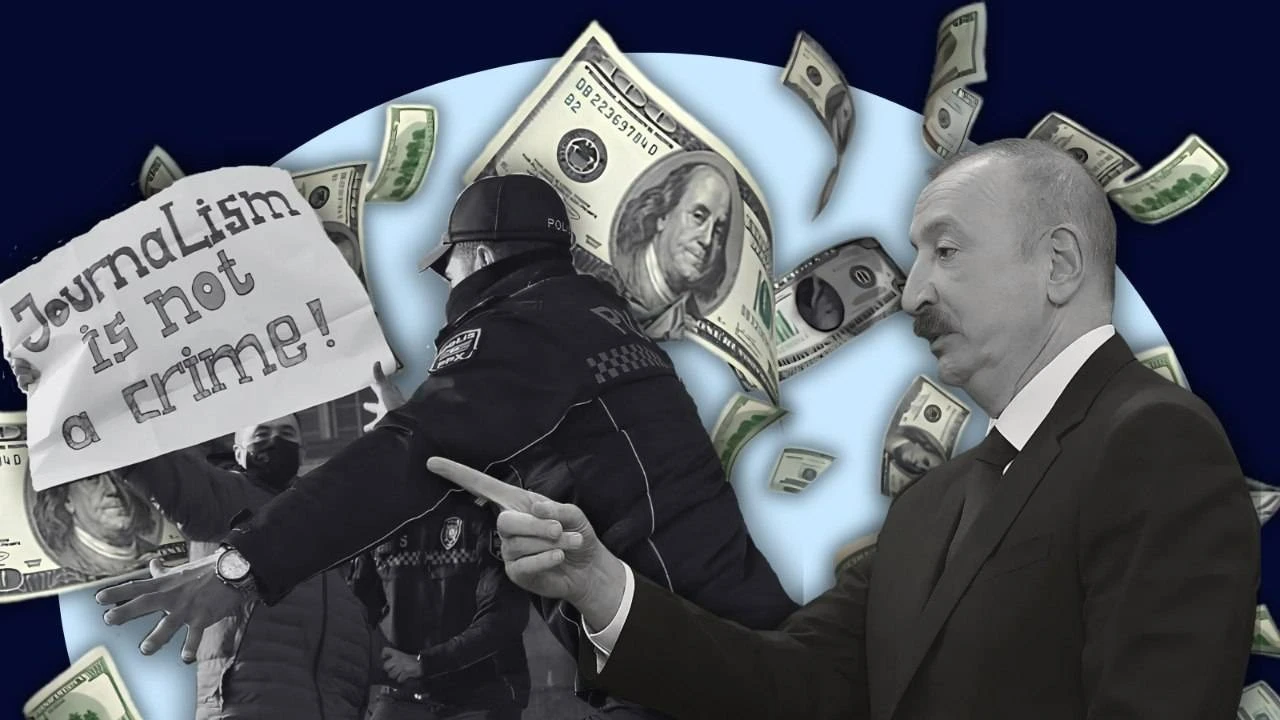
(The article was prepared by the "Khar Center" within the framework of research on Azerbaijani authoritarianism)
Author:
✍️ A young researcher with bachelor's and master's degrees in Journalism
Introduction
For over thirty years, the Aliyev clan has centralized all of the country's wealth and property relations around itself. At the same time, it has designed the information space in its own image. Under an authoritarian regime, information can never be a neutral news product. Under the current Aliyev regime, the media acts as a propaganda machine for its political line. Furthermore, the media has become a tool that legitimizes the regime's authoritarian measures. So, how did this happen? Although the father, Aliyev, who came to power in 1993, lifted censorship on the press five years later, in reality, the mechanisms of control transitioned into a new form with economic, administrative, legal, and political tools. The financial dependence of media outlets, a limited advertising market, and unequal access to state resources weakened the ability of independent media to operate. In this study, we seek to examine how state control over the media in Azerbaijan was formed and how it has been strengthened over time through various mechanisms. The study reviews the main changes in media policy since 1993. The calculations in this text are based on officially published financial and statistical indicators. Therefore, the amounts shown represent not the full volume of funds the state spends on shaping its information space, but rather the portion determined from open sources. In particular, it should be noted that a portion of the funding allocated by structures close to the authorities for the media is also transferred in an opaque manner through informal capital flows.
Research objective: To analyze how Azerbaijani authoritarianism monopolizes and designs the information space through the state budget and economic levers.
Research questions: This article is the first part of a four-part investigative series and focuses specifically on these questions: How does the regime shape the information space with financial resources? How much money has the state allocated to the media, and how has this amount changed over the years? How have financial and economic pressures weakened independent media?
The next three investigations will examine the mechanisms of agenda-setting and framing, the control established over the digital space and social media, and the hegemonic information strategies activated during times of crisis.
Sources of the research: Budget documents, statistics based on figures released by government agencies, local and international legislative acts, international studies, analytical reports, and open data databases.
What is the information space, and what is the role of finance?
The information space is considered to be the sum of technologies and communication tools that enable the creation, collection, processing, storage, transmission, and use of information. In other words, the information space is the institutional environment that governs the entire process, from the production of information to its dissemination and public reception. From this perspective, the formation of the information space is shaped not only by technological capabilities but also by the interrelationships of the political and economic actors involved in the process. However, in this environment, the sustainability of information production directly depends on its economic viability. This is because the production of news, fact-checking, paying journalists' and media workers' salaries, maintaining the editorial staff, technical infrastructure, delivering news to the audience, traveling to gather information, and other activities all require funding. Therefore, the extent and quality of journalism a media organization can produce is directly dependent on its financial resources.
The direct impact of financial strain on news production was clearly demonstrated by U.S. political communication researcher Eric Peterson (Peterson, 2021) in his study of U.S. newspapers. The researcher wrote that the reduction of resources in the newsroom has a severely negative impact on the volume of political news. According to the study, a reduction in the newsroom staff at a typical newspaper led to a decrease of 300–500 in the total number of political news stories per year. This figure demonstrates that the first, direct consequence of financial pressure and resource shortages is a contraction in the production capacity of journalism. Funding is essential for preserving the quality and originality of journalism. Peterson emphasized that resource scarcity leaves media outlets reliant on press releases, wire services, and content copied from other sources. A similar picture is confirmed by digital media researchers Fletcher and Nielsen (Fletcher & Nielsen, 2018). According to their approach, media outlets with declining revenues become passive broadcasters of information produced by others instead of creating original news, leading to an increase in "copy-paste" media. Furthermore, journalism's most important role in society—the watchdog function—weakens. In fact, investigative journalism, which requires significant financial investment and specialized human resources, is also one of the first casualties during a financial crisis, and the field declines. This academic landscape suggests that the institutional sustainability of journalism is directly dependent on the stability of its funding model. It is at this point that the question arises: who should pay the costs?
In their article "Journalism as a Public Good: The Scandinavian Perspective," Norwegian journalism professor Sigurd Allern and Swedish media researcher Ester Pollack (Allern & Pollack, 2017) state that journalism cannot be sold as a regular commercial product and according to market rules. According to their approach, quality journalism contributes to society's access to accurate information and democratic processes. It is this very characteristic that makes it difficult to fund quality journalism solely through commercial revenues. Therefore, various revenue models have emerged to cover costs. The most common models include advertising revenue, direct payments from the audience (subscriptions and donations), government support and subsidies, grants from private organizations, as well as personal financial contributions from the media owner or partners. Broadly speaking, media financing can also be divided into two main categories: public and private financing. Which model predominates depends on the market in which the media operates, its audience, the state's media policy, and its ownership structure. The diversity of funding sources is considered important for reducing a media organization's dependence on a single source of revenue. However, it is also not enough to approach media financing solely as an economic issue. This is because the source of funding can become a factor that determines the media outlet's independence. Therefore, it is necessary to investigate the source of that income, the degree of dependence on it, and the potential for the financial relationship to influence the editorial decision-making process. This issue is addressed in the Council of Europe's legal framework on media diversity and independence (Committee of Ministers of the Council of Europe, 2018). The Council of Europe acknowledges that support can contribute to the protection of media pluralism. However, the organization emphasizes that financial resources must be distributed based on objective and transparent criteria, there must be no discrimination among media outlets, and this support must not become a tool for intervention. It is precisely this issue of financing that is a cause for serious concern in non-democratic regimes. Spanish sociologist and media researcher Manuel Castells writes in his book "Communication Power" (Castells, 2009) that the intervention of authorities in the information space does not end with the direct regulation of content or administrative censorship. The degree of freedom of the media is determined by the economic and institutional conditions in which it operates. Castells explains that control over the information space can be examined not only with the question "what is said?" but also with the questions "who can say it, with what resources, and what are its chances of reaching the public?" In the historical context, the transformation of media relations also changed the answers to these questions. The classic dictatorships of the 20th century resorted to direct, harsh administrative bans, mass arrests, and physical coercion as a first step to control the information space. In the modern governance models of the 21st century, however, the internal hierarchy of repression has been updated. However, this did not mean that modern autocracies have completely abandoned physical punishments and arrests. On the contrary, legal and physical repressions have simply shifted their place in the hierarchy, becoming the final blow that comes after economic and legal filters. As explained in the study "Information Autocrats" by economist Sergey Guriev and political scientist Daniel Treisman (Guriev & Treisman, 2019), economic dependency mechanisms are the very foundation of governance in modern authoritarian regimes. The regime first tries to shut them down or co-opt them by cutting off their access to financial resources. The practical implementation mechanism of this economic dependency is explained by Harvard University political scientists Steven Levitsky and Daniel Ziblatt. According to the approach in their work "How Democracies Die" (Levitsky & Ziblatt, 2018), the selective distribution of state resources restricts independent actors' access to funding, while indirectly rewarding those who support the ruling party's policies. As a result, conditioning access to economic resources on political loyalty becomes a mechanism that weakens the ability of independent media outlets to operate. The theoretical philosophy behind this pressure tactic used by modern-day autocracies has also been written about by Professor Des Freedman of Goldsmiths, University of London (Freedman, 2014). According to the author's analysis, in such regimes, the allocation of funds is not a neutral administrative act; it becomes a political tool used by the authorities to consolidate their position. It is Freedman's (2014) theoretical framework that posits a three-tiered fiscal mechanism focused on control, characteristic of authoritarian regimes:
- Financial co-optation (winning over with money, dependency): Media outlets are systematically supported through state resources, subsidies, and official advertising contracts, thereby shaping pro-regime media institutions. As a result, the regime's political discourse gains dominance in the media (Freedman, 2014);
- Resource isolation: Legal and economic barriers cut off media outlets that wish to pursue an independent information policy from access to advertising and donor revenues;
- Repression: Direct punitive mechanisms are used against surviving actors who operate on foreign grants or donations because they cannot secure funding domestically. This includes the closure of editorials, financial charges, and arrests (Guriev & Treisman, 2019).
The practical manifestations of this three-tiered system can be clearly observed in Azerbaijan's media environment.
The Case of Azerbaijan: What is the state of the information space?
In Azerbaijan, the information space is formally composed of various platforms, including television, radio, print, and online media. According to the official 2025 report of the Audiovisual Council, 92 licensed audiovisual media entities operate in the country, including 47 television and 23 radio editorial offices (Audiovisual Council, 2026). Although there are few audiovisual media outlets that are formally funded directly from the state budget, all broadcasters—even private entities—do not pursue an independent information policy, but either indirectly or directly benefit from state funding. Traditional print media, meanwhile, is represented by only about 30 newspapers amid a decline, and there are no newspapers in the country with an independent information policy. Although the exact number of online sites is unknown, it is estimated to be around 150-200 (Report.az, 2023). The number of independent media outlets that provide space for critical and alternative views within the country is quite limited. For instance, the locally established "Azadlıq" newspaper, "Meydan TV," "Açıq Azərbaycan," Almost all independent platforms such as "Time TV," "Abzas Media," "Toplum TV," "HamamTimes," "Mikroskop Media," and "Qəzetçi" have been forced to continue their activities from abroad (in exile) due to severe persecution. Additionally, the foreign-based "Radio Liberty" and "BBC Azerbaijani" also conduct their activities entirely outside the country due to the closure of their domestic bureaus. This situation dominating the information space is directly linked to the current regime in the country. According to assessments by international human rights organizations, Azerbaijan has an authoritarian political system. The U.S.-based international human rights center Freedom House In March 2026 (Freedom House, 2026), it announced that Azerbaijan has maintained its "not free" status for fundamental freedoms since 2002, and its score on a 100-point scale has dropped from 33 to 6 over the last 20 years. Freedom House notes that since 2005, there has been a continued consolidation of authoritarian rule, with President Ilham Aliyev and his family at the center. In the absence of an independent judiciary and even an independent media, corruption has continued to expand, and the Aliyev family has treated state assets as their personal wealth. Furthermore, state funds are used to finance pro-government media, which not only improves the regime's image but also discredits the opposition," the organization wrote in the report. The V-Dem Institute (2024) also classifies Azerbaijan as an electoral autocracy, stating that the state's control over the country's media space is high. According to a report released on April 30 by the France-based organization Reporters Without Borders (Reporters Without Borders, 2026), Azerbaijan is among the countries with the most restricted press freedom. The organization writes that the country has again fallen in the press freedom ranking, landing in 171st place out of 180 countries, and has assessed the situation for the media as "very difficult." This decline has placed Azerbaijan in the same ranks as Russia (172) and Turkmenistan (173) (Meydan TV, 2026).
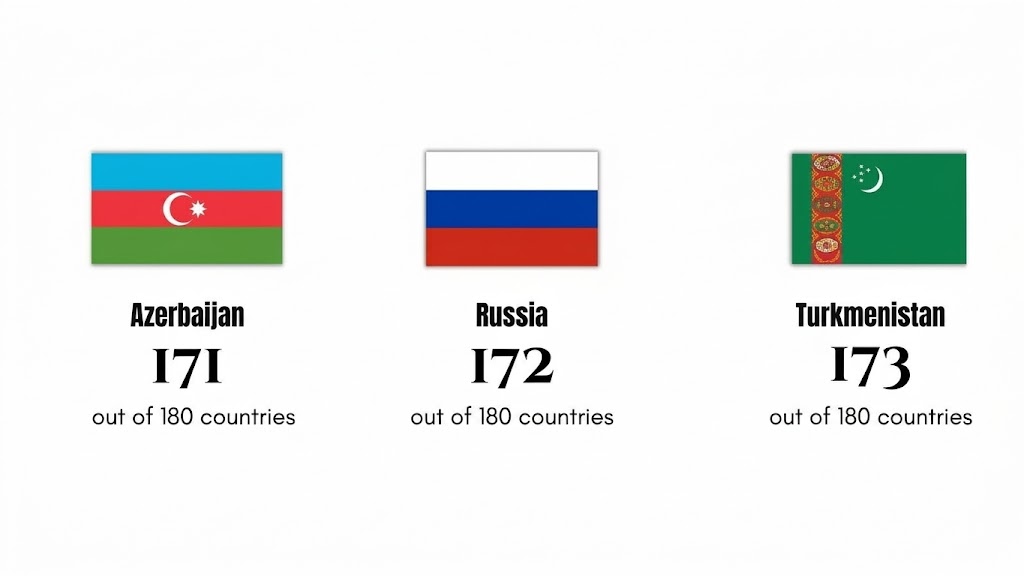
Graph 1. Prepared based on the report of Reporters Without Borders
Reporters Without Borders emphasizes that media freedom is directly proportional to economic freedom and notes that media outlets in a weak financial position are more vulnerable to exploitation. These indicators clearly demonstrate that in an authoritarian regime, state funding for the media leads not to its development but to its decline, once again proving that there is no such thing as neutral economic support. To analyze the information space that has formed in Azerbaijan, it is necessary to examine not only recent years but also how that environment has changed historically.
Transformation of the information space in the first years of independence: 1991–1993
In 1991, Azerbaijan gained formal independence, and two years later, the Alievs' rule, which continues to this day, began. In fact, the return to power of Heydar Aliyev, the former party leader of Soviet Azerbaijan, in 1993 would mark the beginning of long-term changes in the country's political system. With the Aliyevs' arrival, the centralization of political power in Azerbaijan accelerated, and parallel to this, the information space also began to be adapted to the new political reality. But before analyzing this, it is necessary to look at the state of the media before H. Aliyev's arrival.
During the Soviet era, the Azerbaijani press was part of a unified ideological system, operating under the direct ideological control of the Main Directorate for the Protection of State Secrets in the Press, which was subordinate to the Central Committee of the Communist Party and the Council of Ministers, and its main function was the dissemination and legitimization of the ruling political line. (Aşırlı, 2009). After gaining independence, this monolithic model collapsed, and opportunities arose for political parties and various social groups to create their own media outlets. The print outlets that emerged during this period essentially became the main mouthpieces for the country's different political forces and elites as they vied for power. For example, the opposition's "Azadlıq" and "Yeni Müsavat" newspapers, the ruling front's "Səs" and "Yeni Azərbaycan" publications, and the new media policy formed by the relatively neutral camp through "525 Newspaper," became a platform for the ideological confrontation of the parties, in addition to news reporting.
The rise to power of the Azerbaijan Popular Front, led by Abulfaz Elchibey, in 1992 can be considered a separate stage in media history. The censorship inherited from the Soviet era kept the press under state control, and content was subject to review before publication. A report by the Committee to Protect Journalists (CPJ) states that in the first months of his rule, Elchibey largely eliminated the previous censorship, and journalists later recall this as a "golden age" of press freedom (CPJ, 1998). During Elchibey's tenure, Article 3 of the Law on Mass Media, adopted on July 21, 1992, prohibited prior censorship; however, certain restrictions on the abuse of media freedom remained in place. But this liberalization was not long-lasting. The Committee to Protect Journalists wrote that with the intensification of the Karabakh War, a state of emergency and military censorship mechanisms were implemented in Azerbaijan. As a result, the censorship that had begun to be lifted in 1992 was re-imposed in 1993. A CPJ report documented an official directive from this period for the pre-censorship of articles, photos, and cartoons (CPJ, 1998). The political crisis in Azerbaijan deepened with an armed uprising led by Surat Huseynov, a weakening of control mechanisms, and a split among internal forces. Against this backdrop, Heydar Aliyev came from Nakhchivan and first became Speaker of Parliament, then President.
Heydar Aliyev's changes in the media landscape
With Heydar Aliyev's arrival, state control over the media began to take on a more systematic character. According to the CPJ, political censorship was established alongside the previous military censorship (CPJ, 1998). At H. Aliyev's behest, attempts were made to control opposition and independent newspapers alongside state media. Cases documented by the CPJ in 1996–1997 show that materials in newspapers on corruption, police activities, human rights, and other political topics were censored and not published (CPJ, 1998). On August 6, 1998, the President signed a decree "On Additional Measures for Ensuring Freedom of Speech, Thought, and Information in the Republic of Azerbaijan." Paragraph 8 of the decree declared decrees on censorship and control of information broadcasting null and void (Decree of the President of the Republic of Azerbaijan, 1998). Although this decision was a formal abolition of censorship, the state's ability to influence the media did not disappear; other forms of control became more significant. The new challenge facing media freedom would now be economic sustainability. In other words, Heydar Aliyev's abolition of censorship was merely a manipulation. This is where the concept of cultural hegemony by the leftist theorist Antonio Gramsci (Selections from the Prison Notebooks, 1971) comes into play, where power governs society not through coercion, but through voluntary consent by controlling resources. The application of this approach to the Azerbaijani media was documented in CPJ and IREX reports, specifically after the Aliyevs' rise to power. The state exercised control over the media through monopolies in the advertising market, publishing debts, and other economic pressures (CPJ, 2000, 2001; IREX, 2003). In its 2000 report, the CPJ wrote that President Heydar Aliyev's authoritarian tendencies toward the independent press had not disappeared (CPJ, 2000). The report noted that during those years, there were a series of violent attacks against journalists who investigated the president, his family, and his political and business associates. For example, on June 30, Kamil Taghiysoy, a reporter for the then-opposition newspaper "Yeni Müsavat," was kidnapped, beaten, and threatened for a series of articles he published about President Aliyev's health. These attacks showed that censorship was, in fact, still in place.
The arrival of Son Aliyev - How was the media censorship mechanism created?
After Heydar Aliyev's son, Ilham Aliyev, took over the presidency in 2003, the main features of the system inherited from his father were preserved. Additionally, the state's financial and institutional role in the media sector became more systematic. Of course, a state financial allocation in itself is not considered an antidemocratic act; state subsidies also exist in democratic countries. However, if the state is not the only participant in the media market but is also the dominant actor in the distribution of economic resources, asymmetrical relationships are automatically created.
In 2005, the first decree regarding direct state aid was signed. In the decree on the occasion of the 130th anniversary of the press (President of the Republic of Azerbaijan, 2005) I. Aliyev allocated 10 million manat (equivalent to 2,000 AZN after the 2006 denomination) to each of the 30 editorial offices. Parallel to this, in 2005–2006, the commissioning of the Baku-Tbilisi-Ceyhan pipeline led to a sharp expansion of the state budget as oil revenues flowed into the country ("Radio Liberty", 2005). This also paved the way for an increase of up to 40 percent in "Radio, Television and Publishing" expenditures (Cabinet of Ministers of the Republic of Azerbaijan, 2005, 2006). Although AzTv, the regime's main propaganda machine, received the largest share during this period, the most dramatic increase in funding was observed in the newly launched Public Television and AZERTAC—120% (Cabinet of Ministers of the Republic of Azerbaijan, 2005, 2006). In official rhetoric, this funding was presented to the public as support for the development of the press. However, reports by international observers analyzing the year 2005 stated that independent and opposition media still remained under economic and legal pressure. The U.S. Department of State's 2005 human rights report noted that censorship remained in practice, state institutions created obstacles to placing ads in opposition newspapers, and private companies were also pressured not to advertise in such papers (U.S. Department of State, 2006). The continuation of this practice in 2006 was documented in reports by the same organization.
A 2006 report by the Committee to Protect Journalists stated that the authorities pressured media outlets that did not support its policies not to run advertisements. For example, state institutions were prohibited from advertising in opposition newspapers, and state libraries were restricted from subscribing to them. Private businesses were also pressured to prevent them from allocating funds to alternative media. The government controlled the two main press distribution agencies, Qasid and Azermatbuatyayimi (CPJ, 2006). In the 2005–2006 Media Sustainability Index by the international research organization IREX (IREX, 2006) it was noted that independent newspapers were forced to sell their retail copies through Qasid, but this organization also did not pay the newspapers for the copies sold. At the same time, the state-owned "Azərbaycan" publishing house threatened to stop publishing independent newspapers, citing accumulated "printing debts" as a pretext. Additionally, newspaper paper was artificially scarce, particularly during political campaigns and on the eve of elections, as a method of economic pressure (IREX, 2006). Independent and opposition editors described this mechanism as "the strangulation of the independent press with an economic noose" (CPJ, 2006; U.S. Department of State, 2006).
The authorities' next step was to increase praise for money. In 2008, the "Concept for State Support of the Development of Mass Media in the Republic of Azerbaijan" was approved, and the State Support Fund for the Development of Mass Media (SSFDMM) was established under the President (President of the Republic of Azerbaijan, 2008). Official sources stated that the purpose of this Fund was to support media freedom and the economic sustainability of the media in the country, to strengthen the social protection of journalists, and to improve the press's material and technical base (AzərTac, 2009). We analyzed the budget documents for the years 2009-2020 and our calculations showed that a total of 41,882,778 manat was allocated to the Media Development Fund from the state budget (Budget documents, 2009-2020). The allocated funds increased by more than 200 percent from 1,304,160 manat in 2009 to 4,133,184 manat in 2020.
The first major line of financial resources consisted of quarterly and semi-annual grants, under which aid ranging from 5,000 to 60,000 AZN was allocated to editorial offices. For example, in the terms of the competition announced for the second quarter of 2019, the monthly financial assistance amounted to 20,000 AZN for daily public-political newspapers, 10,000 AZN for bi-daily publications, and 5,000 manat for weekly newspapers (AzərTac, 2019). Thus, state support ceased to be a one-time assistance. However, a little earlier than this, for example, in 2014, the removal of the "Azadlıq" newspaper from the list of recipients could be considered key evidence of selective aid ("AzadlıqRadiosu", 2014). Another piece of evidence is the consistent presence of the same publications among the aid recipients. For consecutive years, the same amount of aid was given to editorials with different political backgrounds, such as "Yeni Azərbaycan," "İki Sahil," "525-ci qəzet," "Səs," "Bakı-Xəbər," "Yeni Müsavat," and "Olaylar." Officials portrayed this as protecting media freedom and diversity. However, when analyzing each of these different newspapers for 2019, it appears that the President's activities, state programs, and the country's socio-economic development were portrayed in a positive light. Meanwhile, the fact that funding came from a single source created institutional financial dependence. This situation led editors to apply self-censorship and align with the state's agenda due to economic interests. The authorities turned this crisis they had created into the next opportunity. In 2020, the terms of a new competition announced by the Media Development Fund were revealed (Yeni Çağ, 2020). With those terms, specific topics and directions for funding were directly dictated. These directions included specifically the promotion of the idea of Azerbaijanism and the strengthening of statehood and its position. Looking at the areas where media outlets were declared winners in the official KİVDF information, it becomes clear that the authorities would spend every penny of the funds they allocated specifically on promoting their political line (KİVDF, 2020). This was now in clear violation of journalistic principles, as the independence of newsrooms was being completely stripped away ("Yeniçağ", 2020). This process, known in media theory as "Media Capture," paralyzed the press's watchdog function. This dictate on content would later become a mechanism used by the predecessors of the Media Development Fund (MDF) as well.
The second major pillar of the KİVDF's financial resources was the distribution of direct social projects and government advertisements, thereby creating dependency for individual journalists. More than 30 million manat was allocated from the state budget for the construction of the 1st and 2nd journalist buildings in Baku's Sabail district, as well as for the foundation work of the 3rd building (President.az, 2017) Drey Sullivan, head of the Organized Crime and Corruption Reporting Project (OCCRP), stated that a journalist who receives expensive real estate—an apartment—from the state loses their fundamental principle: the freedom to criticize and remain impartial, becomes a public relations (PR) agent for the authorities ("Meydan TV," 2017).
Vugar Safarli, who was the Foundation's executive director for 11 years starting in 2009, was charged under Article 179.4 of the Criminal Code (particularly for embezzlement or misappropriation on a large scale), and other articles, and was sentenced to 10 years and 6 months in prison in 2021. ("Radio Liberty", 2021). Shortly before his arrest, the MEDIA Fund had been dissolved.
The Transition from the MEDIA Development Fund to MEDIA – Reform or Increased Control?
From 2009 to 2020, media policy in Azerbaijan was implemented through the Media Development Fund (MDF), and this model was based on economic co-optation (financial dependency). The replacement of the MEDIA Development Agency (MDA) with the Media Development Agency (MDA) (Decree of the President of the Republic of Azerbaijan, 2021) and new legislation in this area ("Law on Media," 2021) means the systematic establishment of all control relationships through legal-administrative mechanisms, alongside financial dependence. This change is not, of course, a renunciation of the financial levers of authoritarian governance. It is simply supplementing them with more stable legal-administrative mechanisms. Thus, the authoritarian regime, alongside the question "who do I give money to?", also asks, "who is a media outlet?", "how much news can it produce?", It also made the answers to questions like "who is a media outlet?" and "who is a journalist?" the subject of legal regulation.
The first legal pillar of this process was the Law on Media of the Republic of Azerbaijan, adopted on December 30, 2021. With this law, the notification regime over media activity was replaced by a licensing regime (Law on Media, 2021). It replaced the previous laws on mass media and television and radio broadcasting, establishing the organizational, legal, and economic foundations of media activity in a single system. The law introduced the concept of the Media Registry, which was the official state registration of information about media entities and journalists. This mechanism led to the state determining who could operate in the media and under what conditions. Entities not included in the Media Register were also automatically deprived of the state financial support and concessions provided for by law (Səs Information Agency, 2022). Article 60.5 of the law stipulated the publication of at least 20 materials per day for continuous operation. This was considered a point that could create difficulties for qualified media outlets and platforms wishing to conduct research. The requirements established by Article 74.2 of the same law (Law of the Republic of Azerbaijan, 2022) confined the question of "who is a journalist?" to an administrative and bureaucratic framework. Conditions were established for journalists to be registered, in other words, to be officially recognized by the state, such as higher education, an employment/civil contract, cooperation with registered media, continuous activity, and at least 3 years of experience. Additionally, the law states that the state can decide which journalistic activity is "biased" and which is "objective." The law does not establish measurable legal criteria for the concepts of "objective," "impartial," and "balanced," creating broad opportunities for interpretation and abuse. On the eve of the law's adoption, international organizations predicted that the situation for the media in Azerbaijan would worsen (Radio Liberty, 2022). The Venice Commission stated, "The Law seeks to regulate almost everything in the Azerbaijani media sector, including online media. Instead of creating the necessary conditions for the media to fulfill its watchdog role, the law focuses on restricting media activity," it stated (Radio Liberty, 2022). To regulate the financial aspect of these administrative control mechanisms, the charter of the Media Development Agency was approved by an order from Aliyev in January 2021. The agency's initial charter capital was 285,405 manat (Decree of the President of the Republic of Azerbaijan, 2021). However, the funds allocated to the Agency for the period 2021-2026 have repeatedly exceeded this amount.
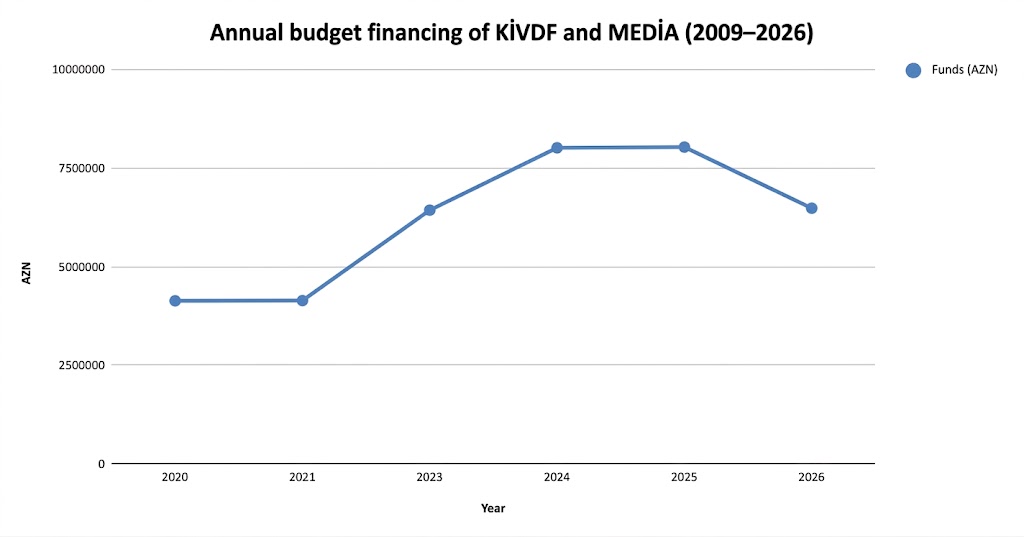
Graph 2. Prepared based on budget documents
We calculated the amounts allocated to the Agency from the budget for these years using official documents (with the exception of 2022, as the funds were not specified in the budget) and, in total, AZN 33,078,005 was allocated (Budget documents, 2021; 2023; 2024; 2025; 2026). The figure, which was 4.14 million in 2021, rose to 6.43 million in 2023 and 8.01 million in 2024, showing a growth trend. In 2026 alone, it did not increase, falling to 6.48 million manat, a 19.3% decrease compared to the previous year. (ed. AZN 8,027,949 in 2025) decreased. In official rhetoric, the purpose of the allocated funds and the Agency was stated to be ensuring freedom of speech and information, as well as pluralism; strengthening the economic independence of the media; enhancing the professionalism of journalists; and ensuring society's access to objective, unbiased information (MEDIA, 2021). A significant portion of the funds has been allocated to newspapers and online media as monthly financial assistance.
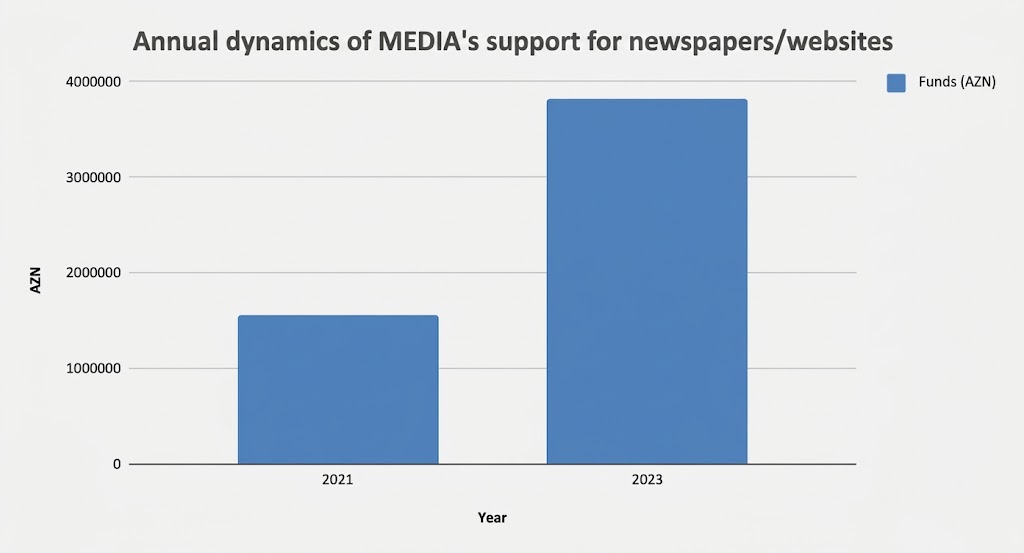
Graph 3. Prepared based on budget documents
Thus, of the total 33,078,050 manat allocated to the media for 2021–2026, 57.06 percent – 18,876,000 manat – was directed to newspapers and websites in the form of financial support (MEDİA, 2021-2026)In other words, approximately 57 manat out of every 100 manat allocated during this period was spent on funding newspapers and websites. The total amount allocated to newspapers and websites rose from 1,560,000 manat in 2021 to 3,816,000 manat in 2023, reaching its highest level of the period. It should be noted that only officially published data were taken into account in these calculations. However, the requirements imposed on the media receiving this funding actually served to protect the political interests of the existing authoritarian regime rather than expanding media freedom and pluralism. Among the main directions of state support in the agency's concept are "the protection of public and state interests," "the development of the young generation's national self-awareness and the cultivation of patriotic feelings," topics with a political and ideological content, such as "diaspora building," "the promotion of the idea of Azerbaijanism," and "the promotion of the history of statehood, national customs and traditions, and science and culture of Azerbaijan" (MEDIA, 2021). Similarly, when a competition was announced every 6 months, the terms were listed. Winning media outlets are required to produce materials weekly on themes supporting statehood, Azerbaijanism, patriotism, the "Great Return," diaspora building, and the political line (MEDİA, 2025). In the media that receive funding, materials are produced monthly based on these themes, and the support of MEDİA is highlighted at the end. Even when preparing material on more neutral topics, journalists resorted to self-censorship due to the risk of losing funding, the established content frameworks, and the necessity of maintaining good relations with the state. Although human rights topics were formally among the requirements, an analysis of the media that received funding reveals that these materials were also geared towards propaganda. Thus, for the authoritarian regime, this financial support goes beyond being merely a tool of economic co-optation, also participating in shaping the media agenda and public opinion.
In the second half of 2026, the Media Development Agency was abolished and merged with the Audiovisual Council, creating the new body, the Media and Broadcasting Council (President of the Republic of Azerbaijan, 2026). Thus, MEDIA's functions regarding media development, state support, and the Media Registry were consolidated within the same body, alongside the Audiovisual Council's authority to supervise and regulate television and radio broadcasting. Media platforms in the information environment would now be under control in a centralized model. President Ilham Aliyev appointed Ahmad Ismailov, who led MEDİA, as the chairman of the Council (Oxu.az, 2026). Until then, broadcasters were already behaving in line with the government's political line, simply producing manipulative materials about issues where lower-level officials could be criticized. It was also clear that websites and newspapers adhered to the same line. In particular, during crisis situations, the authorities' theses are seizing the agenda through all communication channels. Previously, it was claimed that the Presidential Administration informally coordinated the media. Now, with the powers of MEDIA and the Audiovisual Council being concentrated in the same center, it can be said that this mechanism has been institutionalized. It can be assumed that the authoritarian regime also sought to make its work easier, so that the theses coming from the Presidential Administration would now be used by the same center to shape public opinion and change the agenda.
Against this backdrop, there were also some decreases in the growth dynamics of media funding over the years. Notably, the funding for the state news agency AZERTAC was significantly cut. While the agency was allocated 9.1 million manat from the budget in 2025, this amount was reduced by approximately 22 percent—2 million manat—to 7.1 million manat for the following year. Funding has been completely cut for "Azərbaycan Nəşriyyatı" LLC, which owns a large building in central Baku. In 2025, however, approximately 2.3 million manat had been allocated to the organization. Funding for the Media Agency will decrease to 6.48 million manat in 2026, a 19.3% decrease from the previous year. (ed. AZN 8,027,949 in 2025) decreased. The two main television entities receiving large sums of money from the state budget were the Azerbaijan State Television (AzTV) and Public Television of Azerbaijan (İTV). As in the previous year, both are receiving large sums this year as well, with 42.4 million manat planned for AzTV and 21.8 million manat for İTV (Law of the Republic of Azerbaijan, 2025). Parallel to this, there have been layoffs at television stations in the past year, and the editorial offices of "Respublika" and "Xalq qəzeti" have been merged (Report.az, 2025). It is not enough to assess such changes as budget optimization. It appears that the authorities can reduce the number of traditional media outlets, consolidate them on a platform with greater influence, or replace them. It is no coincidence that authoritarian regimes readily discard any political tool as soon as its functionality weakens, deeming it unusable and sidelining it.
Meanwhile, in Azerbaijan, clientelism exists in the media sector through shadow sponsorship. The concept of clientelism primarily expresses a relationship of loyalty and influence in exchange for resources, support, and opportunities. That is, political and economic actors, including ministries and oligarchic holdings, offer the media financial assistance, informal sponsorship ("package" funding), artificial advertising flows, and access to information. In return, they demand a favorable narrative that serves their interests. Thus, in exchange for resources, the media adopts a broadcasting policy that protects the reputation of these partners and avoids criticism. Additionally, government bodies grant exclusive interviews, access to official events, and information from primary sources only to media outlets and journalists who show loyalty in exchange for money. However, neither the government body nor the media openly declares this collaboration. As a result, this relationship becomes a classic tool of clientelism used to keep the media dependent within an authoritarian regime.
The Necessity of Foreign Donors in Independent Media
In the information space designed by the Alievs, there was no room for independent and alternative media. This situation became even more pronounced with Ilham Aliyev's rise to power. At the heart of this decline are the regime's complementary economic and political steps. The core of the Azerbaijani economy is composed of oil revenues and state procurement. The private sector's share of GDP is limited (World Bank, 2026), and the major existing businesses (banks, construction, etc.) are directly or indirectly dependent on the state elite. In monopolized markets, companies invest in political loyalty rather than quality. In the reality of Azerbaijan, companies understand that advertising revenue given to a critical platform will incur the wrath of state institutions and create problems for their operations. Therefore, the private sector has been forced to self-censor and economically boycott independent media. The other economic factor relates to the citizens. Namely, a working class or lower class with wages that only cover daily living expenses cannot afford to pay for information consumption. Subscription or donation apathy is also linked to low income. Furthermore, repression in authoritarian regimes leaves psychological scars on society. People fear they will be punished, whether openly or covertly supporting independent media, and therefore refrain from making any payments. In short, the advertising market is limited, demand for donations and subscriptions is weak, and media outlets that publish politically critical content are considered risky partners for commercial advertisers. Thus, amid the expansion of state-funded media, alternative media have been unable to establish a sustainable financial model.
It is also impossible for any media outlet to operate continuously for free or without compensation. Continuous news gathering and presentation to the public requires time and money. Modern media research states that professional journalists whose main function is to act as a watchdog must be free from the daily concerns of making a living (Schiller, 1999). When journalists are forced to take on a second job to earn income, the time they dedicate to news production also decreases (Anderson, Bell & Shirky, 2012). For this reason, journalism cannot be based on volunteerism or activism for the long term. Without being paid for their work, newsrooms will eventually collapse or simply become platforms that repost content from other sources.
Under these conditions, foreign donor funding emerged as a lifeline for alternative media. In a broader sense, media funding by donors and foundations can be seen as a continuation of the philanthropic tradition that developed in the West in the late 19th and early 20th centuries (Zunz, 2012). For example, in the United States and the United Kingdom, large charitable foundations emerged as social institutions between 1870 and 1930 and operated to solve social problems. According to researcher Dair Higgins (Higgins, 2014), this model expanded during the Cold War, an ideological confrontation between the US and Western states and the socialist bloc, led by the USSR. A portion of these funds financed civil society, information, and democracy projects. This was because Western states saw independent media as a tool against authoritarian regimes and considered its significant impact on the spread of democracy undeniable. Following the collapse of the USSR and the political system changes in Eastern Europe, this financial mechanism began to spread to the post-Soviet space starting in the 1990s. In this context, the Ford Foundation, the Open Society Foundations (the Ford Foundation, the Open Society Foundations Wedel, 2001; Mendelson & Glenn, 2002), and international funds such as the National Endowment for Democracy; organizations like USAID (U.S. Agency for International Development) began to allocate grants for the development of civil society, human rights, and the media in post-Soviet countries (Quigley, 1997; Wedel, 2001; Mendelson & Glenn, 2002). The ethical policies of such organizations prohibit pre-screening or censorship of media content. Donors can determine the general direction of the project they will fund (for example, corruption investigations), but they cannot interfere with the target of criticism or the outcome to be achieved. Nevertheless, the financial report for the amount they have allocated is also provided to the donor. This mechanism allows independent media to operate freely. The arrival of these funds and organizations in Azerbaijan also dates back to the 1990s. Thus, the European Union, many Western organizations, and foundations launched projects, allocated grants, and conducted trainings in Azerbaijan aimed at developing civil society, freedom of speech and expression, and the media. However, the projects were not only carried out with independent organizations but also with state bodies. For example, from 1991 until it ceased its operations in the country in 2023, USAID invested $431 million in humanitarian aid, the healthcare sector, and economic and governance reforms in Azerbaijan (BBC, 2023). Although the state financed projects that benefited it with donors, it began to create obstacles for independent NGOs and the media.
Under the Law on Grants of the Republic of Azerbaijan, adopted in 1998, the relationship between donor organizations and recipients was regulated more simply. In the 2000s, however, legal restrictions on foreign donor funding were established. Since 2004, by an order of Aliyev, the registration of grant agreements received by non-profit legal entities has been carried out by the Ministry of Justice, and a copy of the agreement was provided (AzərTac, 2009). In 2009, a subsequent decree required NGOs to submit a notarized copy of the original grant project to the Ministry of Justice to conduct banking operations, which the ministry then had to approve. The problem was that a number of NGOs working with foreign donors were closing these projects online, and the originals were not in the NGOs' possession. Thus, from 2009, the legal registration of a grant became not just a formal mechanism, but a prerequisite for accessing the funds (Radio Liberty, 2010). After the 2013 amendments, it became mandatory to submit contracts between the parties to a state agency for registration. Not only the initial contract, but also any subsequent amendments to it had to be reported. Thus, the import and circulation of grants were brought under control (Law of the Republic of Azerbaijan, "On Grants"). After an amendment in 2014, a foreign donor could not directly provide a grant to any organization in Azerbaijan. First, the appropriateness and usefulness of the grant for the country had to be reviewed by a state body (the competent executive authority). The right to grant the aid was not acquired until the state body provided a positive official opinion. During and after these restrictive changes to the legislation, criminal cases were opened against independent NGOs in Azerbaijan, and many well-known citizens also criticized both the law and the growing fines, while international organizations assessed these steps as excessive interference (BBC, 2013). During and after these restrictive changes to the legislation, criminal cases were opened against independent NGOs in Azerbaijan, and many well-known civil society activists were arrested. However, research by Human Rights Watch (HRW, 2016) showed that during these years, foreign grants were a primary source of funding for NGOs and media that were critical of the government in Azerbaijan. However, legal and physical repression made it difficult for the media to operate, thanks to foreign support. The subsequent "Law on Media" also included restrictions on donors. For example, the law states that a foreign source can only sponsor a media platform for 25 percent. This is considered an impossible scenario for independent news sites in Azerbaijan.
The next wave of pressure on media outlets deprived of funding
In these years, as the Aliyev family sought to monopolize the information space, the existence of independent media was not just a professional activity, but also an act of resistance against the authoritarian regime. Therefore, it is not enough to limit the activity of independent media to merely producing alternative news. These media outlets made the government's policies more visible, demanded accountability for the use of state budget funds, and highlighted problems that had been overshadowed by dominant narratives. Led by "Meydan TV" and "Radio Liberty," whose sites were blocked as early as 2014, other media outlets that emerged and developed over the years collaborated despite domestic pressure and highlighted the people's problems ("Meydan TV," 2025).
In their study titled "Information Autocrats," economist Sergey Guriev and political scientist Daniel Treisman (Guriev & Treisman, 2019) write that modern authoritarian regimes are changing their levers of pressure against media outlets they cannot integrate into the system. This theory was also demonstrated in Azerbaijan: the authorities replaced restrictive measures with defamation and arrests starting in 2023. The Committee to Protect Journalists (CPJ) reported earlier this year that Azerbaijan ranked among the top jailers of journalists for the first time since 2018 ("Radio Liberty," 2026). The CPJ wrote that with laws restricting foreign donor aid, the Azerbaijani authorities had intensified their efforts to silence independent media, but in 2023, following a one-day military operation in Karabakh, the wave of arrests became the next phase of repression. The wave of arrests began in November 2023 with Abzas Media, known for its corruption investigations. A verdict in this case was delivered on June 20 of last year at the Baku Court for Grave Crimes. According to the verdict, the publication's director Ulvi Hasanli, editor-in-chief Sevinc Vagifgizi, editor of the Turan Information Agency and investigative journalist Hafiz Babaly, and a journalist for Radio Liberty, economist Farid Mehralizadeh to 9 years, journalists Nargiz Absalamova and Elnare Gasimova to 8 years, and the site's coordinator, Mahammad Kekalov, to 7 years and 6 months in prison ("AzadlıqRadiosu", 2025). The next victims of a mass arrest were the employees of "Toplum TV." In March 2024, the media outlet's office was sealed, and its employees were detained. On July 27 of this year, III Republic Platform spokesperson Akif Qurbanov and founding member Ruslan Izzatli were each sentenced to 15 years in prison, while the founder of Toplum TV online television, Alasgar Mammadli, and journalist Ali Zeynalov were each sentenced to 14 years. Editor Mushfiq Jabbarov, activists Ramal Babayev and Ilkin Emrahov were each sentenced to 13 years, while journalists Farid Ismailov and Elmir Abbasov received 12-year prison sentences ("Radio Liberty", 2026). The first arrests in the "Meydan TV case," whose trials are ongoing, began on December 6, 2024. On that day, media employees Aytac Tapdıq, Aynur Elgünəş, Xəyalə Ağayeva, Aysel Umudova, Ramin Deko, and Natiq Cavadlı were detained. Ülvi Tahirov, the deputy director of the Baku School of Journalism, was also arrested that day. In the following months, Şəmşad Ağa, Nurlan Libre, Fatimə Mövlamlı, Ülviyyə Əli, and Əhməd Muxtar were also detained in this case ("Meydan TV," 2026). The individuals detained in all 3 cases are charged under Article 192 (illegal entrepreneurship), 193-1 (legalization of assets obtained through criminal means), 213 (tax evasion), 206 (smuggling), and other articles (Criminal Code of the Republic of Azerbaijan). They are also each accused of committing these crimes as part of an organized group. In other words, official rhetoric claims they are facing harsh penalties for being funded by foreign donors.
However, under the Code of Administrative Offenses, failure to submit documents related to the grant to the Ministry of Justice is considered an administrative offense. Individuals are fined up to two thousand manat, officials up to two thousand five hundred manat, and legal entities up to seven thousand manat (Administrative Offenses Code of the Republic of Azerbaijan). In other words, this should not lead to their arrest. Article 193.1 of the Criminal Code also refers not to any property obtained illegally, but specifically to property obtained through a crime. In this case, the failure to register grant agreements with the Ministry of Justice does not fall under the definition of property acquired through criminal means ("Tribunat," 2025). The first and primary charge, smuggling, is the detection of goods or funds being illegally transported across the customs border. However, the investigative body claims that these funds originated from a house or apartment, but has not provided any evidence of a border seizure. The media representatives also plead not guilty, stating that the seized funds were deposited later, and they attribute these prosecutions to their professional activities. Pro-government media outlets have violated these individuals' presumption of innocence by publishing reports about them, yet have not presented any visual evidence of how the funds were discovered (Qafqazinfo.az, 2024). Thus, charging the arrested journalists with laundering criminally obtained property is inconsistent with the duties of the criminal prosecution. For this reason, it violates the fundamental principles of the criminal prosecution process ("Tribunat", 2025). Following the arrests, the media announced that they would continue their activities from exile ("Voice of America", 2025; "JAMnews", 2024). Parallel to this, a portion of the independent journalists who had operated in the country were forced to leave, while others changed their profession in light of the political reality. As a result, the authoritarian regime weakened the presence of critical media in the country. Therefore, it would be incorrect to explain these operations by the authorities as a matter of whether or not a journalist broke the law. This was a step taken to protect the information space designed by the authoritarian regime and to prevent the dissemination of information beyond its control. Despite all the levers of the authoritarian regime, the media that are a broadcaster of class struggle and alternative ideas continue to maintain their existence.
Conclusion
The main question this study poses concerns the mechanisms on which the information space in Azerbaijan is based and how the state exercises control over the media. Our analysis shows that the formation of the information space in Azerbaijan was not accidental. This is the result of the gradual establishment of media control through economic, institutional, and legal mechanisms. Until the Aliyevs came to power, the main problem for the Azerbaijani media was official censorship. Five years after Heydar Aliyev came to power, censorship was formally abolished. However, the claims in the official rhetoric that this decision would have a positive effect on pluralism and media freedom ultimately proved to be an illusion. Like modern autocracies, the Azerbaijani government also turned to a three-tiered financial mechanism focused on the media. In the initial stage, economic co-optation took place. Through the Media Development Fund (MDF) and its predecessors, media outlets were systematically funded. However, this funding was not a neutral act of assistance but specifically served to form pro-government media outlets. Dominant narratives, copy-pasted information, and a group of experts supporting the government's policies emerged. At this stage, the resource isolation had been refined, creating an asymmetrical distribution of media resources. The lack of a free market environment in the country had also paralyzed the advertising market. The country's economy's reliance on oil revenues and the monopolization of the private sector had weakened the internal capabilities of the independent media. Fearing the wrath of government agencies, companies subjected critical media outlets to an advertising boycott. The weak purchasing power and the climate of fear instilled in the population also made the donation model unworkable. The state was not only a primary source of funding but also the actor controlling the distribution of resources. Legal levers were also tightened starting in 2021. Those seeking official state recognition as journalists and media outlets were forced to conform to its framework. The requirements for the Media Registry and journalist status were formally voluntary. But in practice, independent media and journalists were not taken into account for participation in anything, from elections to any other event, and were considered unauthorized. Additionally, those outside the registry were automatically deprived of state support. Foreign donor assistance was made legally impossible for independent media within the country, in addition to being negatively portrayed in public opinion. Under the regressive laws, individuals deemed to have committed administrative offenses faced harsher penalties. As a result, around 30 media outlets were arrested on various financial charges without credible evidence, in a politically motivated move.
These are based on an analysis of state funding distribution, the structure of the advertising market, the 2021 media legislation, and the legal persecution of critical media. The research findings are fully consistent with existing scholarly literature on media governance in authoritarian regimes and reveal the systematic nature of these mechanisms in the case of Azerbaijan.
The significance of the study is that the information space in Azerbaijan has been transformed from a mere environment for news production into a mechanism that shapes public opinion for the authorities and supports their political stability. This mechanism was established with a budget controlled by one family, funded by the people's taxes and natural resources. To restore media freedom, state funding must be made transparent, and a competitive advertising market must be ensured. Additionally, the Media Registry's criteria must be changed in a way that does not harm editorial independence, and legal obstacles to international donor funding must be removed.
One of the main limitations of the study is the lack of access to complete and comparable data on media organizations' finances, advertising revenues, state funds, and donor funding. This situation has made it difficult to accurately measure the scale of some of the findings. Future research could more systematically investigate the impact of the economic and legal mechanisms identified in this study on the information content. In conclusion, conditions such as democratic governance, equal access to financial resources, transparent state funding, and limiting interference in journalists' professional activities are crucial for the formation of an independent information space. Without institutional changes in these areas, the prospects for creating a real pluralism in the information space will remain limited.
Note: The article you have read was originally written in the Azerbaijani language. Artificial intelligence tools were used only in the translation.
References:
Allern, Sigurd, and Ester Pollack. 2017. "Journalism as a Public Good: A Scandinavian Perspective." Nordicom Review 38 (Special Issue 1). https://www.researchgate.net/publication/320306842_Journalism_as_a_public_good_A_Scandinavian_perspective.
Anderson, C. W., Emily Bell, and Clay Shirky. 2012. Post-Industrial Journalism: Adapting to the Present. Tow Center for Digital Journalism, Columbia University. https://www.academia.edu/4964810/Post_Industrial_Journalism_Adapting_to_the_Present_a_r_eport_by.
Aşırlı, A. 2009. History of Azerbaijani Press (1875–1920). http://elibrary.bsu.edu.az/files/books_460/N_45.pdf.
Republic of Azerbaijan. 2021. On Media. https://e-qanun.az/framework/49124.
Republic of Azerbaijan. 2022. Law of the Republic of Azerbaijan on Media (February 8, 2022, No. 487-VIQ). https://president.az/az/articles/view/55399.
Audiovisual Council of the Republic of Azerbaijan. 2026. General Report of the Audiovisual Council of the Republic of Azerbaijan for 2025. https://acra.gov.az/kommunikasiya/hesabatlar/azerbaycan-respublikasi-audiovizual-surasinin-2025-ci-il-uzre-umumi-hesabati-692.
Code of Administrative Offenses of the Republic of Azerbaijan. n.d. Unified Electronic Database of Normative Legal Acts. https://e-qanun.az/framework/46960.
Criminal Code of the Republic of Azerbaijan. 1999. Criminal Code of the Republic of Azerbaijan. Unified Electronic Database of Normative Legal Acts. https://e-qanun.az/framework/46947.
Cabinet of Ministers of the Republic of Azerbaijan. 2005. Decision on the Implementation of the Law of the Republic of Azerbaijan "On the 2005 State Budget of the Republic of Azerbaijan". https://e-qanun.az/framework/5561.
Cabinet of Ministers of the Republic of Azerbaijan. 2006. Decision on the Implementation of the Law of the Republic of Azerbaijan "On the 2006 State Budget of the Republic of Azerbaijan". https://e-qanun.az/framework/12240.
President of the Republic of Azerbaijan. 2008. On the Approval of the Concept of State Support for the Development of Mass Media in the Republic of Azerbaijan (Decree No. 2957, July 31, 2008). Unified Electronic Database of Legal Acts. http://www.e-qanun.az/framework/15291.
President of the Republic of Azerbaijan. 2009a. On the creation of the State Support Fund for the Development of Mass Media under the President of the Republic of Azerbaijan (Decree No. 82, April 3, 2009). Unified Electronic Database of Legal Acts. http://www.e-qanun.az/framework/16601.
President of the Republic of Azerbaijan. 2009b. Decree on Amendments and Additions to Certain Decrees of the President of the Republic of Azerbaijan in Connection with the Implementation of the Law of the Republic of Azerbaijan No. 842-IIIQD of June 30, 2009 "On Amendments and Additions to Certain Legislative Acts of the Republic of Azerbaijan." https://azertag.az/xeber/azerbaycan_respublikasinin_bezi_qanunvericilik_aktlarina_elaveler_ve_deyisiklikler_edilmesi_haqqinda_azerbaycan_respublikasinin_2009_cu_il_30_iyun_tarixli_842_iiiqd_nomreli_qanununun_tetbiqi_ile_elaqedar_azerbOn Amendments and Additions to Certain Decrees of the President of the Republic of Azerbaijan. Decree of the President of the Republic of Azerbaijan (January 12, 2021). https://president
President of the Republic of Azerbaijan. 2021. Decree on the Creation of the Media Development Agency of the Republic of Azerbaijan (January 12, 2021). https://president.az/az/articles/view/50115.
President of the Republic of Azerbaijan. 2026. Decree on the Implementation of the Law of the Republic of Azerbaijan of July 14, 2026, No. 449-VIIQD "On Amendments to the Laws of the Republic of Azerbaijan 'On the Civil Service' and 'On Media'," and on the Regulation of Certain Related Issues. https://president.az/az/articles/view/73217.
President of the Republic of Azerbaijan. 2005. Decree No. 923 "On providing financial assistance to mass media in the Republic of Azerbaijan". E-qanun.az. https://e-qanun.az/framework/10495.
Law of the Republic of Azerbaijan. n.d. On Grants. Unified Electronic Database of Legal Acts. https://frameworks.e-qanun.az/3/f_3527.html.
On the 2009 State Budget of the Republic of Azerbaijan. n.d. Law of the Republic of Azerbaijan. https://e-qanun.az/framework/15822.
On the 2011 State Budget of the Republic of Azerbaijan. n.d. Law of the Republic of Azerbaijan. https://e-qanun.az/framework/20908.
On the 2012 State Budget of the Republic of Azerbaijan. n.d. Law of the Republic of Azerbaijan. https://e-qanun.az/framework/22742.
On the 2013 State Budget of the Republic of Azerbaijan. n.d. Law of the Republic of Azerbaijan. https://e-qanun.az/framework/24867.
On the 2014 State Budget of the Republic of Azerbaijan. n.d. Law of the Republic of Azerbaijan. https://e-qanun.az/framework/27027.
On the 2019 State Budget of the Republic of Azerbaijan. n.d. Law of the Republic of Azerbaijan. https://e-qanun.az/framework/41117.
On the 2021 State Budget of the Republic of Azerbaijan. 2021. Official Gazette of the Republic of Azerbaijan. https://e-qanun.az/framework/46614.
On the 2023 State Budget of the Republic of Azerbaijan. 2023. Official Gazette of the Republic of Azerbaijan. https://e-qanun.az/framework/53092.
On the 2024 State Budget of the Republic of Azerbaijan. 2024. Official Gazette of the Republic of Azerbaijan. https://e-qanun.az/framework/55892.
On the 2025 State Budget of the Republic of Azerbaijan. 2025. Official Gazette of the Republic of Azerbaijan. https://e-qanun.az/framework/58618.
On the 2026 State Budget of the Republic of Azerbaijan. 2025. On certain issues related to the implementation of the Law of the Republic of Azerbaijan No. 292-VIIQ of December 9, 2025. Unified Electronic Database of Normative Legal Acts. https://e-qanun.az/framework/61130.
Azerbaijan State Information Agency (AZERTAC). 2009. On the approval of the Charter of the State Fund for the Development of Mass Media under the President. https://azertag.az/xeber/azerbaycan_respublikasinin_prezidenti_yaninda_kutlevi_informasiya_vasitelerinin_inkisafina_dovlet_desteyi_fondu_haqqinda_nizamname-437349.
State Information Agency of Azerbaijan (AZERTAC). 2019. The Media Development Fund has announced a competition for the financing of media projects for the second quarter of 2019. https://azertag.az/xeber/2019_cu_ilin_ikinci_rubu_uzre_kiv_e_maliyye_yardimi_musabiqesinin_sertlerine_yeni_elave_edilib-1254868.
Radio Liberty. 2005. "Budget Spending to Increase by 78 Percent Next Year." https://www.azadliq.org/a/153673.html.
Radio Liberty. 2010. "Special Hurdle for Civil Society." January 14, 2010. https://www.azadliq.org/a/1928581.html.
Radio Liberty. 2021. "Vugar Safarli Sentenced to 10 Years, 6 Months in Prison." https://www.azadliq.org/a/vuqar-seferli-eli-hesenov-mehkeme/31619568.html.
Radio Liberty. 2022. "CPJ also calls for the repeal of the new media law." https://www.azadliq.org/a/cpj-media-qanunu/31698971.html.
Radio Liberty. 2025. "'Imprisoned Women Journalists from AbzasMedia Complain About Conditions." October 10, 2025. https://www.azadliq.org/a/abzas-media-lenkeran-hebsxana-serait/33556462.html.
Radio Liberty. 2026a. "Azerbaijan Among Countries with the Most Journalists Imprisoned in the World." https://www.azadliq.org/a/azerbaycan-jurnalist-hebs/33656389.html.
Radio Liberty. 2026b. "Freedom House's Azerbaijan Report." https://www.azadliq.org/a/freedom-house-azerbaycan-hesabat/33710447.html.
BBC News Azerbaijani. 2013. "President signs new NGO law despite appeal." https://www.bbc.com/azeri/azerbaijan/2013/03/130312_ngo_law.
BBC News Azerbaijani. 2023. "What projects does the US have in Azerbaijan? Which government officials have studied in the US? In answers to 9 questions." https://www.bbc.com/azeri/articles/c132m537k3ko.
Castells, Manuel. 2009. Communication Power. Oxford University Press. https://studylib.net/doc/28222502/manuel-castells-communication-power-2009.
Committee of Ministers of the Council of Europe. 2018. Recommendation CM/Rec(2018)1 of the Committee of Ministers to Member States on Media Pluralism and Transparency of Media Ownership. Council of Europe. https://search.coe.int/cm#%7B%22CoEIdentifier%22:%5B%220900001680790e13%22%5D,%22sort%22:%5B%22CoEValidationDate%20Descending%22%5D%7D.
Committee to Protect Journalists. 1998. Oil Flows More Freely than Ideas in Azerbaijan. Committee to Protect Journalists. https://cpj.org/reports/1998/03/caucasus-page4/.
Committee to Protect Journalists. 2000. Attacks on the Press 1999: Azerbaijan. https://cpj.org/2000/03/attacks-on-the-press-1999-azerbaijan/.
Committee to Protect Journalists. 2001. "Azerbaijani Press Suffers under Government Restrictions." Briefing and Press Release. https://ifex.org/press-suffers-under-government-restrictions/.
Committee to Protect Journalists. 2006. "Attacks on the Press 2005: Azerbaijan Report." February 16, 2006. https://www.refworld.org/reference/annualreport/cpj/2006/en/56388.
Fletcher, Richard, and Rasmus Kleis Nielsen. 2018. "Are People Interactively Engaged with News on Social Media, and Does It Matter?" Digital Journalism. https://scispace.com/pdf/are-people-incidentally-exposed-to-news-on-social-media-a-zvkzvl5hvy.pdf
Freedom House. 2026. Freedom in the World 2026: The Growing Shadow of Autocracy. https://freedomhouse.org/report/freedom-world/2026/growing-shadow-autocracy.
Gramsci, Antonio. 1971. Selections from the Prison Notebooks. Edited and translated by Quintin Hoare and Geoffrey Nowell Smith. International Publishers. https://ia600506.us.archive.org/19/items/AntonioGramsciSelectionsFromThePrisonNotebooks/Antonio-Gramsci-Selections-from-the-Prison-Notebooks.pdf.
Guriev, Sergei, and Daniel Treisman. 2019. "Informational Autocrats." Journal of Economic Perspectives 33 (4): 100–127. https://www.jstor.org/stable/26796838?seq=1.
Higgins, Daire. 2014. "The Western Way: Democracy and the Media Assistance Model." Global Media Journal (German Edition). https://arrow.tudublin.ie/cgi/viewcontent.cgi?article=1089&context=aaschmedart.
Human Rights Watch. 2016. Harassed, Imprisoned, Exiled: Azerbaijan's Continuing Crackdown on Government Critics. https://www.hrw.org/report/2016/10/20/harassed-imprisoned-exiled/azerbaijans-continuing-crackdown-government-critics.
IREX. 2003. Media Sustainability Index (MSI): Europe & Eurasia—Azerbaijan Country Report. International Research & Exchanges Board. https://www.irex.org/sites/default/files/pdf/media-sustainability-index-europe-eurasia-2017-azerbaijan.pdf.
JAMnews. 2024. "Abzas Media will continue its activities with a new team abroad." https://jam-news.net/az/abzas-medianin-yeni-komandasi/.
Levitsky, Steven, and Daniel Ziblatt. 2018. How Democracies Die. Crown Publishing Group. https://ia600803.us.archive.org/21/items/HowDemocraciesDieStevenLevitsky/How%20Democracies%20Die%20-%20Steven%20Levitsky.pdf.
Mendelson, Sarah E., and John K. Glenn, eds. 2002. The Power and Limits of NGOs: A Critical Look at Building Democracy in Eastern Europe and Eurasia. Columbia University Press. https://www.researchgate.net/publication/231865945_The_Power_and_Limits_of_NGOs_A_Critical_Look_at_Building_Democracy_in_Eastern_Europe_and_Eurasia_Edited_by_Sarah_E_Mendelson_and_John_K_Glenn_New_York_Columbia_University_Press_2002_300p_4950_cloth22.
Meydan TV. 2017. "Government Gives Homes to Journalists It Controls." https://www.meydan.tv/az/article/hokumet-idare-etdiyi-jurnalistlere-ev-verir/.
Meydan TV. 2025. "Who is imprisoned journalist Aytac Tapdıq?" July 18, 2025. https://www.meydan.tv/az/article/h%c9%99bsd%c9%99-olan-jurnalist-aytac-tapdiq-kimdir/.
Meydan TV. 2026a. "Azerbaijan is among the 10 worst countries in the world press freedom index." https://www.meydan.tv/az/article/az%c9%99rbaycan-dunya-uzr%c9%99-m%c9%99tbuat-azadligi-indeksind%c9%99-%c9%99n-pis-10-olk%c9%99-sirasindadir/.
Meydan TV. 2026b. "Amnesty International has launched a petition in the 'Meydan TV case.'" August 14, 2026. https://www.meydan.tv/az/article/amnesty-international-meydan-tv-isi-uzr%c9%99-petisiya-basladib/.
Meydan TV. n.d. "Luka Volonte and Vüqar Səfərli." https://www.meydan.tv/az/article/luka-volonte-ve-vuqar-seferli/.
Media Development Agency. 2021a. "Print Media Outlets—Competition Results." July 1, 2021. YouTube. https://youtu.be/0qj_DWiFG24?si=6HFZ8hxllfjbCv-a.
Media Development Agency. 2021b. "Online Media Entities—Competition Results." July 1, 2021. YouTube. https://youtu.be/T6MEuWhLax4.
Media Development Agency. 2022a. "What advantage does the Media Registry give to journalists?—A MEDIA representative spoke." https://sia.az/az/news/media/986303.html.
Media Development Agency. 2022b. "Results of the competition announced within the framework of the project 'Support for Online Media Actors'." July 1, 2022. https://media.gov.az/medianin-inkisafi-agentliyi-terefinden-onlayn-media-subyektlerine-veb-saytlara-destek-layihesi-cercivesinde-elan-edilmis-musabiqenin-neticeleri/.
Media Development Agency. 2022c. "Results of the competition announced by the Media Development Agency of the Republic of Azerbaijan within the framework of the support project for print media entities." December 20, 2022. https://media.gov.az/azerbaycan-respublikasinin-medianin-inkisafi-agentliyi-terefinden-cap-mediasi-subyektlerine-destek-layihesi-cercivesinde-elan-edilmis-musabiqenin-neticeleri-1/.
Media Development Agency. 2023a. "Results of the competition announced under the Support for Online Media Actors project have been announced." https://media.gov.az/onlayn-media-subyektlerine-destek-layihesi-cercivesinde-elan-edilmis-musabiqenin-neticeleri-aciqlandi/.
Media Development Agency. 2023b. "Results of the competition announced under the project for support of print media outlets were announced." https://media.gov.az/cap-mediasi-subyektlerine-destek-layihesi-cercivesinde-elan-edilmis-musabiqenin-neticeleri-aciqlandi/.
Media Development Agency. 2024a. "Results of the competition announced under the Support for Online Media Entities project have been announced." https://media.gov.az/onlayn-media-subyektlerine-destek-layihesi-cercivesinde-elan-edilmis-musabiqenin-neticeleri-aciqlandi-2/.
Media Development Agency. 2024b. "We present the results of the competition announced under the Support for Online Media Entities project." December 28, 2024. https://media.gov.az/onlayn-media-subyektlerine-destek-layihesi-cercivesinde-elan-edilmis-musabiqenin-neticelerini-teqdim-edirik/.
Media Development Agency. 2024c. "We present the results of the competition announced under the Support for Print Media Entities Project." December 28, 2024. https://media.gov.az/cap-mediasi-subyektlerine-destek-layihesi-cercivesinde-elan-edilmis-musabiqenin-neticelerini-teqdim-edirik/.
Media Development Agency. 2025a. "We present the results of the competition announced under the Support for Online Media Entities project." June 21, 2025. https://media.gov.az/onlayn-media-subyektlerine-destek-layihesi-cercivesinde-elan-edilmis-musabiqenin-neticelerini-teqdim-edirik-2/.
Media Development Agency. 2025b. "Announcing the results of the competition announced under the Print Media Support Project." June 21, 2025. https://media.gov.az/cap-mediasi-subyektlerine-destek-layihesi-cercivesinde-elan-edilmis-musabiqenin-neticelerini-teqdim-edirik-2/.
Media Development Agency. 2025c. "We present the results of the competition announced under the Support for Online Media Entities project." December 29, 2025. https://media.gov.az/onlayn-media-subyektlerine-destek-layihesi-cercivesinde-elan-edilmis-musabiqenin-neticelerini-teqdim-edirik-3/.
Media Development Agency. 2026a. "We present the results of the competition announced under the support project for print media entities." July 1, 2026. https://media.gov.az/cap-mediasi-subyektlerine-destek-layihesi-cercivesinde-elan-edilmis-musabiqenin-neticelerini-teqdim-edirik-4/.
Media Development Agency. 2026b. "We present the results of the competition announced under the Support for Online Media Entities project." July 1, 2026. https://media.gov.az/onlayn-media-subyektlerine-destek-layihesi-cercivesinde-elan-edilmis-musabiqenin-neticelerini-teqdim-edirik-4/.
Media Development Agency. n.d. Concept of State Support for the Development of Mass Media in the Republic of Azerbaijan. https://media.gov.az/konsepsiya/.
Peterson, E. 2021. "Paper Cuts: How Reporting Resources Affect Political News Coverage." American Journal of Political Science. https://www.researchgate.net/publication/346240902_Paper_Cuts_How_Reporting_Resources_Affect_Political_News_Coverage.
Quigley, Kevin F. F. 1997. For Democracy's Sake: Foundations and Democracy Assistance in Central Europe. Johns Hopkins University Press. https://www.akademika.no/en/pedagogikk-og-samfunnsvitenskap/statsvitenskap/democracys-sake/9780943875811.
Report Information Agency. 2023. "Number of media entities and journalists entered into the Media Register has been announced." https://report.az/media-xeber/media-reyestrine-daxil-edilen-media-subyektlerinin-ve-jurnalistlerin-sayi-aciqlanib.
Report Information Agency. 2025. "'Republic' and 'People's Newspaper' merged, legal form of 'Baku Worker' newspaper changed." https://report.az/daxili-siyaset/iki-dovlet-qezetinin-teskilati-huquqi-formasi-deyisdirildi.
Report Information Agency. n.d. "Funding for the Media Development Fund to be increased from state budget." https://report.az/media-xeber/dovlet-budcesinden-ki-vdf-ye-ayrilan-vesait-artirilacaq.
Reporters Without Borders. 2026. 2026 World Press Freedom Index. April 30, 2026. RSF. https://rsf.org/en/2026-rsf-index-press-freedom-25-year-low?data_type=general&year=2026.
Voice Information Agency (VIA). 2022. "What advantage does the Media Registry give to journalists?—A MEDIA representative spoke." https://sia.az/az/news/media/986303.html.
Schiller, Dan. 1999. Digital Capitalism: Networking the Global Market System. MIT Press. https://www.researchgate.net/publication/226042405_Digital_Capitalism_Networking_the_Global_Market_System_Dan_Schiller.
Tribunat. 2025. "Can a grant be criminal proceeds?" February 4, 2025. https://tribunat.info/analiz/qrant-cinayet-yolu-ile-elde-edilmis-emlak-ola-bilermi.
U.S. Department of State. 2006. Country Reports on Human Rights Practices: Azerbaijan, 2005. Washington, DC: U.S. Department of State. https://www.refworld.org/reference/annualreport/usdos/2006/en/38390.
V-Dem Institute. 2024. Democracy Report 2024. Gothenburg: University of Gothenburg. https://www.v-dem.net/documents/43/democracy_report_2024.pdf.
Wedel, Janine R. 2001. Collision and Collusion: The Strange Case of Western Aid to Eastern Europe. New York: Palgrave. https://www.researchgate.net/publication/274054580_Janine_R_Wedel_Collision_Collusion_The_Strange_Case_of_Western_Aid_to_Eastern_Europe_New_York_Palgrave_2001_xi_322_pp_1895_paper.
World Bank. 2026. "Azerbaijan Overview: Development News, Research, Data." https://www.worldbank.org/ext/en/country/azerbaijan.
Yeni Çağ. 2020. "KİVDF announced a competition for the financing of newspapers—CONDITIONS." https://yenicag.az/kivdf-qezetlerin-maliyyelesmesi-ile-bagli-musabiqe-elan-etdi-sertler.
Yeni Çağ. 2022. "MEDİA allocates financial assistance to 16 newspapers." July 1, 2022. https://yenicag.az/media-16-qezete-maliyye-yardimi-ayirir.
Zunz, Olivier. 2012. Philanthropy in America: A History. Princeton University Press. https://press.princeton.edu/books/paperback/9780691161204/philanthropy-in-america.
