(The article was prepared within the framework of the KHAR Center's research on "Authoritarian Regimes and Transregional Mechanisms of Influence")
Türkiye, which is changing quite rapidly and is rich in political tensions and harsh discussions, is currently preparing for a very important event—the NATO leaders' summit. This preparation is not limited only to cleaning the streets, patching the asphalt, and announcing bans that will almost paralyze a large part of the capital, Ankara, for two weeks; at the same time, the government is increasing its total control over society on the eve of the NATO summit. Mass arrests are being carried out in the capital, and in the process, no distinction is made between a potential terrorist, an anti-NATO leftist, or even a university professor (Bianet, 2026), while the opposition media's applications for accreditation to the summit are being massively rejected by NATO at Ankara's request (Cumhuriyet, 2026).
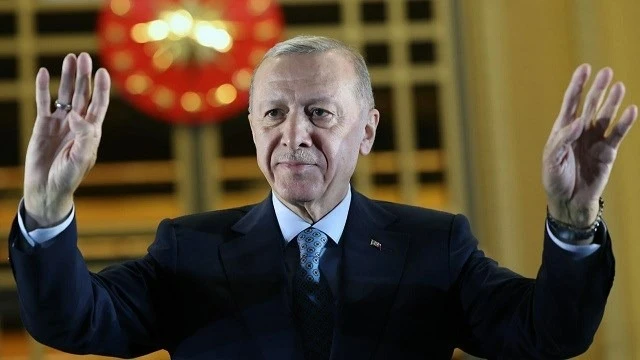
On the other hand, events that seemed impossible a few years or even a few months ago are taking place in the country's domestic political scene—the leadership of the main opposition party is declared "absolutely nullified" by the hands of the court, the former leadership claims to be the legal owner of the party and tries to restructure it, and speculations are voiced that the CHP (Cümhuriyyetçi Halk Partisi - Turkish, Republican People’s Party) will split and a new party will be established. Against the backdrop of growing economic problems, forecasts are being made that early elections could be held; while within the government, on one hand, the propaganda that "Türkiye needs Erdoğan for another term" is increasing, on the other hand, proposals regarding the post-Erdoğan era are being voiced. Some present all these occurrences as a "deep mind" or a "deep state plan," while others evaluate them as chaotic, impulsive repressions whose consequences the government has not calculated.
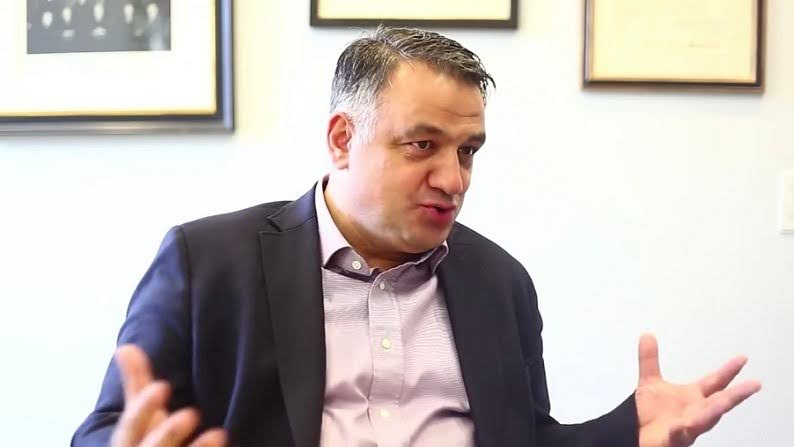
The KHAR Center analyzes the recent events in Türkiye's domestic and foreign policy with Suat Kınıklıoğlu, a foreign policy expert, former AKP member of parliament, and head of the Metropoll Research Center. The analysis is built around the question: "Where is Türkiye heading—towards a completely closed authoritarianism, or a democratic transformation full of difficulties?"
Suat Kınıklıoğlu: The head of the Metropoll Research Centre.
Authoritarian consolidation
Kınıklıoğlu believes that what is happening is the consolidation of authoritarianism in Türkiye: "Processes in Türkiye are continuing dynamically. A lot is happening, and we will see new events in the coming period. Perhaps a new party will be created; we will see how this party is received by the public and what it means for the CHP. But speaking in general terms, it can be said that authoritarianism is strengthening in Türkiye." The expert emphasizes that Turkish authoritarianism is one of the most complex models in the world, with its own specific nuances, and expresses this with the word "sofistike" (sophisticated) in Turkish: "In Türkiye, you do not fall from the third floor like in Moscow. If people fell out of windows every two or three weeks, like in Moscow, it would probably be impossible to manage this system. I think Erdoğan knows this, too. That is why he does this in a very sophisticated way. In Türkiye, matters are resolved through methods called 'lawfare'—the use of law for political purposes—or through law enforcement agencies. This is a multi-layered system—there is the media, the management of public opinion, the manufacturing of consent on certain issues, and the use of foreign policy in domestic policy. For example, I have been hearing this from people around me recently: 'There is a war in Iran, it is unclear what will happen to Syria. If there is a war with Israel the day after tomorrow, would you want Özgür Özel at the head, or Tayyip Erdoğan?' Even some opposition people say they prefer Erdoğan in such situations. Because in times of crisis and uncertainty, the voter naturally turns to a strong leader. It is like this everywhere in the world. The government also knows this very well and uses it." Suat Kınıklıoğlu believes that the recent events are a political design project, but he does not explain this with the "deep state" rhetoric: "Of course, what has been experienced recently is not only related to the CHP. This is more of an issue about how the new Türkiye is intended to be designed. That is, it is clear that the government has a plan. I am not saying a state plan; I am talking about a government plan. This is not an impulsive plan either. There is a certain template in the government's mind. And that template is as follows: a hegemonic AKP, a strong leader, Erdoğan at its head, and parties that participate in elections and maintain a democratic appearance, but never have a say in the administration of the country. That is, let them have certain opportunities in certain areas, like some municipalities in the hands of the CHP, but let them not be able to approach the central government. This is the model the government has in mind, and actually, it worked for a long time. However, when Ekrem İmamoğlu and his team changed the CHP and said 'we want to be the government now,' the magic was broken..."
People going to the polls, but seeing taking to the streets as treason to the state....
Our interlocutor emphasizes that the main uncertain issue in the template the government envisions for the new Türkiye is the position of the people. He notes that how successful the government's new political design will or will not be depends exactly on this factor: "The Turkish people are not highly predictable in these matters. Even in many authoritarian governments, legitimacy comes from the ballot box. At least formally, an election must be held, people must go and vote, and the government must manufacture legitimacy from that election. For Türkiye, this is especially important. Because first of all, although Erdoğan and the AKP have been in power for 24 years, they have not been able to convince half of the people, perhaps even more. There is still a large mass in Türkiye that holds an opposition stance, has been deprived of economic and political opportunities for years, has suffered various damages, but has still not backed down and does not agree with this order. The government constantly tries to establish psychological superiority over this mass. Visibility in the media, billboards, advertisements, state opportunities, public resources—these all work for the continuous production of the 'AKP is strong,' 'There is no alternative' psychology. A certain part of society is also affected by this. But despite all this, what is interesting is this: despite the 24-year AKP rule, at least half of the society still does not believe in this system." On the other hand, Kınıklıoğlu says that the people in Türkiye have a memory of changing the government through democratic elections and that this poses a threat to the government: "We have changed governments with our votes in the past. For example, these people reduced Bülent Ecevit, whom they elected with 21 percent, to one percent of the vote in the subsequent election. In 2022, they single-handedly brought a conservative, 'religious,' anti-establishment party like the AKP to power. So this memory exists, and our people do not want to forget it either. We are among the countries with the highest voter turnout rates in the world. People consider voting important."
According to the expert, the third threat to the government is the economic situation: "The Turkish economy is in a very bad state. While people ride in expensive cars on one street, on another street, there are those collecting bread from the garbage truck. Unemployment is high. Young people sit at home. Opportunities for social mobility have decreased. A significant portion of the youth is either trying to go abroad or trying to build a future for themselves through connections within the system. The possibility of rising by working outside of this has weakened considerably. Of course, we do not know what will happen until 2028, but as of today, the main plan of the government is to go to the elections after recovering the economy. But the Iran crisis complicated these calculations. Inflation is still not falling. Trust in the economic program has seriously weakened. People no longer believe the situation will improve. If an election were held under today's conditions, the government's job would be very difficult. But they think they will be able to recover the situation by 2028. If the target is indeed 2028, they consider that they still have enough time ahead of them." However, there is a very important problem regarding the people factor in Türkiye. And that is the fact that the Turkish voter envisions change only as going to the polling station and voting. Although there were many disputes in the recent elections held in the country, and even questions and suspicions about the results were expressed, the people's experience of protesting on such issues is not stable and strong. Suat Kınıklıoğlu explains this by the Turkish voter being conservative: "The Turkish voter attaches great importance to the State. They see it as a sacred entity. They consider it important for the people who will govern the state to be strong and influential. The Turkish voter attaches great importance to going to the polling station and voting, but there is no strong tradition of popular movements in the history of Turkish society. In other countries around the world, when people have doubts about elections, they can take to the streets. We see this, for example, in Georgia, Ukraine, and Moldova. Sometimes they get results, sometimes they don't, but such a political reflex exists. There is no such political reflex in Türkiye. Even a part of society perceives this as opposing the state. The Supreme Election Council is also perceived as the state. Therefore, the result it announces means the state's decision for many people."
The opposition is unable to create an alternative, and the truth İmamoğlu sees
On the other hand, according to the expert, the lack of a strong leadership alternative also plays a role in the people's struggle behaviors: "I always give this example: imagine the AKP as a large and strong ship moving in the ocean. As the ship continues on its way, the captain throws some of his old friends into the sea and parts ways with some. Then the sea gets rough, the waves get bigger, and things get harder. People start to get worried. But when they turn and look, they see the CHP on the side and perceive it as a boat. Even if they are dissatisfied with the current ship, they do not dare to jump into that boat. Because the first thing they think about is safety. Even if people are dissatisfied with the current situation, if they do not see a structure strong enough to carry them on the opposite side, they do not take a step towards change. In countries like ours, and actually everywhere, the success of processes is always related to opposition leadership. If a leader whom society trusts, believes in, and is ready to follow emerges and makes a strong call, a significant part of the people can respond to it." Precisely for this reason, Kınıklıoğlu believes that the opposition must create a strong alternative that will convince the conservative voter who sees the state as a sacred entity: "The first person to understand this in Türkiye was Ekrem İmamoğlu. He saw that the opposition could not continue in its previous form. The old CHP had very little left to talk to the voter about other than secularism and Mustafa Kemal Atatürk. When the opposition began to change, and the Istanbul elections were won back-to-back, the picture also changed. Ideology is not as important in Türkiye as it is thought to be. People look first at the leader and the team around him. If they can create trust, they give support. Whenever the voter says, 'These people can govern the state, can fix the economy, will not create problems in foreign policy, can manage the country in times of crisis,' that is exactly when the balance will start to change. Being the opposition is a difficult job, especially in the face of such a strong government, it is very difficult. But the Turkish opposition also has very little leeway to make mistakes. For this reason, for the opposition to be successful, it needs to organize smartly, find the right personnel, and build trust. In politics, trust and reliability are formed with personnel. People evaluate not only the leader but also the people around him." Our interviewee points out that another problem of the main opposition in Türkiye is historical baggage: "The main opposition party - the CHP - is actually very conservative in itself. It is the party that founded the Republic; it was formed on the line of the six arrows, secularism, and Mustafa Kemal. Until the Kemal Kılıçdaroğlu era, it did not want to seriously deviate from this line. The approach of 'This is who I am, let them accept me as such' was dominant. This created a serious irritation and was the reason for not voting for the CHP for many people. For example, when Mansur Yavaş was nominated by the CHP for the first time, a part of the people used to say: 'I cannot even tell my wife that I voted for Mansur Yavaş.' Even though Mansur Yavaş came from a nationalist background, he was the candidate of the CHP. The CHP label was considered a problem in itself. For the first time during the Kılıçdaroğlu era, different openings on issues such as reconciliation and the headscarf began to be seen. But this was not enough either. Although these perceptions have decreased recently, they have still not completely disappeared. Secularism and Atatürk are, of course, important topics. But in daily politics, it is also necessary to build a strong narrative in areas such as the economy, education, health, and foreign policy." Our interviewee gives an example of how the Turkish government uses the defense industry on the topic of "building a narrative": "The AKP uses this area very effectively. They say, 'If we go, they will destroy the defense industry.' Although a significant part of the voters does not believe this, they are proud of the successes in the defense industry. Moreover, this finds resonance not only among AKP voters but among a broader mass." Kınıklıoğlu emphasizes that other parts of the opposition are also problematic: "There seems to be a tribalization in Turkish politics. People live inside certain tribes - CHP supporters, MHP supporters, HDP supporters, conservatives... Each group has its own world, and these groups have great difficulty cooperating with each other. For example, a part of the opposition in Hungary was able to act together. Without a doubt, Péter Magyar's personal performance was also important—he presented an extremely hardworking profile, traveled to many cities, and established direct contact with the people. More importantly, he spoke the language of the conservative voter and did not look down on people. These were important; as far as I observed, many parties also put their own interests in the background and prioritized a joint struggle against Orbán. I am not too sure that the political elites in our country will create this unity. But sometimes the people manage this on their own. We saw a certain example of this in the municipal elections." Alongside these, Suat Kınıklıoğlu says there has been a qualitative change in the opposition, or more precisely within the CHP, in recent years. And he emphasizes that this change was initiated by the currently imprisoned former mayor of the Istanbul Metropolitan Municipality, Ekrem İmamoğlu, and his team: "For many years, the secular segment of Türkiye looked down on AKP voters—insulting them by saying 'these are religious fanatics,' 'these are ignorant.' But there was a truth that was overlooked: the AKP built an extremely well-functioning political machine. It created a professional structure working with public opinion research, strategy, and organization. Of course, it had state power and serious resources behind it. But still, they executed this politics professionally. It took the opposition about twenty years to understand this. And just when they started to fully understand, the situation became more complicated. Because when Ekrem İmamoğlu tried to change this balance, the AKP immediately resorted to a counterattack. It started to discredit İmamoğlu and his team. The likes of the arguments the CHP used against the AKP for years started to be used against İmamoğlu's team this time. Like corruption allegations, claims of unreliability, and targeting of personnel. Then the matter did not end there either. Not just discrediting, but criminalization began. The process has already crossed the boundaries of political competition."
The international conjuncture favors authoritarianism
The international conjuncture also creates fertile conditions for the authoritarianism of the Turkish government that crosses the boundaries of political competition. The international law and security system established after the Second World War is facing serious cracks, threats, and questions. In the new world order, international law is ceasing to be a priority. The West, especially the USA, no longer considers democracy a priority and even deems it unnecessary for many countries. This is also confirmed by the words of the US Ambassador in Ankara, Tom Barrack, at the Antalya Diplomacy Forum two months ago, where, keeping Türkiye in mind, he said, "Benevolent monarchies or soft monarchy-type strong leadership regimes for the Middle East are the only thing that works" (AnkaHaber, 2026). Before this, the US Ambassador revealed Washington's perspective with the words: "Trump thinks Türkiye's need is legitimacy, 'let's give this legitimacy to him (Erdoğan)'" (Diken, 2025). Suat Kınıklıoğlu emphasizes that one of the reasons for the deepening of authoritarianism in Türkiye is exactly this perspective. In his opinion, for Westerners, Türkiye serves the function of a buffer zone, a security cordon (cordon sanitaire), and in this regard, it is an indispensable actor for both Europe and the US: "However, it is exactly this functionality that is the biggest obstacle to Türkiye being a normal democracy. Because international actors need authoritarian stability, and for the Turkish people to absorb tensions and waves of migration. For them, a transition to democracy with a potential change of government is not highly desirable as it would also bring a lot of uncertainty and turbulence." Suat Kınıklıoğlu notes that in the current international conjuncture, it is not important for the West that Türkiye is a democratic country; what is important is for Türkiye to continue its functionality under the leadership of a strongman whom system actors know well and can easily negotiate with: "Westerners do not need democracy in Türkiye, but a strong partner who can maintain control. Currently, this is the Erdoğan government. They have known Erdoğan for 24 years; they know how to work with him, how to bargain. Naturally, working with a strong leader is much easier for them than conducting negotiations with various actors of a multilateral democracy. Previously in Türkiye, what public opinion would say, how the Ministry of Foreign Affairs would react, what the reaction of the opposition and the army would be—all of these had to be taken into account. Instead of satisfying so many different actors, convincing them, and endearing themselves, it is naturally much more convenient for them to agree with one person and solve the matter. Especially thanks to Trump, it is more clearly seen that all slogans regarding democracy and human rights are hollow, that countries actually pursue completely different interests, and even that the discourse of democracy and human rights is used as a tool of pressure. I think Erdoğan saw this earlier and read it correctly. From this perspective, he works more comfortably with the West. Because he knows what they actually want. That is, he saw that for Europeans, keeping millions of migrants in Türkiye is more important than democratization in Türkiye. He saw that the safe and stable operation of pipelines and energy lines, and access to NATO bases, are more important. Now everyone sees that these are the main priorities. And this, unfortunately, is not a good sign for democracy in Türkiye. The opposition in Türkiye must both defeat the ruling party and overcome this mindset of foreign actors. This is not such an easy task." One of the biggest paradoxes in the West's attitude towards Türkiye emerges exactly at this point—Erdoğan acts, on the one hand, as a strong actor they know and can bargain with, and on the other hand, as an unreliable partner who does not spoil relations with Russia and China, slows down the adoption of many decisions within NATO, and creates problems. However, Kınıklıoğlu believes that the West sees this paradox as a manageable problem as well: "Türkiye was actually a difficult partner both within NATO and on European platforms even before Erdoğan came to power. It's just that at the time, not everything was this open. And now it is more open. Also, there is social media; the world has changed, and information technologies have changed. Now everyone is aware of everything. Westerners have perceived Türkiye in this way for a long time. This is no longer an anomaly for them. According to them, Türkiye will never be a fully Western partner in the true sense; it is a unique country. It has special relations with Russia, it has relations with Iran, and it has separate calculations in Syria. If Erdoğan has a great success, it is his ability to give the world the message: 'We are not tied anywhere by our umbilical cord. We will look out for our own interests.' The Chinese know this, too. The Russians know it too. I paid attention these days; apparently, Erdoğan has not met face-to-face with Putin for three years. Whereas once they used to meet four or five times a year. Türkiye is a country that takes a stance in such matters based on how the balance of power changes. It has always been like this. It was like this in the Second World War, too, and it is like this now. Personally, I would like Türkiye to give more support to Ukraine. But Türkiye has always been cautious in these matters, both in the past and now. Because when talking about Russia, fourteen wars and twelve of them ending in defeat come to the Turks' minds. Huge territorial losses are remembered. It is recalled that the Russians came all the way to the gates of Istanbul. There is such a trauma in the consciousness of Turks regarding Turkish-Russian relations. But at the same time, the Turkish government sees that Russia has taken very heavy blows in the Ukraine invasion, that its international legitimacy has been largely lost, that the Europeans are resolute and, despite Trump, determined in their own defense, seeing, for example, that they will allocate 90,000 million euros to Ukraine over two years. The resolute behavior of the Europeans was a surprise for many, I think also for us. Especially Germany, transitioning to production very rapidly in the defense industry sector, is carrying out joint projects with Ukraine, and the determination shown by all of Europe on the issue of natural gas dependence came as a surprise. In Türkiye, they love to say, 'The West is dying, finishing, nothing will come out of Europe.' But I think they do not know it well and do not follow it closely. The government, however, sees it and adjusts its position accordingly. Especially after the coup attempt in 2016, Türkiye took the Russia factor very much into account. But lately, it is clearly seen that they are more relaxed."
The Trump factor, NATO summit, and international legitimacy
Our interlocutor states that the main source of this relaxation is Erdoğan's special relationship with Trump: "Erdoğan has such a relationship with Trump that perhaps no leader in the world has. He uses this to his advantage. We saw Trump warning Netanyahu in front of the cameras in Erdoğan's favor. He said, 'You will act logically.' He said, 'I will fix the relations between you.' For Trump, Erdoğan is a special figure. Trump actually did not want to come to the NATO summit to be held in Ankara either, because their current stance is known—they say the Europeans did not help us in Iran, so we are not helping them either. I think Erdoğan convinced Trump, and he is coming exactly for him. He will come, pictures will be taken, and various meetings will be held. Trump will most likely make extraordinary statements again, and these will become news. But Erdoğan will be in the picture; the host will be Türkiye. This naturally strengthens his weight and domestic legitimacy. An image of a leader who hosts a NATO summit, brings even Trump, gathers world leaders, and, unafraid of Putin, even invites Zelenskyy. There is no doubt that this will play well in the domestic political context. This is Erdoğan's greatest expectation and gain from the NATO summit." Nevertheless, Kınıklıoğlu believes that in the event the rift between the US and Europe deepens at the Ankara summit and serious questions arise regarding the future of the alliance, Erdoğan will not act as a Trump partisan: "First of all, the Turkish public may seem anti-NATO. But after the Ukraine invasion and the Iran events, they saw very well that NATO is Türkiye's only security umbrella. There has always been anti-NATO sentiment in Türkiye at the rhetorical level. There will be tomorrow as well when the summit takes place. But the government is aware of this—Türkiye's security is currently ensured by its NATO membership. On the other hand, if contradictions emerge at the Ankara summit, I think Erdoğan will give the image there of an actor fulfilling his obligations within NATO, adhering to the decisions taken by NATO. Without damaging his relations with Trump, but overall, he will be on the European side. Because Türkiye absolutely would not want the dissolution or weakening of NATO. Because NATO is the only platform for Türkiye where it sits at the table on equal terms with the West. The situation is not like this in the European Union. We are trying to enter there. In NATO, however, we have a strong army. We have a developing defense industry. Moreover, we have a geostrategic position. Türkiye is an indispensable country. Therefore, we will most likely see a line where Europeans want to include Türkiye more in security matters, and Ankara moves closer to the European side without offending Trump. Türkiye has already seen one thing: its value has increased even more in this chaotic world. Because Türkiye holds some advantages. It has experience in combating terrorism in the southeast. It has armed forces that have gained experience in Syria. Therefore, it will do its part for the continuation and strengthening of NATO. Undoubtedly, it will try to do these without angering Trump too much—because our weapons, our planes come from America."
The hope at the end of the tunnel…
Despite internal and external factors increasingly strengthening authoritarianism, Suat Kınıklıoğlu thinks the state of democracy in Türkiye is not hopeless. In his opinion, the most important reason for hope is that the demand for change in society does not disappear despite the efforts made for the consolidation of authoritarianism: "Currently, we are passing through an extraordinary period. The internal structure of the party that founded the Republic has completely changed. The person considered the natural leader of the party is in prison. There are great uncertainties regarding the future of the current leader. These are not ordinary events. Even if the Turkish society does not take to the streets, it remembers all this. They watch it on television, see it on social media, and discuss it in their circles. A significant part of society sees that the criminalization campaign conducted against Ekrem İmamoğlu and his entourage is political. People are really tired. The economic difficulties are felt very heavily. All of this will undoubtedly have consequences, but for it to turn into a political outcome, a leader and a team trusted by the people must be formed. Under current conditions, Özgür Özel manages the process without making critical mistakes. Moreover, he acted very correctly in recent events; he could very easily have said, 'Mr. Ekrem, I'm sorry, it's not working out, you go your way, I go mine,' but he didn't. This was leadership. Furthermore, the raid on the CHP building by supporters of Kemal Kılıçdaroğlu with the police, and the march and speech of Özel and his friends in the rain, also created a serious rupture. But Özel's biggest problem is also his close team. The opposition is obliged to solve this problem. Because the breaking point will emerge with full trust in the leader and the team." Observations show that the government is preparing for this breaking point more than the opposition. In recent weeks, possibilities regarding the post-Erdoğan era have been explicitly expressed by people close to the government. In these possibilities that foresee the continuity of the current government, the names of the president's son-in-law, Berat Albayrak, his son Bilal Erdoğan, and Foreign Minister Hakan Fidan are mentioned. Suat Kınıklıoğlu says these are matters that have been known for a long time, only explicitly expressed for the first time: "Naturally, as Mr. Tayyip's age advances, the AKP base thinks about what comes after. Because they have governed Türkiye very comfortably. The riches of Türkiye are in their hands. The disruption of this comfort is a problem for them. Such broad powers do not exist in any model. For this reason, there are certain factions. They build their future on specific individuals." The expert thinks the president also wants to test the pulse in a sense: "Lately, there seems to be an attempt to bring Bilal Erdoğan to the forefront. They are probably testing Bilal's performance; they want to see the public’s reaction. Most likely, they are measuring how Bilal Erdoğan is received by society through secret public opinion polls. He attends various meetings and visits. He exhibits an English-speaking profile. It is as if preparations are slowly being made." However, our interviewee believes it is still too early to talk about these scenarios: "Mr. Tayyip will not want to leave power easily. As long as his health permits, he will want to govern the country." Nevertheless, Kınıklıoğlu emphasizes that there are many grounds for optimism: "Even if Türkiye would not want to get involved in anything it is in such a geographical position that a number of powers will definitely need to work with Ankara. The Black Sea, the Caucasus and the Middle East as well as the Eastern Mediterranean are all critical strategic regions. It may appear as if due to these strategic regions and such critical times the situation is even more hopeless for Turkish democracy. However, it is not that easy to fully consolidate Türkiye under authoritarian rule for a long time. It is difficult to make it sustainable. As I said, we have lived in a democracy, unlike many post-Soviet societies we still have a democratic memory, we have tasted changing governments through the ballot box." On the other hand, our interviewee draws attention to the volatility of the international conjuncture as well: "For example, in November of this year, midterm elections will be held in America. It could most likely be a heavy defeat for the Republicans, and Trump could fall into a 'lame duck' situation. The Congress and the Senate could largely pass under the control of the Democrats. In such a situation, we could see a period where Trump's influence decreases. Knowing this, both Netanyahu and Erdoğan are trying to put their affairs in order through Trump before November. For instance, recently, there was news that Türkiye could get a swap agreement worth 20,000 million dollars from the US. 20,000 million dollars is a very serious resource for the Turkish economy. If such funds come in, a period of relief for six to eight months could be experienced. Pensions could be increased, money could be pumped into the markets—that is, it could be a timely election investment. But after the midterm elections in the US, and especially when a new president comes to the agenda in the US during the 2028 elections in Türkiye, we could be talking about completely different issues. In terms of the short term and foreseeable future, from the perspective of democracy and multilateralism, we can still be hopeful in the medium term for Türkiye's democracy to return to its previous state, where, even if not perfect, legal mechanisms worked, certain rules existed, and a minimum legal order was present. Because, as I said, you cannot put a country that has integrated with the world to this extent inside a jar and keep the lid closed."
Conclusion
This interview-genre analysis presented by the KHAR Center presents the current political landscape of Türkiye. The analyses of expert Suat Kınıklıoğlu summarize the following conclusions:
- The current authoritarian governance model in Türkiye is based on more subtle and deeply calculated mechanisms. The government strengthens its total control over society through the use of law for political purposes, media dominance, and the criminalization of the opposition.
- The international conjuncture, especially the Trump factor in the US, prioritizes geopolitical stability over democracy and human rights in Türkiye. For the West, what matters is that Türkiye is a buffer zone curbing illegal migration and remains a reliable security partner (within the framework of NATO). This approach is one of the biggest levers feeding the domestic and foreign legitimacy of the Erdoğan government.
- Despite the severe economic crisis in the country and the hopelessness of the youth, dissatisfaction in society does not automatically pave the way for a change of government. Because the Turkish voter considers the State sacred. In this case, in order to convince the conservative Turkish voter who shies away from street demonstrations, the opposition must present a strong leader and team of personnel (an alternative ship) that can gain full trust in society.
As a final word, despite the total control of the government and the succession scenarios built regarding the post-Erdoğan era, it seems impossible to squeeze Türkiye into a fully closed authoritarian framework. The deep-rooted election memory of the Turkish people, their experience with democracy, and the country's inevitable integration with the world are the most fundamental resources keeping the hope for change at the end of the tunnel alive.
Note: The article you have read was originally written in the Azerbaijani language. Artificial intelligence tools were used only in the translation.
References:
Bianet, 2026.Ankara Üniversitesi öğretim üyesi Doç. Dr. Emel Memiş gözaltına alındı.
https://bianet.org/haber/ankara-universitesi-ogretim-uyesi-doc-dr-emel-memis-gozaltina-alindi-320838
Cumhuriyet, 2026. NATO’dan Türkiye’nin en köklü gazetesine ambargo: Zirve akreditasyon talebi reddedildi. https://www.cumhuriyet.com.tr/turkiye/nato-dan-turkiye-nin-en-koklu-gazetesine-ambargo-zirve-akreditasyon-talebi-reddedildi-2515064
Anka Haber, 2026. Özgür Özel Barselonada Anka Haber Ajansına konuştu: “Tom Barrackı persona non-grata ilan ediyoruz”.
Diken, 2025. Barrack: Trump, Türkiye'ye hayran; meşruiyetten kasıt saygı
https://www.diken.com.tr/barrack-trump-turkiyeye-hayran-mesruiyetten-kasit-saygi.
